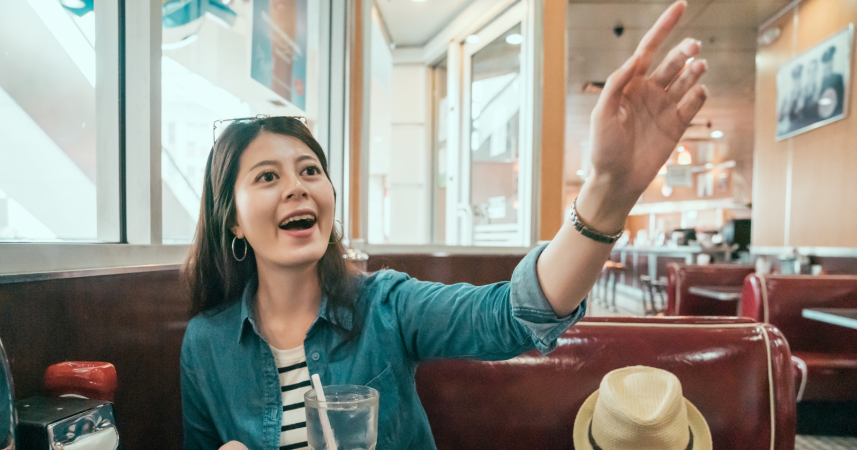
Nothing reveals character faster than how someone behaves at dinner when they are not the one picking up the bill.

Add VegOut to your Google News feed. 
You can tell a lot about a person by how they behave when the bill isn’t theirs.
Money brings out people’s true character, and nowhere is that more obvious than at a restaurant.
When someone else is picking up the check, polite guests show gratitude and restraint.
Low-quality people, on the other hand, treat it like an open invitation to act entitled, inconsiderate, and greedy.
They might not realize how bad it looks, but servers, friends, and hosts always notice.
Here are ten things only low-quality people do when someone else is footing the bill.
1. Ordering the most expensive item on the menu
Nothing screams lack of class like scanning the menu for the priciest thing just because you are not paying.
It shows no awareness, no gratitude, and no social grace.
High-quality people order what they actually want, not what costs the most.
It is not about the price, it is about respect.
The person paying will notice, and so will everyone else at the table.
2. Skipping basic manners with the staff
Low-quality people act like politeness only applies when they are the ones spending money.
They talk down to servers, snap their fingers, or ignore them completely.
When someone else is paying, they think they do not have to care about tips or service.
But how you treat people who cannot give you anything in return says everything about you.
Good manners are free, and they never go out of style.
3. Drinking excessively because it is “free”
Having a drink or two is one thing, but some people take advantage the second they realize they are not paying.
They order round after round, loud and careless, turning a nice dinner into a spectacle.
It makes the host uncomfortable and kills the atmosphere for everyone else.
Drinking like you are at an open bar instead of a dinner table is not confidence, it is tackiness.
4. Sending food back for no real reason
Everyone makes mistakes, but low-quality people love to complain just to show off.
They send food back because it “wasn’t hot enough” or “didn’t taste how they expected.”
They are not trying to fix the problem, they are trying to get attention.
It puts the host and the server in an awkward spot and makes the entire table tense.
If you did not pay for the meal, nitpicking is not an option — it is an insult.
5. Making a scene over the bill
When the check arrives, decent people either offer to contribute or quietly thank the person paying.
Low-quality people suddenly start making jokes, acting confused, or trying to make the moment about themselves.
Some even grab the bill and pretend to reach for their wallet, knowing they never planned to pay.
It is fake generosity and everyone sees through it.
Gratitude is always more elegant than a performance.
6. Ignoring the person who invited them
The biggest mistake rude diners make is focusing only on themselves.
They spend the whole night talking over others, scrolling on their phone, or chatting with the server instead of engaging with the host.
When someone invites you out and pays for your meal, the least you can do is give them your attention.
Low-quality people treat generosity like a transaction instead of a gesture.
Good guests know the best way to repay kindness is with conversation and appreciation.
7. Criticizing the restaurant or menu
Nothing ruins a dinner faster than a guest who complains about the food, prices, or décor at someone else’s choice of restaurant.
It is the ultimate sign of insecurity disguised as opinion.
The host took time to plan the outing, and picking it apart is just rude.
Even if the food is not your favorite, you can still find something to enjoy.
Gratitude should always come before critique.
8. Taking leftovers they did not pay for
It is one thing to take home food you ordered, but quite another to pack up half the table’s leftovers when you did not contribute.
Low-quality people see it as a free bonus, not realizing how greedy it looks.
It turns generosity into an opportunity for personal gain.
If the host offers leftovers, fine — but asking for them yourself is poor form.
Decent people know that class is shown in restraint, not in taking extra.
9. Talking about how much everything costs
Bringing up prices during dinner instantly kills the mood.
Low-quality people love to comment on how expensive something is, as if it makes them sound informed.
It only makes them sound insecure and ungrateful.
When someone else is paying, drawing attention to the cost is tactless.
Classy people appreciate the gesture and focus on the experience, not the receipt.
10. Leaving without saying a genuine thank you
The simplest act of appreciation is the one most often forgotten.
Low-quality people finish their meal, stand up, and leave without acknowledging the person who paid.
Sometimes they mumble a quick thanks on the way out, but it feels empty.
A sincere thank you takes seconds, yet it shows real gratitude.
People remember it, and it matters far more than you think.
The bigger picture
Dining etiquette is not about pretending to be fancy, it is about showing respect.
When someone covers your meal, it is a gesture of generosity and trust.
Low-quality behavior turns that kindness into discomfort.
Good manners are not about money, they are about awareness.
How you behave when someone else pays says far more about your character than the food ever will.