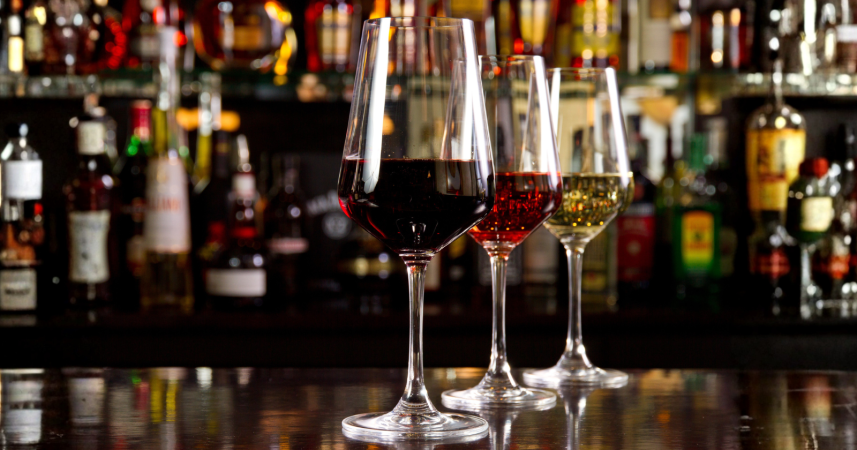
That bottle of red you're eyeing might contain fish bladders, egg whites, or milk proteins, and the label won't tell you a thing.

Add VegOut to your Google News feed. 
Wine seems like it should be the most vegan-friendly drink imaginable. Grapes, yeast, time. Maybe some oak barrels if we're getting fancy.
So when I first learned that many wines contain animal products, I felt genuinely betrayed. It's like finding out your favorite band lip-syncs.
Here's the thing: wine naturally contains tiny particles that make it cloudy. Bits of grape skin, proteins, tannins, dead yeast cells. Left alone, these would eventually settle. But winemakers are impatient, and consumers expect crystal-clear wine.
So the industry developed a shortcut called fining, and that's where things get complicated for anyone trying to avoid animal products.
What fining actually does to your wine
Fining is essentially a filtration hack. Winemakers add a substance that binds to those unwanted particles, making them heavy enough to sink to the bottom. Then they rack the clear wine off the top. The fining agent itself gets removed, which is why winemakers argue it's not technically "in" the final product.
But here's the behavioral science angle: just because something gets removed doesn't mean it wasn't used. If you're vegan for ethical reasons, the process matters as much as the end result.
The demand for these animal-derived fining agents still drives their production. Your purchase still supports that supply chain, even if no fish bladder ends up in your glass.
The animal products hiding in your cabernet
The list of traditional fining agents reads like a medieval apothecary inventory. Isinglass comes from fish bladders, primarily sturgeon. It's especially popular for white wines because it creates brilliant clarity without stripping flavor. Casein derives from milk protein. Egg whites have been used for centuries, particularly in red Bordeaux.
There's also gelatin, which comes from animal bones and connective tissue. And chitin, sourced from crustacean shells. None of these appear on wine labels because current regulations don't require it. The industry considers them processing aids rather than ingredients. It's a loophole big enough to drive a delivery truck through.
Why labels won't help you
Unlike food products, wine labeling laws are remarkably lax about processing methods. In the US, the Alcohol and Tobacco Tax and Trade Bureau doesn't mandate disclosure of fining agents.
The EU requires allergen warnings for milk and egg-based fining agents, but only if residues exceed certain thresholds. Fish and crustacean-derived agents? No disclosure required.
This creates a frustrating information gap. You can't simply flip the bottle and check the ingredients. Even "organic" wine certification doesn't guarantee vegan status. Organic refers to how the grapes were grown, not how the wine was processed.
A winemaker could use organically grown grapes and still fine with egg whites. The certifications exist in separate universes.
How to actually find vegan wine
The good news: vegan wines are increasingly common, and finding them has gotten easier. Many winemakers now use plant-based or mineral fining agents like bentonite clay, activated charcoal, or pea protein. Some skip fining entirely, letting time do the work and embracing a slightly cloudier aesthetic.
Look for bottles with explicit vegan certification from organizations like BeVeg or The Vegan Society. Apps like Barnivore maintain extensive databases of vegan-verified wines, beers, and spirits. Many natural wine producers default to vegan methods as part of their minimal-intervention philosophy. And increasingly, mainstream brands are adding vegan labels voluntarily because they recognize the market demand.
The market is shifting in your favor
Here's what's encouraging: consumer pressure actually works. The vegan wine market is growing significantly, and major producers are paying attention. When enough people ask questions, supply chains adapt. We've seen this pattern with plant-based milk, meat alternatives, and now wine.
More wineries are proactively marketing their vegan status. Restaurants are noting vegan wines on their lists. Retailers are creating dedicated sections. The infrastructure for informed choices is building itself in real time.
Five years ago, finding vegan wine required serious detective work. Now it's becoming almost routine.
Final thoughts
Wine's animal product problem is really an information problem. The products exist. The alternatives exist. What's missing is transparency. Until labeling laws catch up, we're stuck doing our own research.
But that research has never been easier. Between certification programs, community databases, and producers who proudly advertise their vegan methods, you can build a solid rotation of wines that align with your values. It just takes a little more intention than grabbing whatever's on sale.
The next time you're browsing the wine aisle, think of it as a small act of market democracy. Every vegan wine purchase signals demand. Every question asked at a restaurant or wine shop plants a seed. The industry responds to what we buy.
ƒAnd increasingly, what we're buying is wine made without fish bladders, egg whites, or milk proteins. Which, honestly, is how it probably should have been all along.
If You Were a Healing Herb, Which Would You Be?
Each herb holds a unique kind of magic — soothing, awakening, grounding, or clarifying.
This 9-question quiz reveals the healing plant that mirrors your energy right now and what it says about your natural rhythm.
✨ Instant results. Deeply insightful.

Jordan Cooper
Jordan Cooper is a pop-culture writer and vegan-snack reviewer with roots in music blogging. Known for approachable, insightful prose, Jordan connects modern trends—from K-pop choreography to kombucha fermentation—with thoughtful food commentary. In his downtime, he enjoys photography, experimenting with fermentation recipes, and discovering new indie music playlists.
More Articles by Jordan