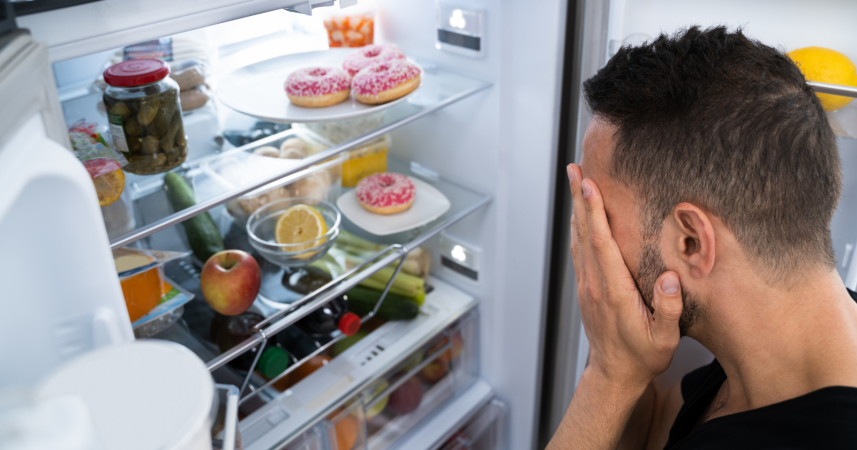
A fridge that looks like a vending machine—neon creamers, jumbo sauces, deli slices—tells a richer story than the receipt.
This isn’t a dunk piece.
It’s a pattern check.
Fridges tell stories about time, money, and mental load.
If yours holds a lot of quick fixes and big-brand “value,” that’s not a moral failing—it’s a snapshot of trade-offs.
Spot the patterns, make a few smarter swaps, and your food budget and energy go further without spending more.
1. Door packed with sugary condiments
Ketchup, ranch, BBQ, “spicy” mayo, sweet chili sauce—often in jumbo bottles and duplicates.
It reads convenient and cheap, but you’re paying for sugar, emulsifiers, and shipping water.
Smarter move: keep two or three workhorse flavors and make the rest in 60 seconds.
Mustard + maple + vinegar = fast vinaigrette.
Tahini + lemon + water + garlic powder = all-purpose drizzle.
Hot sauce + soy + a little lime = instant stir-fry finish.
Fewer bottles, more flavor, less waste.
2. Pre-shredded cheese as a default
Bags are easy, sure.
You’re also buying anti-caking starch and paying a premium per ounce.
If you eat dairy, buy a block and shred once; it melts better and costs less.
If you’re plant-based, skip the rubbery shreds and use nutritional yeast for “cheesy” depth or blitz silken tofu + lemon + salt for a quick creamy base.
You’ll get more flavor per dollar either way.
3. Processed singles for every sandwich
Singles are shelf-stable, uniform, and… mostly oil and whey.
They train your palate to expect bland plus plastic-smooth texture.
Upgrade the habit, not the bill: thin slices from a small block of real cheddar or a thick swipe of hummus/mashed avocado.
Same speed, better nutrition, grown-up taste.
4. Flavored coffee creamers in neon flavors
Cookies-and-cream creamer is dessert in disguise.
It’s also the priciest way to add fat and sugar to coffee.
Swap to oat or soy milk plus a teaspoon of maple, or make a tiny jar of “house creamer”: plant milk + a pinch of salt + vanilla.
Cost drops, ingredients simplify, and you still get café vibes at home.
5. Margarine tubs and “butter blends”
These live in a lot of doors because they spread straight from the fridge.
They also come with a long ingredient list and a waxy aftertaste.
Practical swap: keep real butter (or a simple olive-oil-based spread) on the counter in a covered dish so it’s always spreadable, and use olive oil for most cooking.
Fewer products, better fat profile, cleaner taste.
6. Two-liter soda and energy drinks on repeat
Liquid sugar is the fastest way to burn cash and crash energy.
If bubbles are non-negotiable, rotate flavored seltzer.
If caffeine is the point, keep a mason jar of cold-brew concentrate; top it with water or oat milk all week.
Tastes better, costs less, and doesn’t park a sugar bomb in every meal.
7. Deli meat packs as the protein plan
Ultra-processed cold cuts are convenient, salty, and oddly expensive per protein gram.
Try a “cook once, slice all week” rhythm: roast a tray of tofu, tempeh, or chickpeas with spices; slice and stack for sandwiches and bowls.
If you eat meat, a roasted chicken breast or turkey tenderloin does the same job with fewer additives.
You’ll feel fuller, longer, on less money.
8. Takeout boxes and sauce packets as a lifestyle
No shame—we all have those weeks.
But when the fridge is mostly clamshells and crusted soy-sauce packets, you’re outsourcing decisions to a menu and losing both money and micronutrients.
Low-effort upgrade I use: “base + freestyle.”
Keep a cooked base (rice, quinoa, roasted potatoes, or a salad mix) and a tray of roasted veg.
Then freestyle with one condiment or quick sauce.
You still get variety, but the base is yours—and cheaper.
9. Bottled water crammed on the shelf
A case of single-use bottles feels practical.
It’s also pricey per sip and eats fridge real estate.
Get a filter pitcher or sink filter and a couple of reusable bottles.
You’ll refill automatically, drink more, and stop paying a brand to deliver tap water with extra steps.
10. Produce drawers that double as compost starters
Slimy spring mix.
Half an onion desiccated into archaeology.
Three limes that died heroes.
This isn’t about willpower; it’s about systems.
Buy less, more often.
Prep once: wash greens, spin dry, and store in a lidded container with a paper towel.
Keep a “use-me-first” bin at eye level for anything that’s on the clock.
Pickle the stragglers (carrots, onions) in a 1:1 vinegar-water brine; they’ll last weeks and make everything taste brighter.
11. Pre-cut fruit trays and veggie platters
They look healthy; they bleed money.
You’re paying a big labor premium for food that expires tomorrow.
If knife time is the barrier, set a five-minute timer when you unload groceries and cut just one item: a pineapple today, cucumbers tomorrow.
Or buy frozen fruit for smoothies and dessert; it’s picked ripe and costs less per cup.
12. “Party beer” and sweet wine as a standing inventory
A six-pack and a bottle of flavored vino live on the bottom shelf “just in case.”
No harm in a treat.
But if they’re permanent residents, they crowd out better basics and nudge weeknights into weekend mode.
Smarter default: keep one bottle you actually love (or a zero-proof option that feels festive) and reclaim the space for seltzer, cut citrus, and a fresh herb jar.
Your future self will thank you on weekday mornings.
A couple of moments that changed how I stock my fridge
After a month of deadlines, my fridge looked like a vending machine—creamer, deli slices, soda, sauces, and three heroic limes.
My grocery spend was up; my energy was down.
I pulled everything out, lined it on the counter, and realized there wasn’t a single “base” food in sight.
I cooked a pot of farro, roasted two sheet pans of vegetables, and made a small jar of tahini sauce.
Forty minutes later, I had four different meals in rotation—wraps, bowls, a quick salad, and a soup starter.
Same budget the next week, wildly different days.
Anecdote two.
Staying with friends in Barcelona, I noticed their tiny fridge was calm: a pitcher of water, two cheeses, olives, greens, cooked beans, half a loaf, and a lemon.
No overflow, no panic purchases.
Meals were fast because options were obvious.
That trip didn’t turn me into a minimalist, but it did give me a rule I still use: if I can’t see it, I won’t use it.
Now I keep fewer things visible—and I eat better because of it.
A simple reset plan if your fridge feels “busy but empty”
-
Do a five-minute audit. Count how many items are sauces, drinks, or “extras” versus bases and produce.
-
Pick two swaps. Examples: bottled water → pitcher; deli packs → roast-once protein; creamer → DIY mix.
-
Adopt one base. Cook a grain, bake a potato tray, or wash and spin greens.
-
Make one house sauce. Tahini-lemon, yogurt-dill, or peanut-lime—whatever you’ll actually use.
-
Create a “use-me-first” bin. Put it at eye level, not in the crisper graveyard.
-
Schedule a tiny refill. Midweek five-item top-up: greens, bananas, one veg, bread, seltzer.
A short shopping list that punches above its weight
-
Greens with spine (romaine, kale, cabbage).
-
A grain that cooks itself (rice, quinoa).
-
Versatile protein (beans, tofu, eggs if you eat them).
-
Two flavor bombs (lemon/lime, fresh herb, or pickled veg).
-
One “treat that travels” (frozen berries, dark chocolate).
You don’t need a brand-new fridge or a brand-new budget.
You need a few new defaults.
When your shelves hold bases you’ll use, sauces you can assemble, and produce you can see, you stop impulse-buying for a quick hit.
You start cooking simple food, fast.
And you look at that door full of giant bottles and think, “Nice try, marketing. I’ve got this.”
If You Were a Healing Herb, Which Would You Be?
Each herb holds a unique kind of magic — soothing, awakening, grounding, or clarifying.
This 9-question quiz reveals the healing plant that mirrors your energy right now and what it says about your natural rhythm.
✨ Instant results. Deeply insightful.

Jordan Cooper
Jordan Cooper is a pop-culture writer and vegan-snack reviewer with roots in music blogging. Known for approachable, insightful prose, Jordan connects modern trends—from K-pop choreography to kombucha fermentation—with thoughtful food commentary. In his downtime, he enjoys photography, experimenting with fermentation recipes, and discovering new indie music playlists.
More Articles by Jordan