These six staples aren’t just groceries, but a blueprint for resilience.
If your fridge was stocked with these six budget staples, you probably grew up lower middle class
I grew up in a house where the fridge told the truth.
No fancy built-ins, no sparkling glass jars of imported olives.
Just a humming white box that quietly reflected what our family cared about: Stretching a dollar, eating decently, and never wasting a crumb.
If that sounds like your childhood, this one’s for you.
Here are six budget staples I still spot in the fridges of friends who made it work without a safety net—and the life lessons they taught me about resilience, creativity, and building a better future:
1) Eggs by the dozen
If there was a more versatile MVP than eggs, I’ve yet to meet it.
We always had at least a dozen, sometimes two, because eggs are the Swiss Army knife of home cooking.
Breakfast, sure—scrambled on school days, fried on weekends—but also quick dinners when money was tight: omelets, fried rice, egg salad, the classic “breakfast for dinner” that felt like a minor holiday.
Eggs taught me constraint-driven creativity.
Give me six eggs, a tired onion, and whatever leftovers are hiding behind the ketchup—and I can feed four people in under 15 minutes.
In restaurants, I learned the same principle: Constraints sharpen taste.
Fewer ingredients, more intention.
If you’re trying to get better at cooking, master three techniques: Soft scramble on low heat, a six-minute jammy boil, and a silkier-than-it-should-be omelet.
Those three alone can carry a week of meals.
2) A big jug of milk
Was it organic? Not usually.
Was it there for cereal, baking, instant mashed potatoes, and as a peace offering when the instant coffee tasted like regret? Always.
Milk in the lower middle class fridge wasn’t about aesthetics—it was insurance.
It meant you could still make pancakes when the cupboards were thin.
You could soften a tomato sauce, stretch a can of cream-of-something soup, or scrape together a white sauce for noodles.
My mom made a mean stovetop mac with milk, margarine, and a handful of shredded cheese that probably wasn’t 100% from a cow—and I still think about it after leg day.
There’s a mindset hidden in that jug: Adaptability.
Success is rarely about having perfect tools; it’s about making good tools do great work.
Milk reminds me that progress comes from iteration—pour, taste, and adjust.
It’s the culinary version of “ship, learn, ship better.”
Use it beyond cereal, whisk a splash into scrambled eggs, soften strong coffee instead of buying flavored creamer, or stir it into soups to make them feel substantial without doubling the grocery bill.
3) American cheese singles
Before you come for me with your aged Gruyère and triple-cream this or that—same, I love them—but the plastic-wrapped singles were an era!
They melted like a dream and tasted like Saturday afternoons, cartoons, and grilled cheese on the cheapest white bread available.
Food is memory; those neon slices carried us through growth spurts and hard months, and they turned sad fridge situations into kid-approved dinners.
I’ve worked in luxury F&B, plated Michelin-chasing menus, and still—still—there’s a place in my heart for a single cheese slice on a burger fresh off a backyard grill.
There’s a life lesson in not sneering at the basics.
We become snobs when we confuse price with meaning.
As adults, we can upgrade our tastes while honoring where we came from.
Buy the fancy cheese for date night, and keep the singles for grilled cheese with tomato soup when the weather turns and the week is long.
Both can coexist—like ambition and gratitude.
4) Bologna, hot dogs, or that one mystery deli meat
There was always a pack of “something” in the meat drawer.
Not the heritage charcuterie board kind, but the “buy two, get one free” kind.
It made fast sandwiches, fed the cousin who stayed over unannounced, and migrated into eggs on Sunday mornings like it paid rent.
Did we know it wasn’t health food? Of course, but it did a job.
It taught portion control, too, because we learned to layer flavor with mustard, pickles, and a slice of tomato rather than stacking five slices like we were in a commercial.
Resourcefulness is a muscle; when you grow up lower middle class, you learn to reframe “not much” as “just enough.”
The pantry becomes a puzzle you’re smart enough to solve.
Later in life, that mindset turns into career scrappiness—shipping projects without perfect budgets, negotiating with what you have, spotting opportunities others miss.
If you’re trying to eat a bit better now, keep the spirit and tweak the execution.
5) A family-sized margarine tub
The butter vs. margarine debate didn’t matter in our kitchen.
Margarine was cheap, spreadable straight from the fridge, and made everything taste like “we’ll be okay.”
It glazed weeknight corn, slicked noodles into a side dish, and finished steamed vegetables when olive oil felt too precious to measure.
I’ve learned this working in great kitchens: Fat is a flavor delivery system, since it carries salt, spice, and aromatics.
Budget cooking leans on that power—garlic blooming in a tablespoon of spread and turning plain rice into something a little special or, if you want the upgraded take, grab a butter-margarine blend or just keep butter and a neutral oil.
You’ll still get spreadability and that rounded, comforting taste.
Gourmet? No.
Satisfying? Absolutely.
A little fat at the right time turns harsh moments into manageable ones.
In work and relationships, that’s your tone, your patience, your willingness to listen before you correct.
Margarine won’t fix a budget, but the mindset behind it will help you navigate tight corners with grace.
6) An army of leftovers in mismatched containers
This was the signature move.
Open the fridge and you’d see a Tetris of stained plastic tubs holding the week’s edible history—stew with a heroic ratio of potatoes to meat, rice from two dinners ago, the last quarter of a casserole, a stubborn scoop of coleslaw that refused to die.
Leftovers are discipline made visible.
They say, “We paid for this once—we’ll benefit from it twice.”
That’s compounding value, the same principle the personal finance books praise.
It teaches delayed gratification, planning, and palette training—when you eat your food again tomorrow, you start seasoning better today.
If you grew up this way, you probably perform fridge archaeology like a pro.
You know the smell test, the “reheat with a splash of water” trick, and the magic of a hot pan.
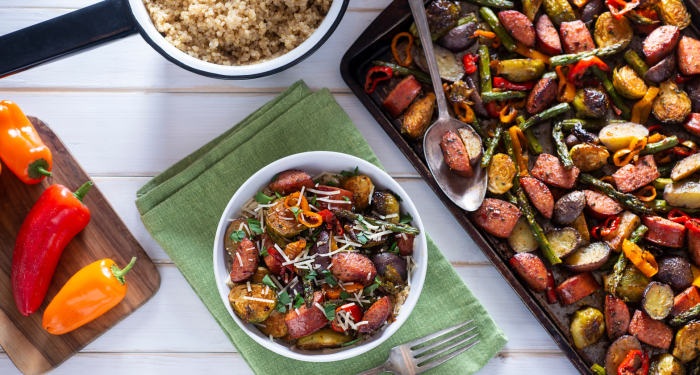
Day-old rice becomes fried rice, roasted vegetables become a frittata, and half a chicken thigh becomes soup with noodles, frozen corn, and too much black pepper (the correct amount, in my opinion).
Suddenly, leftovers aren’t leftovers—they’re components.
That shift alone can cut your food spending in half without sliding into joyless eating.
The bottom line
There’s a reason I love writing about food and personal growth in the same breath.
A good kitchen teaches the same things a good career does: preparation, respect for materials, patience, and pride in the details.
When you grow up lower middle class, those lessons land early.
The six staples—eggs, milk, American cheese singles, bargain deli meat, a big tub of margarine, and leftovers in mismatched containers—aren’t just groceries, but a blueprint for resilience.
They teach creativity under constraints, pride in small rituals, and the maturity to plan ahead; they remind us that progress often looks like small, quiet decisions repeated for years.
Keep what served you, upgrade what you’ve outgrown, and let your fridge—humble or fancy—tell the truth you’re living into now.