These dinners aren't just cheap because all of them solved money, time, and mood in one move.

Add VegOut to your Google News feed. 
Crafting a life often starts in the kitchen—especially when the budget is tight.
If you grew up in a Boomer household (or even if you didn’t), there are a handful of dinners that show up again and again.
They’re simple, they stretch, they’re built from pantry staples, and they double as little lessons in resourcefulness, ritual, and comfort.
As someone who writes about why we make the choices we make—and who also happens to be vegan—what interests me isn’t just the food, but the psychology behind it.
These dinners made people feel safe in uncertain times, yet they also taught a generation how to do more with less.
Here are six of those classic dinners, what made them work, and how I reimagine them today without breaking the bank—or the planet:
1) Tuna noodle casserole
The appeal was obvious.
A few cans, a bag of egg noodles, a “cream of” soup, and something crunchy on top.
Dinner for a crowd with almost no effort.
It’s the budget equivalent of a weighted blanket.
Under the hood is a smart formula: starch for bulk, creamy binder for cohesion, a salty protein, a hit of texture.
When money is tight, formulas matter more than recipes.
You memorize the pattern, swap what you have, and keep the ritual alive.
My plant-based version keeps the architecture: I use short pasta, a quick roux with plant milk and vegetable bouillon, frozen peas, and a “tuna” stand-in made from chickpeas mashed with nori flakes, lemon, and a spoon of vegan mayo.
Panko, olive oil, and paprika go on top for the crunch.
Two things happen when you do this; first, you get the same comfort notes without the fish and, second, you remind yourself that constraints breed creativity.
Scarcity nudges us to focus on structure, not brand names.
That mindset spills into everything—finances, time, energy.
You start asking, “What’s the core job to be done here?” and “How else could I meet it?”
2) Meatloaf with mashed potatoes
If tuna casserole was the weeknight stretcher, meatloaf was the Sunday anchor.
It turned a pound of ground beef into a family-size center.
Breadcrumbs extended it, ketchup glazed it, and potatoes turned it into a complete event.
What’s happening psychologically is bigger than protein—it’s identity.
Meatloaf said, “We are the kind of family that sits down together even when the budget is thin.”
Rituals signal stability; in times of uncertainty, they keep us grounded.
My move is a lentil-oat loaf that costs a fraction of meat and holds together like a champ: Cook green or brown lentils until tender but not mushy, then sauté onion, garlic, and grated carrot, afterwards stir in oats, a spoon of tomato paste, soy sauce, and smoked paprika, and press into a pan, glaze with ketchup and a streak of mustard, and bake until set.
The mashed potatoes? Plant milk, a little vegan butter, and a splash of pickle brine for brightness.
Trust me on that last part.
This plate scratches the same itch as the original: Sliceable, saucy, starchy, familiar.
You get leftovers that convert into sandwiches, hash, or “meatballs” for pasta.
The lesson here is to design for day two—when money is tight, the best dinner is the one that becomes tomorrow’s lunch with zero extra effort.
3) Spaghetti with red sauce
I’ve mentioned this before, but if you gave every home cook one dish to keep for life, spaghetti with red sauce would probably win.
It’s the ultimate algorithm: cheap, fast, endlessly flexible.
Boomer families leaned on jarred sauce or canned tomatoes, a shake of dried herbs, maybe a little ground meat if payday was kind.
The brilliance wasn’t authenticity—it was reliability.
You knew exactly how long it would take, and everyone at the table would eat it.
These days I keep it vegan and pantry-driven: Sauté garlic in olive oil, add crushed tomatoes, a pinch of sugar, oregano, and a tablespoon of soy sauce for umami, and grate carrots straight into the pot to soften the acidity.
Sometimes I crumble firm tofu with fennel seed to mimic that nostalgic sausage vibe; other nights it’s a can of lentils rinsed and stirred in at the end.
What this dinner teaches is the power of defaults.
When decision fatigue is high—tight budget, long day—defaults rescue you.
Set yours up in advance: Keep two jars of sauce or two cans of tomatoes in your pantry at all times, and keep dry spaghetti on hand.
A ladle transforms any humble sauce into a glossy, clinging miracle.
4) Grilled cheese and tomato soup
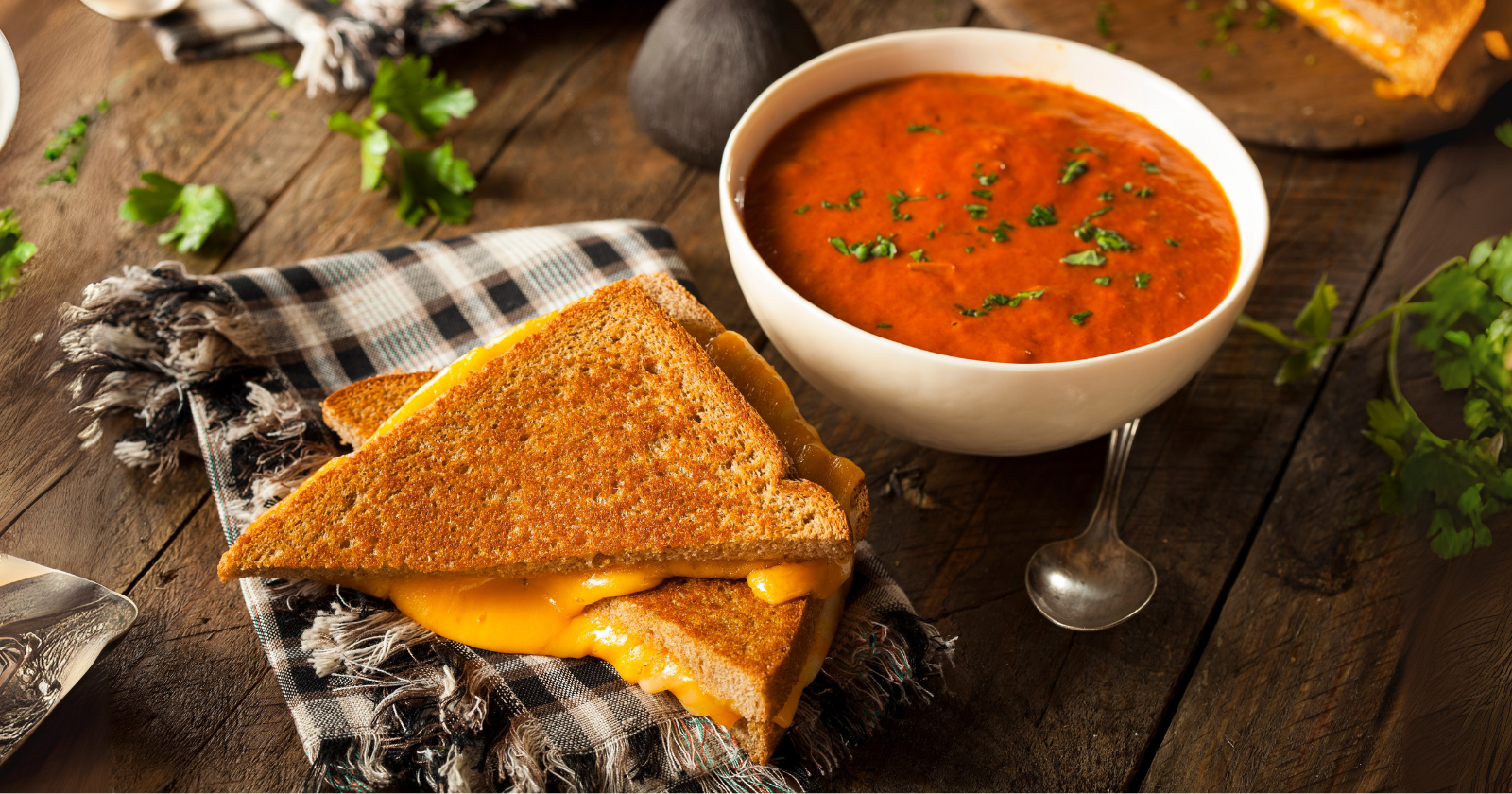
I can still picture the steam on the kitchen window from a friend’s house where this was the rain-day special.
Golden toast, melty middle, that canned tomato soup sweet-salty thing.
Even if you didn’t grow up with it, you’ve seen the movie version.
This combo is less about ingredients and more about contrast.
When funds are low, these contrasts trick your brain into perceiving a richer meal.
For a plant-based take, I layer thin slices of tomato between two pieces of bread with a modest layer of vegan cheese and a swipe of Dijon, then pan-grill in olive oil on low heat so it melts without scorching.
For the soup, I blend canned tomatoes with sautéed onion, garlic, and a little oat milk, and add a pinch of baking soda softens the acidity if needed.
What’s the larger lesson? Micro-upgrades.
When you can’t overhaul your life, you can tilt it by 5 degrees with a better technique or a smarter combo.
Low heat and patience turn a basic sandwich into something you’d happily serve guests.
A spoon of mustard unlocks a new layer.
Same budget, better outcome!
5) Breakfast at dinner
When the pantry’s thin, flipping the script helps.
Pancakes at 6 p.m., eggs at sundown (or tofu scramble in my case), hash browns, applesauce, and maybe a few frozen berries.
These items are cheap, familiar, and quick.
Boomer parents knew the secret: Timing reframes value.
The very act of making “breakfast for dinner” turns scarcity into novelty.
You’re not skimping—you’re remixing.
My standard is a basic pancake made with flour, baking powder, plant milk, a little sugar, and oil.
If I have a banana that’s on its way out, I mash it in.
On the savory side, tofu scramble with turmeric, black salt for eggy aroma, and whatever vegetables are threatening to wilt.
Toast becomes croutons if I cube it and pan-fry for two minutes.
Everything gets a generous grind of pepper.
Psychologically, this night breaks monotony as predictable stress needs unpredictable joy.
Even small acts of play matter, especially when funds are tight.
Changing the frame is free—and it works.
6) Chili and cornbread
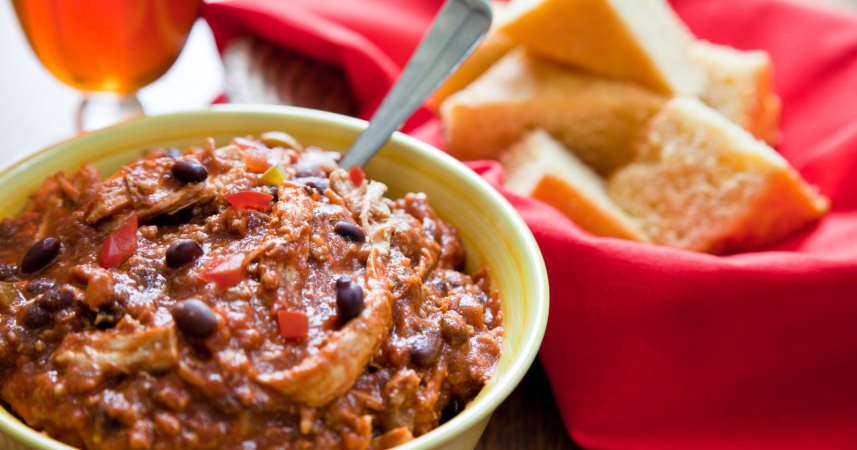
If you had a slow-cooker, you had chili nights.
Beans stretch, tomatoes bulk, and spices hide a multitude of “I used what I had.”
Cornbread turns a soup into a supper—the magic here is compounding flavor.
Every hour of simmering pays “interest.”
When budgets shrink, you trade money for time—chili is a masterclass in that trade.
I go heavy on beans—kidney, pinto, black—plus onion, garlic, chili powder, cumin, and a square of dark chocolate if one is around.
A cup of lentils thickens it without extra cost.
I skip faux meat most nights to keep the price down, but crushed walnuts can mimic that ground texture if you want it.
For cornbread, I whisk cornmeal, flour, baking powder, plant milk, a little oil, and a tablespoon of vinegar.
Into a hot pan it goes, sizzling as it hits—that sound alone feeds you.
Chili is also strategic.
It feeds many, freezes beautifully, and morphs into nachos, stuffed potatoes, or taco salad on night two.
In behavioral science, we talk about choice architecture.
Chili is edible choice architecture: One pot unlocks four paths, so you don’t feel stuck, even if your grocery budget is.
Quick takeaway
These dinners weren’t just cheap; they were tiny systems that made life feel doable.
Casseroles, loaf-and-mash, spaghetti, grilled-cheese nights, breakfast-for-dinner, and a pot of chili—all of them solved money, time, and mood in one move.
That’s why they lasted; steal the pattern, not the past.
Keep the ritual, upgrade the ingredients to match your values, and design for leftovers so tomorrow gets easier, too.
When the week gets loud, default to one of these and let the nostalgia carry you.
Affordability is good, but reliability is better.
Together, they’re a plan!