Before takeout apps and meal kits, dinner was simple, filling, and made to stretch. These ten classic meals kept lower middle class families fed week after week.

Add VegOut to your Google News feed. 
Money was tight.
The fridge was never empty, but it was rarely stocked with anything “fun.”
If you grew up in a lower middle class family, you probably remember the same dinners appearing on rotation, week after week.
These weren’t glamorous meals. They weren’t balanced in the way today’s wellness gurus would insist on.
But they got the job done—they filled bellies, stretched paychecks, and somehow became part of our cultural DNA.
I want to revisit those dinners—not just to laugh or cringe at them, but to pull out the quiet lessons they hold about resourcefulness, family life, and resilience.
Let’s dig in.
1) Spaghetti with jarred sauce
Pasta night was survival 101.
A one-dollar box of spaghetti, a $2 jar of sauce, and maybe a sprinkle of Parmesan if things were going well.
Sometimes ground beef made an appearance, but plenty of times it didn’t.
For families, pasta was more than cheap carbs. It was easy to make after a long day, it felt like a “real” meal, and leftovers stretched into lunchboxes.
It also carried a quiet dignity. Italians have eaten pasta for centuries. Even if ours came from a blue box and a jar, it still felt classic.
2) Meatloaf
Ah, meatloaf. A pound or two of ground beef bulked up with breadcrumbs, eggs, and ketchup on top.
It wasn’t glamorous, but it was filling. Meatloaf gave families the illusion of a proper roast without the cost.
Add some mashed potatoes and frozen green beans, and suddenly you had something close to a Sunday dinner—even if it was a Tuesday night after a shift at the factory.
There’s a reason this dish has a reputation as “America’s working-class classic.” It’s food as comfort, food as endurance.
3) Hamburger helper
This was a lifesaver.
Brown a pound of beef, dump in the boxed mix, add milk and water, and in 20 minutes dinner was served.
Was it salty? Yes. Did it taste vaguely like school cafeteria food? Also yes. But it stretched meat further than it could go on its own, and when you’re feeding a family of five on a budget, that matters.
For a lot of us, it was also the first “fancy” thing we learned to cook on our own. Following the steps on that box was a rite of passage.
4) Breakfast for dinner
When cupboards were running low, eggs and pancakes came to the rescue.
Breakfast-for-dinner felt like a treat to us kids, even if our parents were silently stressed about money. A carton of eggs and a bag of flour could turn into a meal that felt playful.
There’s something brilliant about reframing necessity as novelty. It’s a reminder that mindset matters just as much as material conditions.
5) Tuna casserole
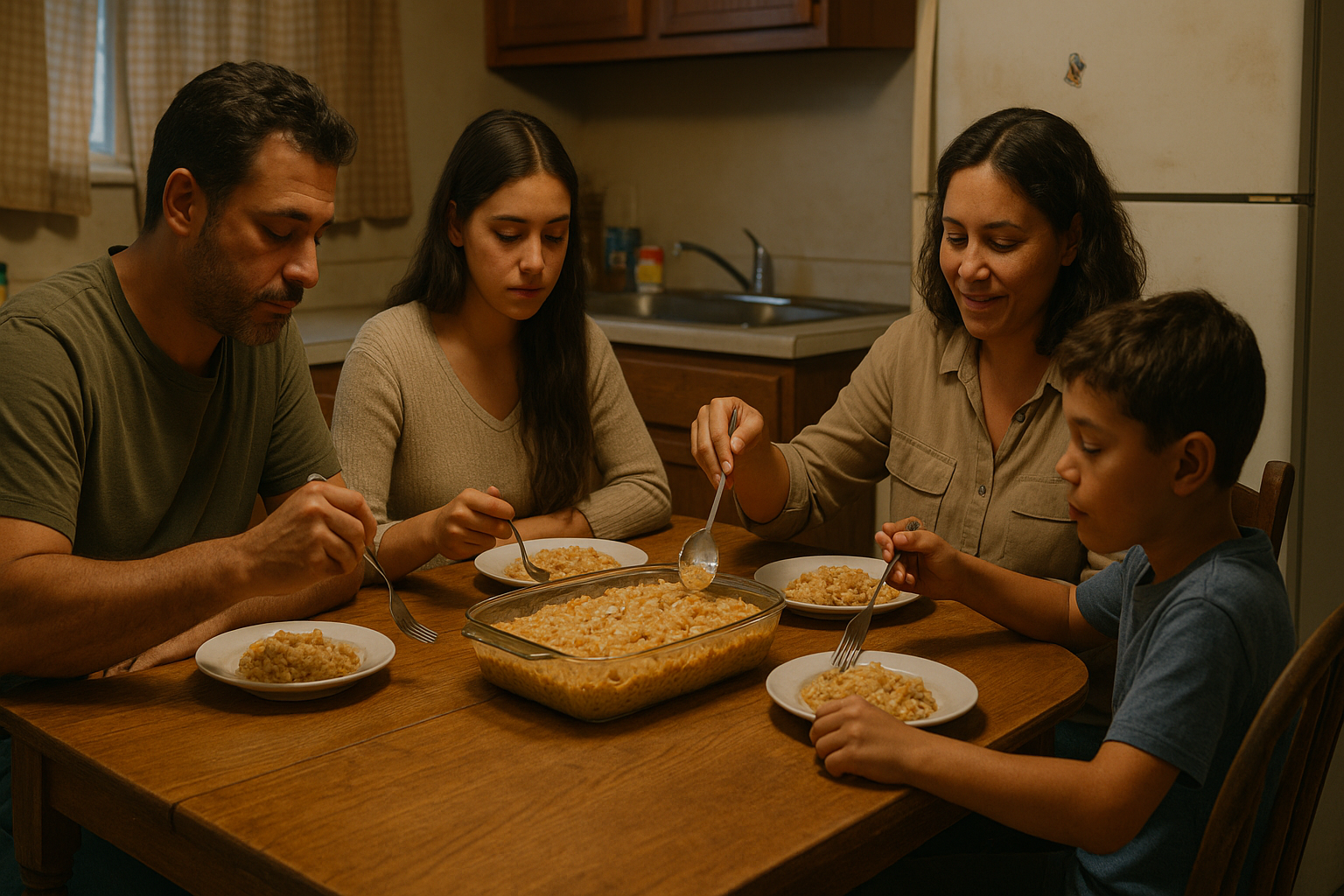
This was the true badge of a frugal household.
Egg noodles, cream of mushroom soup, a can of tuna, maybe some peas, and a crushed potato chip topping if you were lucky.
It wasn’t pretty, but it was hot, filling, and reheated decently the next day.
I remember staring at it as a kid, suspicious of the pale beige blob. But now, as an adult who’s paid grocery bills, I respect the ingenuity.
Protein, carbs, fat—all for a couple of dollars.
6) Sloppy joes
Ground beef cooked down with ketchup or canned sauce, slapped onto hamburger buns.
It was messy, cheap, and weirdly satisfying. No one pretended this was gourmet, but it was kid-friendly and filling.
Looking back, sloppy joes were an example of how presentation changes perception.
The same meat could have gone into tacos, but by rebranding it as “sloppy,” it became fun instead of desperate.
7) Hot dogs and boxed mac and cheese
This might have been the most common combo of them all.
Kraft mac & cheese was practically its own food group for lower middle class families.
Add boiled hot dogs, and you had a dinner that cost less than $3 to feed multiple kids.
Was it healthy? Not remotely. Did we care? Not at all.
To this day, some of us still crave that neon-orange powder because it’s not just taste—it’s nostalgia.
8) Frozen pizza
Friday night meant pizza night, but not the delivery kind. Delivery was a luxury. Instead, a Tombstone, DiGiorno, or Totino’s went into the oven.
For a lot of families, frozen pizza was “treat food” that still fit into the budget. It gave parents a break from cooking and gave kids something to look forward to.
It’s funny how those cheap pies created a ritual.
They weren’t just dinner—they were a marker that the week was over, that we made it.
9) Chicken and rice (the endless casserole)
Chicken thighs or drumsticks, rice, a can of cream soup or bouillon cubes, and maybe some carrots. That was dinner.
This one was all about stretching protein. Dark meat was cheaper than breasts, rice filled you up, and throwing it all in one dish made cleanup easy.
It was the definition of “humble but hearty.” And honestly, when seasoned right, it could actually taste great.
10) Grilled cheese and tomato soup
Finally, the emergency classic.
Grilled cheese sandwiches were fast, cheap, and comforting. Pair them with canned tomato soup, and you had a meal that felt more intentional than it really was.
There’s a lesson here about simplicity. Not every dinner needs a dozen ingredients or fancy plating. Sometimes bread, butter, and cheese can carry you through the hardest times.
The bottom line
Looking back, these dinners weren’t about culinary excellence. They were about survival, routine, and keeping families fed when money was tight.
But here’s the thing: they also built resilience. They taught us that you don’t need extravagance to create a sense of stability. They reminded us that creativity often flourishes under constraint.
And they showed us that food is about more than nutrition—it’s about love, togetherness, and finding joy even when the pantry looks bare.
If you grew up on these meals, you know what I mean. And if you didn’t?
Well, maybe it’s worth trying one of them on purpose, just to see how a generation of families got by—one budget-friendly dinner at a time.
If You Were a Healing Herb, Which Would You Be?
Each herb holds a unique kind of magic — soothing, awakening, grounding, or clarifying.
This 9-question quiz reveals the healing plant that mirrors your energy right now and what it says about your natural rhythm.
✨ Instant results. Deeply insightful.

Adam Kelton
Adam Kelton is a writer and culinary professional with deep experience in luxury food and beverage. He began his career in fine-dining restaurants and boutique hotels, training under seasoned chefs and learning classical European technique, menu development, and service precision. He later managed small kitchen teams, coordinated wine programs, and designed seasonal tasting menus that balanced creativity with consistency.
After more than a decade in hospitality, Adam transitioned into private-chef work and food consulting. His clients have included executives, wellness retreats, and lifestyle brands looking to develop flavor-forward, plant-focused menus. He has also advised on recipe testing, product launches, and brand storytelling for food and beverage startups.
At VegOut, Adam brings this experience to his writing on personal development, entrepreneurship, relationships, and food culture. He connects lessons from the kitchen with principles of growth, discipline, and self-mastery.
Outside of work, Adam enjoys strength training, exploring food scenes around the world, and reading nonfiction about psychology, leadership, and creativity. He believes that excellence in cooking and in life comes from attention to detail, curiosity, and consistent practice.
More Articles by Adam