Moving to Europe didn’t turn me into a food snob—it just made me see how America’s oversized portions, constant snacking, and rushed meals drown out the quiet, sane rhythms of real eating
I didn’t move to Europe for the baguettes.
I moved for work, for a change of scenery, for a version of me that didn’t live inside a calendar invitation. But it took about a month of walking past farmer’s markets and eating long, unrushed lunches to realize something I’d never fully seen inside the U.S.: the way we eat isn’t just different—it’s quietly exhausting.
This isn’t a “Europe is better” sermon. It’s a field note from a person who grew up on American portion sizes, snack aisles the length of football fields, and a deeply transactional relationship to food. Moving here flipped lights on I didn’t know were off.
The day the supermarket felt loud
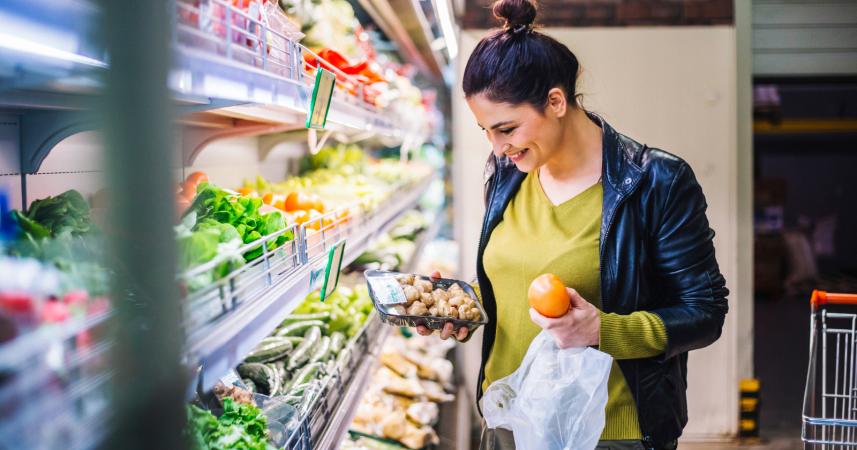
My first week in Lisbon, I wandered into a neighborhood grocery with a basket and the kind of unconscious American hunger that expects bulk everything. There was no family-size anything. No 48-ounce tub of yogurt. No “stack ‘em high” cereal walls. Just petite cartons of milk, small jars of jam, eggs on a shelf, and a modest bread section that smelled like actual bread.
At the register, my brain did a double-take. The bill was lower than what I paid back home for a single “stock-up” run. And weirdly, I felt… calm. The absence of options lowered a mental noise I couldn’t hear until it stopped. Choice is good; a firehose of choices isn’t. Back home I treated restraint as discipline. Here, restraint is baked into the shelf size.
This is the first thing Europe taught me: your environment pre-decides half your behavior. In the U.S., the environment is engineered for hyper-choice and hyper-convenience. In a lot of Europe, it’s engineered for “enough.”
Portion size is not a personality
American plates are event-sized. Our restaurants serve meals that could feed two. Our takeaway containers are basically meal-prep for tomorrow and maybe the day after. In Europe, the default is smaller, and the social script is to linger.
The first time I ordered lunch at a local café, it arrived on a normal plate—vegetables you could name, a scoop of grains, a protein, bread that tasted of wheat and not sugar. Afterward, I wasn’t full-full. I was just… done. The signal was internal, not the end of a trough.
Back home, I treated “fullness” as a destination with a sign and parking. Here, it’s a soft exit. Turns out satiety cues work when you stop shouting over them. We like to make this a moral debate—discipline vs. indulgence. It’s mostly acoustics. In the U.S., everything is louder: plates, packaging, marketing, the guilt afterward. Lower the volume and you don’t need heroics.
Snacking versus meals
American days are stitched together by snacks. Bars, drinks, bites, “just in case” almonds in the glovebox. I used to keep a granola bar in every bag like a doomsday prepper. In my European neighborhood, people actually sit for coffee and something small rather than eat while walking. Vending machines exist, but they don’t narrate your commute. The cultural default honors meals.
At my co-working space, folks actually break for lunch. Not ten minutes hunched over a laptop, but a sit-down with plates and knives and a short conversation. No one congratulates themselves for skipping it. A meal isn’t an interruption to productivity; it’s part of the rhythm of being a human who can think.
That rhythm changes how you choose. If you know a real lunch is coming at 1 p.m., you’re not hoarding emergency calories all morning. If dinner is a sit-down with friends at 8, you’re not panic-grazing at 5 because you “might not make it.” Food stops being a series of guardrails against disaster.
The marketing is quieter
U.S. grocery aisles scream. “NEW!” “PROTEIN!” “KETO!” “ZERO!” We’re sold health as an identity costume. In Europe, the packaging is more likely to tell you what’s inside in a normal font. Nutritional info is easy to find, allergy warnings are clear, and health halos don’t need a spotlight.
I didn’t realize how much American food marketing trained me to outsource judgment to packaging. “If it’s got the right badge, it must be okay.” Over here, my brain looks at the ingredient list because nothing is promising to be a miracle. That small cognitive pivot makes you a participant again, not a spectator with a credit card.
Walking erases a thousand “fixes”
It feels too simple to say “people walk more,” but the ripple effects are everywhere. When the default commute is your feet, your appetite has a baseline job to do. I routinely hit 10,000 steps without trying. Back home, to get the same movement, I had to create an event: a workout, a class, a moral victory.
Movement changes hunger math. It changes stress math too. I used to “earn” my dinner with a high-intensity class and then inhale half my kitchen because I was dysregulated. Here, walking to meet friends, walking home, walking to the market—by the time I eat, my nervous system is already downshifted. With a calmer body, you crave food that participates in that calm. You’re not chasing a sedation.
Kids’ menus are not beige deserts
One of the strangest American artifacts is the kids’ menu: mac ‘n’ cheese, fries, nuggets, maybe a limp “fruit cup.” It’s a palette of beige. In a lot of Europe, kids just… eat food. Smaller portions, same dishes. At restaurants I’ve watched toddlers tackle soup, vegetables, bread, fish, pasta that tastes like tomatoes and not sugar. The message is quiet but potent: you live here with us, not in a culinary sidecar.
It reframed something for me. In the U.S., we often treat “healthy” as a phase you scale into after you’ve outgrown your chicken-nugget era. In Europe, food culture inducts you immediately. The idea that vegetables are “adulting” doesn’t take root, because you never learned the opposite.
The pastry paradox
Let’s address the stereotype: yes, there are pastries. There’s gelato. There’s wine. So why does it all feel less, well, unhealthy?
Frequency and context. A pastel de nata eaten at a café with a friend is different from a warehouse-club box of muffins inhaled in a car. A croissant three times a week tastes like a treat; a croissant twice a day becomes background noise. Portions are smaller, quality is higher, and the ritual is built in. Pleasure isn’t the enemy. Mindless volume is.
In the U.S., we keep trying to undo mindless volume with mindless restriction. Europe cheats by bypassing the need for undo. It designs for pleasure that begins and ends cleanly.
Grocery shopping is nearer and more often
My weekly American routine was a car, a big list, a trunk full of perishables, and a quiet dread about what would rot. In Europe, I shop two or three times a week because the market is a five-minute walk and what I need fits in a canvas bag. The fridge is smaller and somehow enough.
When you buy less, you waste less. When you waste less, you don’t need to play “What can I rescue?” on Thursday nights with a pile of wilted produce that tastes like penance. I cook more simply, more often, and with more joy because I’m not managing an inventory problem. The constraint is liberating.
Eating as time, not task
The day I finally got it, I was an hour into a long lunch. Nothing fancy—vegetable soup, grilled bread, a salad, sparkling water. I looked around and realized no one was hustling me out. The server wasn’t measuring table turns. People were talking like they had nowhere else to be.
Compare that to the American script: “Are you done with that?” “No rush!” (with a rush). Meals at home are eaten in orbit around screens; meals out compete with schedules and parking meters. When food is a task, speed is virtue. When food is time, attention is virtue.
Attention changes how you eat. You actually taste things. You stop when your body says stop because your body isn’t three steps behind your schedule. The health piece hides inside the time piece.
The vegan thing
As a long-time vegan, I braced for the “can you eat here?” dance. Surprisingly, it’s been easy. Not everywhere in Europe is a plant-based paradise, but the baseline quality of vegetables, grains, and legumes is high, and menus aren’t shy about using them as protagonists. I’ve had lentil stews that hold a table quiet, roasted vegetables with edges that taste like we invented caramelization yesterday, and humble bowls of beans that make you forget protein powder exists.
The takeaway wasn’t “Europe is more vegan.” It was “Europe treats simple food with respect.” When you cook plants well and let them taste like themselves, “healthy” stops being brand language and starts being Tuesday.
What I changed without trying
I didn’t go on a program. I absorbed the defaults around me. But if you want the short list, here’s what shifted:
-
I eat at tables. Not sofas. Not laptops. A table is an anchor for attention.
-
I buy smaller. Yogurt that runs out makes you walk, and walking is the point.
-
I cook simply. Olive oil, salt, acid, heat. Real bread. Actual tomatoes. A pan you trust.
-
I sit for coffee. It’s a break, not a drip IV of caffeine to survive your inbox.
-
I plan meals as social time. If you’re there for the people, you don’t measure value in volume.
None of this requires a plane ticket. It requires changing the stage set so the play can go differently.
America, with love
It would be easy to dunk on the U.S. and feel smart about it. I’m not interested.
The American food system is excellent at many things: convenience, innovation, variety, hustle. It’s also designed with incentives that don’t always line up with health or sanity. That’s not a moral failing; it’s a design choice with predictable outcomes.
Moving to Europe didn’t make me superior. It made me aware. Awareness gives you back choices you didn’t know you lost. You can decide to eat on plates not packages.
You can shrink the container and let your hunger catch up. You can make meals a calendar event and treat snacks as optional, not destiny. You can walk—ten minutes counts—before you try a high-intensity solution to a low-intensity problem.
Most of all, you can ask a better question than “Is this good or bad?” Try “Does this choice leave me calmer after I eat?” Try “Will I be glad I ate this tomorrow?” Try “Do I want a treat or do I want to be distracted?” The answers aren’t moral. They’re practical.
A friend visited last month. We did the usual: coffee at the corner, a market loop, lunch outside because the weather let us. Afterward she said, “I didn’t realize food could be this… quiet.” That’s what it feels like here most days. Not perfect. Not ascetic. Just quieter.
When food gets quiet, your life gets louder in the right places—conversation, energy, sleep, the kind of focus that makes afternoons feel possible.
I didn’t move to Europe for the baguettes. But I’m not complaining about the baguettes. I moved and discovered a different contract with eating: less spectacle, more presence.
I don’t think you have to cross an ocean to sign it. You just have to draw a smaller circle around your plate, stack your day with more walking and fewer snack emergencies, and give yourself the time to notice when you’re done.
That version of “healthy” isn’t a diet. It’s a culture you can choose, one meal at a time.