If radicchio, kimchi, mapo tofu, and 85% chocolate make you smile, your palate’s already playing in the big leagues

Add VegOut to your Google News feed. 
Some people chase “fancy.” A refined palate chases balance—bitter and bright, funky and fresh, heat with restraint, textures that ask for a second bite before you judge.
You don’t need a tasting menu to prove you’ve got range. If you genuinely enjoy any of the dishes below, your taste buds are already doing the advanced work: noticing nuance, tolerating complexity, and rewarding patience.
(Quick note: I’m vegan these days. I still mention a few non-vegan classics because they’re great reference points; I’ll flag smart plant-based swaps where it helps.)
Let's get to it!
1. Bitter greens
Loving radicchio, endive, or rapini (broccoli rabe) is like passing the palate SAT. Bitterness is the last flavor most of us learn to enjoy because it used to signal “maybe poison” in our evolutionary wiring.
Choosing bitterness on purpose means you’re tasting for what comes after the initial shock—peppery oils, minerality, and a cleansing finish that makes the next bite taste clearer.
Pro move: shave radicchio thin, toss with lemon, olive oil, salt, a crack of pepper, and something crunchy (toasted walnuts). Bitter meets fat meets acid. That’s balance.
2. Kimchi (and other funky ferments)
If you crave kimchi straight from the jar or love it folded into fried rice, you’re comfortable with fermentation’s wild edges—tang, fizz, garlic heat, a little barn-yardy depth that scares off timid tongues.
Ferments add “top” notes (acid) and “bottom” notes (umami), which is why even a tiny spoonful can turn simple food into something layered.
Plant-based note: kimchi is often fish-free, but check labels. Vegan versions (with kelp, mushroom, or miso) still deliver full personality.
3. Mapo tofu (mala done right)
A bowl of mapo tofu—silky tofu in a sauce humming with doubanjiang (chili-bean paste) and Sichuan peppercorn—measures more than heat tolerance.
Loving it means you value mala, that elegant mix of spicy and numbing.
If you keep coming back to the tingle rather than running from it, you’re tasting like a chef: perceiving sensation as a flavor in its own right.
Kitchen tip: for a plant-based version, double down on mushrooms (shiitake, king trumpet) for chew and extra glutamates, and bloom your spices in oil first to wake the room up.
4. Injera with lentil wot (sour, spongy, glorious)
Ethiopian meals teach your palate two advanced moves at once—sourness (from teff-based injera) and spice depth (berbere-laced stews).
If that tangy, almost effervescent pancake with a slow-built lentil wot thrills you, you’re already voting for complexity over comfort. You’ve learned that sour is not an insult; it’s the lifter of flavors.
Small ritual: eat with your hands, tear the injera, scoop the stew, and let texture be part of taste. A refined palate pays attention to mouthfeel, not just flavor.
5. Natto (yes, really)
Sticky, stringy, funky fermented soybeans are the final boss for many Western palates.
If you love natto’s nutty, coffee-ish bitterness and its slimy-silky texture, you’ve graduated from “pretty food” to “honest food.”
It’s proof your taste has shifted from optics to outcomes: how something nourishes and feels, not just how it photographs.
Serving idea: mix with soy sauce, mustard, scallion, and spoon over hot rice. Add nori shreds for a clean ocean note.
6. Dark chocolate (85% and up)
Enjoying high-percentage dark chocolate means you’re good with restrained sweetness and comfortable parsing bitterness into cocoa, coffee, smoke, and stone fruit. The first bite can feel austere; the second reveals nuance.
That willingness to wait before judging is the backbone of a refined palate.
Try a side-by-side with two origins (say, Madagascar vs. Peru). If you can articulate how they differ, your tongue’s doing doctoral work.
7. Espresso, straight
If your default is a short, unsugared espresso, you’re reading roast, body, temperature, and extraction in eight sips or fewer. Enjoying it without a sugar parachute shows you’re tasting for acidity (citrus snap), sweetness (yes, coffee has it), and bitterness (hopefully clean, not ash).
Bar trick: ask for a glass of sparkling water first. Clean palate, cleaner notes. If you care enough to do that, you’re already in the club.
8. Seaweed-forward dishes
Wakame salad, kombu broth, toasted nori over rice—the ocean’s green pantry adds iodine sparkle and soft umami.
If seaweed tastes like comfort rather than aquarium, your palate has crossed a threshold into savoriness that doesn’t rely on meat. You’re picking up on subtle ocean terroir, which is a fancy way of saying, “This bite tastes like tidepool air and I like it.”
Home hack: simmer a vegan dashi with kombu and dried shiitake. Use it as your water for cooking grains or soups. Everything you make will taste 20% wiser.
9. Grilled artichokes (and the patience they require)
Artichokes reward the eater who enjoys a project—leaf by leaf, scrape by scrape, until you reach the heart.
If that pattern gives you joy, you value vegetal bitterness, chlorophyll, and the way lemon and olive oil soften edges without hiding them. You’re also acknowledging that effort can be part of pleasure, which is an underrated dining skill.
Dip idea (plant-based aioli): blitz silken tofu or aquafaba with lemon, garlic, Dijon, and good oil. Clean, bright, perfect with char.
10. Blue cheese or washed-rind funk (and their vegan cousins)
If you love blue cheese or those cathedral-smelling washed rinds, you’re embracing microbes as artists.
That salty, mushroomy, sometimes barn-floor note? It’s controlled funk, and it teaches your palate to chase aroma as flavor.
For vegans, there are legit mold-ripened cashew blues and washed rinds now; if you enjoy their complexity, you’re tasting for structure, not animal content.
Pairing tip: a slice with something sweet-tart (apple, pear, fig jam) is the oldest harmony in the book.
11. Anchovy-forward sauces (or the umami dupe)
Caesar dressing with real anchovy, bagna càuda, puttanesca—anchovies melt, they don’t shout, leaving behind this anchoring bass note that makes tomatoes taste sunnier and greens taste braver.
If that salty, savory hum delights you, you appreciate integration: flavor that disappears into a dish.
Plant-based dupe: blitz white miso, capers, nori, lemon, and a touch of soy. You’ll get the same briny backbone—proof that refined taste is about effect, not dogma.
Anecdote: Years ago I brought a vegan Caesar to a potluck where the anchovy-police were out in force. I kept quiet and watched people go back for seconds, then thirds. When I told them it was kelp, miso, and capers, someone laughed and said, “I guess I like… sea.” Exactly. A refined palate knows what it’s craving even if the costume changes.
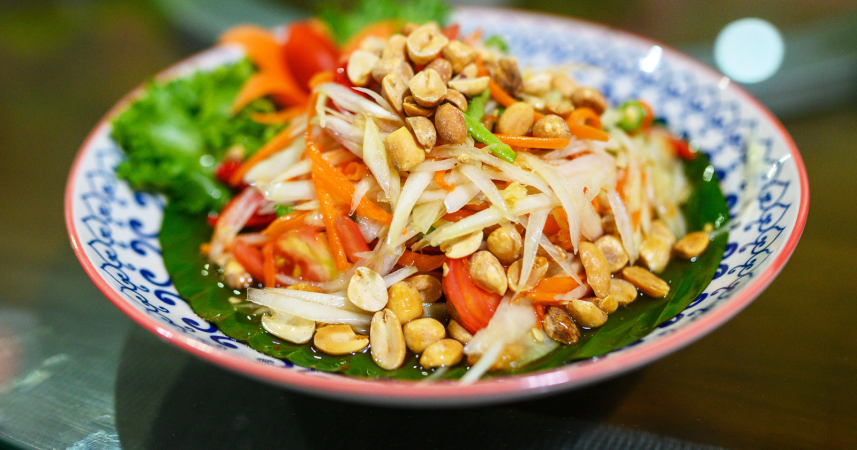
12. Som tam (Thai green papaya salad)
Spicy, sour, salty, sweet—in one bite.
If you crave som tam (I go Thai hot but I’ve learned to respect my tomorrow), your tongue enjoys tension and release. Lime juice snaps, fish sauce (or vegan soy-lime) grounds, palm sugar rounds, chilies ring the alarm, and shredded green papaya keeps it all crunchy and fresh.
Refined palates don’t just tolerate contrast; they seek it. Som tam is a clinic on how opposites make each other taste bigger.
What enjoying these dishes says about you (beyond “you’re fancy”)
-
You tolerate ambiguity. Funk, sour, and bitter are blurry at first. Sticking with them means you’re okay with flavors that don’t introduce themselves right away.
-
You’ve trained attention. You’re not just asking “do I like it?” You’re asking why—how acid lifts, how fat softens, how heat lingers.
-
You reward patience. Many of these dishes bloom on bite two or after a short rest. That wait is where nuance shows up.
-
You value balance over shock. Refinement isn’t maximalism; it’s harmony. You’re listening for chords, not just volume.
How to keep refining your palate (without turning into a snob)
-
Contrast tastes on purpose. Eat two versions of the same thing (two dark chocolates, two kimchis). Name three differences. Not right/wrong—just different.
-
Change one variable. Make mapo tofu twice: once with standard chili oil, once with a toasted-peppercorn oil. Notice how aroma changes heat.
-
Repeat favorites seasonally. Bitter greens in spring vs. fall, som tam in hot weather vs. cold. Context teaches.
-
Pair textures. Crunch beside silk (artichoke + aioli, tofu + pickled veg). Mouthfeel is flavor’s sidekick.
-
Be generous. Offer tastes without “you probably won’t like this.” Gatekeeping is the opposite of refined.
A tiny tasting ritual you can steal
Pick one “advanced” flavor this week (bitter, sour, funky, spicy).
Build a mini plate with three tiny bites that express it—say, radicchio with lemon, olives, and dark chocolate; or kimchi, pickled cucumber, and a miso-glazed mushroom. Take small bites, breathe out through your nose, and say out loud what you notice. You’ll feel silly for twelve seconds. Then you’ll taste more.
I once ran a “five-minute tasting” before a casual dinner—two dark chocolates, a spoon of kimchi, and a tiny espresso.
A friend who swore they “hated bitter” ended up describing one chocolate as “raisin-ish and friendly” and the other as “stern, like a librarian.”
We laughed, but later they texted a photo of radicchio in their cart. Palates grow when language does.
Final thoughts
You don’t need a sommelier course to have a refined palate. You need curiosity, a little courage, and a willingness to let flavors be complicated.
If you love even one or two of these dishes, congratulations—you’re already past “sweet and safe.” Keep going. Taste slower.
Invite contrast. Balance your plate the way you balance your life: a little heat, a little sour, something crunchy, something deep, and room for surprise.
That’s not pretentious; that’s pleasure with context. And once your tongue learns to look for context, everything tastes more alive.
What’s Your Plant-Powered Archetype?
Ever wonder what your everyday habits say about your deeper purpose—and how they ripple out to impact the planet?
This 90-second quiz reveals the plant-powered role you’re here to play, and the tiny shift that makes it even more powerful.
12 fun questions. Instant results. Surprisingly accurate.