Trying too hard to look high-end is the culinary version of buying a luxury logo tee.
We’ve all been there. You go to a dinner party or scroll through Instagram and see someone posting a “fancy” meal that’s… not quite as elevated as they think.
It’s not that the food is bad, it’s just trying a little too hard.
And that’s what this post is about: foods that parade as high-class but secretly tell a different story. These are the edible equivalents of buying a BMW on a multi-year loan, all flash with little substance.
Let’s dive into the nine biggest culprits.
1. Shrimp cocktail
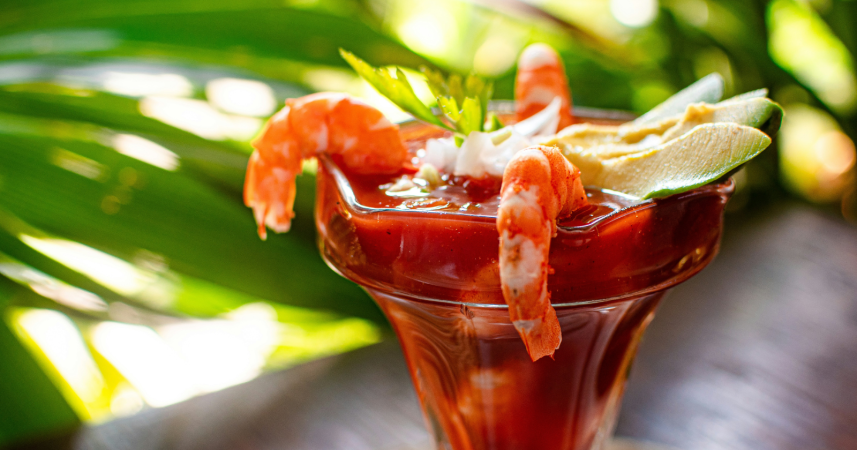
There was a time when shrimp cocktail was the height of sophistication. Today it is nostalgia wrapped in faux luxury.
That glass of shrimp, perched dramatically over a pool of store-bought cocktail sauce, looks like it came straight out of a 1980s cruise ship buffet. And yes, people still break it out for “classy” dinners.
Truth is, it is not elegant anymore. It is predictable. Once you realize it is just cold shrimp and ketchup with horseradish, the illusion starts to collapse.
2. Truffle oil anything
Truffle oil used to be a chef’s secret weapon. Now it is what restaurants use to make you think something is gourmet.
Real truffles are rare and earthy. Truffle oil is synthetic perfume for your fries. Most commercial truffle oils are flavored with 2,4-dithiapentane, a lab-made compound that smells “truffly” but tastes artificial.
If you have ever had a dish “elevated” by truffle oil, you have probably tasted pretension, not truffles.
3. Lobster mac and cheese
This one always cracks me up. Lobster signals luxury. Mac and cheese signals comfort. Put them together and you get culinary confusion.
The idea sounds indulgent, but it rarely delivers. The lobster gets lost in the gooey cheese, and suddenly you are paying $40 for something that tastes like an upgraded TV dinner.
As food writer Anthony Bourdain once said, “Good food is very often, even most often, simple food.” Lobster mac does the opposite. It adds complexity mostly to show off.
4. Charcuterie boards that look like art projects
I love a good cheese board. Somewhere along the way, though, we lost the plot.
What used to be a simple spread, a few cheeses, some olives, a bit of prosciutto, turned into a full-blown Pinterest contest. Now there are grapes dusted in gold, honey drizzles shaped like hearts, and meats folded into rose petals.
If your board takes three hours and a ring light to assemble, it is not rustic elegance. It is performance art. Ironically, all that effort often screams insecurity more than style.
5. Filet mignon (especially well-done)
Let’s be honest. Filet mignon became “the” steak because it was tender, not because it had flavor.
A true steak lover knows that ribeye or strip has more character. Filet mignon is what people order when they want to sound fancy but do not actually like the taste of steak.
And if you are ordering it well-done, that is the culinary equivalent of buying a Ferrari and then driving in the slow lane.
6. Cupcakes with elaborate frosting
There was a cupcake era, and you probably remember it. Around 2010, every city suddenly had a “boutique” cupcake shop charging $6 for what was basically a sugar bomb.
The oversized swirls of buttercream, the glitter, the edible pearls, all of it was supposed to say “luxury.” The trend aged fast.
Today, cupcakes feel like that friend who still uses hashtags like #blessed without irony. Cute, maybe. Classy, not really.
7. Anything labeled “artisan” from a chain store
“Artisan” has become one of those words that lost all meaning.
When Subway rolled out “Artisan Italian Bread,” the joke wrote itself. Artisan used to mean hand-crafted, small-batch, made with care. Now it often means a dusting of flour on the crust and a slightly nicer font on the label.
As author Michael Pollan has pointed out, the industrial food system has mastered the art of “healthwashing,” which means slapping words like “artisan,” “natural,” or “craft” on products to make them seem premium.
If it comes in bulk or from a drive-thru, it is not artisan. It is marketing.
8. Sparkling wine that’s “almost champagne”
Champagne has rules. Real ones. It must come from the Champagne region of France and be made under specific conditions. Everything else is simply sparkling wine.
That does not stop people from calling every bubbly “champagne.” Especially when it is something like André or Cook’s.
There is no shame in enjoying affordable wine. I drink plenty of it. Pretending it is something it is not is where it slips into lower-middle-class cosplay.
If you want real sophistication, own what you are drinking. Confidence reads classier than pretense.
9. “Deconstructed” desserts
This trend refuses to die.
You know the kind. A dessert arrives looking like an explosion on the plate. There is a smear of chocolate here, a crumble of crust there, and a scoop of ice cream floating beside a mystery foam.
It aims for avant-garde. Most of the time it just looks like someone dropped your dessert and then charged extra for the mess.
Fine dining does not need to be confusing. A deconstructed dessert often misses this point.
The bottom line
None of these foods are bad. I have eaten and enjoyed most of them. The problem is not the food. The problem is the pretending.
Trying too hard to look high-end is the culinary version of buying a luxury logo tee. It is a way of saying, “See, I belong.” True sophistication does not need to prove anything.
If you want to eat fancy, focus less on appearances and more on authenticity. Learn where your food comes from. Appreciate simplicity. Cook with care.
Nothing says “upper class” quite like not caring whether people think you are.
If You Were a Healing Herb, Which Would You Be?
Each herb holds a unique kind of magic — soothing, awakening, grounding, or clarifying.
This 9-question quiz reveals the healing plant that mirrors your energy right now and what it says about your natural rhythm.
✨ Instant results. Deeply insightful.