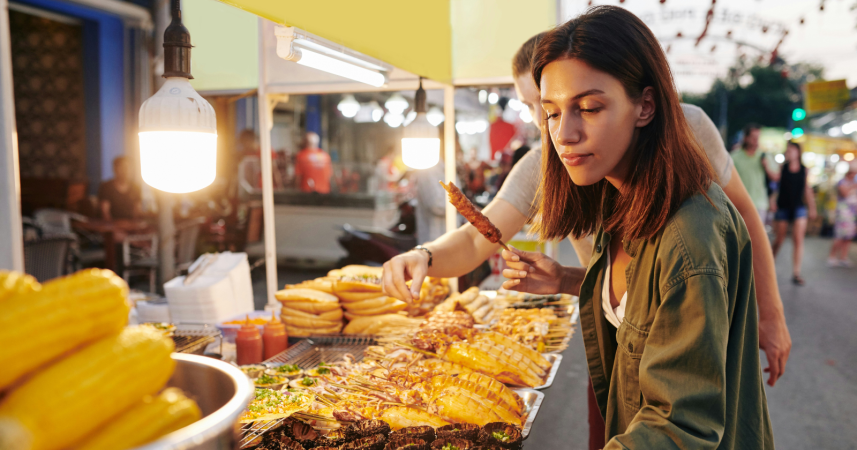
Growing up in Central Asia, then living in Malaysia, and now raising my daughter in São Paulo has exposed me to cuisines that would make my younger self question everything.

Add VegOut to your Google News feed. 
I used to think I was adventurous with food until I moved to Brazil and realized how limited my palate actually was. Growing up in Central Asia, then living in Malaysia, and now raising my daughter in São Paulo has exposed me to cuisines that would make my younger self question everything.
Last month, my husband Matias and I had one of our weekly date nights at a new restaurant in Pinheiros. The waiter brought out a dish that looked like something from a nature documentary, and I watched Matias dig in without hesitation while I sat there wondering if this was really happening. That moment made me think about all the foods I've tried over the years that fall way outside the comfort zone of chicken and rice.
Here are seven unusual foods that require a certain kind of courage to try. If you've tackled even a few of these, you're doing better than most.
1. Fermented shark
This Icelandic delicacy is called hákarl, and it's exactly what it sounds like. Greenland shark meat is fermented and hung to dry for months. The smell alone is enough to make most people turn around and walk away.
I tried it during a work trip to Reykjavik a few years ago. The locals warned me that it tastes like ammonia mixed with fish, which turned out to be accurate. You're supposed to chase it with a shot of brennivín, their local spirit, to help wash it down.
The texture is chewy and the flavor lingers in a way you don't forget. Most tourists take one bite for the photo and leave the rest on the plate. I managed three pieces before calling it quits.
2. Live octopus
Sannakji is a Korean dish where small octopus pieces are served while still moving. The tentacles are cut up, seasoned with sesame oil, and brought to your table while they're still wriggling on the plate.
The challenge isn't just psychological. Those suction cups are still active and can stick to your mouth and throat if you're not careful. You need to chew thoroughly, which feels strange when the food is actively trying to hold on.
I watched a friend attempt this in Seoul and she nearly choked because she didn't chew enough. The waiter had to step in with water and instructions.
It's not something I rushed to try myself, but I respect anyone who goes for it.
3. Balut
This one comes up a lot when people talk about adventurous eating. Balut is a fertilized duck egg that's boiled and eaten from the shell. Inside, you'll find a partially developed embryo, complete with feathers and bones.
It's popular in the Philippines and other parts of Southeast Asia. When I lived in Malaysia, my neighbors would eat balut as a snack with beer. They'd crack open the top, sip the liquid first, then eat the rest with a bit of salt and vinegar.
The texture is the hardest part. It's soft and crunchy at the same time, depending on which part you're biting into. Some people love it for the protein and consider it a delicacy. Others can't get past the visual.
I tried it once. The taste wasn't terrible, but knowing what I was eating made it hard to go back for seconds.
4. Casu martzu
This Sardinian cheese takes fermentation to another level. It's made from sheep's milk and contains live insect larvae that help break down the fats. Yes, you read that right. There are actual maggots in the cheese, and they're supposed to be there.
The larvae can jump up to six inches when disturbed, so some people cover the cheese while eating to prevent any unwelcome surprises. The flavor is described as intense and tangy, way beyond your typical aged cheese.
Casu martzu is actually illegal in many places because of health regulations, but it's still made and eaten in certain parts of Sardinia. Finding it requires local connections and a willingness to ignore food safety warnings.
I haven't tried this one, and I'm comfortable admitting that. Some boundaries exist for a reason.
5. Fried tarantulas
In Cambodia, fried spiders are sold as street food. They're usually tarantulas, seasoned with garlic and salt, then deep fried until crispy. The legs crunch like chips, and the body has a softer texture inside.
This practice started during the Khmer Rouge regime when food was scarce and people ate whatever they could find. Now it's become a regional specialty and a tourist attraction.
I met a traveler in São Paulo who tried these during a trip to Siem Reap. She said the legs were fine, almost like eating a crunchy snack, but the abdomen had a paste-like consistency that she wasn't prepared for. She finished one spider and decided that was enough proof of bravery for the trip.
6. Fugu
Fugu is pufferfish, and it's notorious because parts of it contain tetrodotoxin, a poison that can kill you if the fish isn't prepared correctly. Only licensed chefs in Japan are allowed to serve it after years of training.
The fish itself has a mild, delicate flavor and a texture that's slightly chewy. People don't eat it for the taste alone. They eat it for the experience and the tiny thrill of danger.
I'm not someone who plays with food safety, so fugu isn't on my list. But I understand why it appeals to people who want that edge of risk with their dinner.
7. Escamoles
Known as "insect caviar," escamoles are ant larvae harvested from the roots of agave plants in Mexico. They have a buttery, slightly nutty flavor and a texture similar to cottage cheese.
They're often sautéed with butter and spices, then served in tacos or with tortillas. Escamoles are considered a delicacy and can be quite expensive because harvesting them is labor-intensive and seasonal.
When I learned about this, I was surprised by how normal it sounded compared to some other items on this list. Several of my vegan and vegetarian friends in São Paulo are curious about ethical insect protein, and escamoles come up in those conversations.
The idea of eating larvae still takes getting used to, but the preparation and presentation make it more approachable than you'd think.
Final thoughts
Trying unusual foods isn't about proving how tough you are. It's about curiosity and respect for different cultures and their food traditions.
Some of these dishes have deep historical roots. Others are simply what people had available and learned to prepare well. When you try something outside your comfort zone, you're participating in that story, even if just for a moment.
I'm not saying you need to seek out every strange food you hear about. But if the opportunity comes up and you're in a safe environment with people who know what they're doing, why not give it a shot? The worst that happens is you don't like it and you have a good story to tell later.
Food is one of the most personal ways to connect with a place and its people. Sometimes that connection involves things that wiggle, smell strange, or make you question your life choices. And that's part of what makes it memorable.
What’s Your Plant-Powered Archetype?
Ever wonder what your everyday habits say about your deeper purpose—and how they ripple out to impact the planet?
This 90-second quiz reveals the plant-powered role you’re here to play, and the tiny shift that makes it even more powerful.
12 fun questions. Instant results. Surprisingly accurate.