I went hunting for budget-friendly frozen dinners; most were forgettable, but one punched way above its price tag.

Add VegOut to your Google News feed. 
I’m a big believer that our everyday choices are a lab for self-knowledge.
Food is one of the best labs. It’s emotional, practical, and full of tiny trade-offs that add up.
So I ran a simple, low-stakes experiment at Trader Joe’s: four cheap frozen meals, tested over one week with the same rules for each. Two landed squarely in the “mid” zone, one was a hard pass, and one was shockingly good.
Here’s what I tried, how I scored them, and—more importantly—what the tasting taught me about decision-making, expectations, and getting better at choosing the things that actually make our days easier.
The simple rules I used
I kept this experiment tight and repeatable.
Each meal faced the same conditions: cooked as instructed on the box, no “chef hacks,” and eaten as a full weeknight dinner with water or tea—no sides, no dessert, no distractions.
I rated each dish on five things:
-
Flavor-to-effort ratio. How much happiness per minute in the kitchen?
-
Texture. Because frozen can fool your tongue if you let it.
-
Satiety. Did I feel satisfied two hours later?
-
Cost sanity. Not “is it the cheapest?” but “does the price feel fair for the experience?”
-
Repeat buy. Would I reach for it again when I’m tired and tempted?
This wasn’t a food critic vibe. It was a Tuesday-night human test.
The two that were mid
Mid isn’t bad. Mid is “fine.” Mid is the friend you’re happy to see but rarely text first.
Cauliflower Gnocchi
This is the frozen legend people debate like it’s a sports team. Prepared straight from the bag as directed, it’s light, slightly chewy, and… neutral. That’s both the feature and the bug.
Texture-wise, it’s better than expected, not as good as a skillet-scorched version. Flavor-wise, it’s a blank canvas. On a busy night, that neutrality can feel like a kindness (you can top it with literally anything), but it also means the meal itself doesn’t carry the moment. Satiety was modest; I wanted a protein or a sauce with heft.
Verdict: mid. Respectable. If I’ve got pesto or a can of chickpeas nearby, I’m in. If not, it’s a shrug in a bowl.
Vegan Meatless Meat Eater’s Pizza
Name aside, this is a clear value play. The crust gets nicely crisp, the plant-based pepperoni and sausage give you that familiar salty punch, and the cheese does an adequate melt.
But the flavor bandwidth is narrow. Every bite hits the same chord—salty, smoky, a little sweet from the sauce—without the brightness or contrast you need to keep it interesting. Two slices in, the sameness caught up with me. That said, it satisfies an “I need pizza now” craving for not much cash or effort.
Verdict: also mid. Reliable in a pinch, not something I get excited to keep in the rotation.
The one that was shockingly good
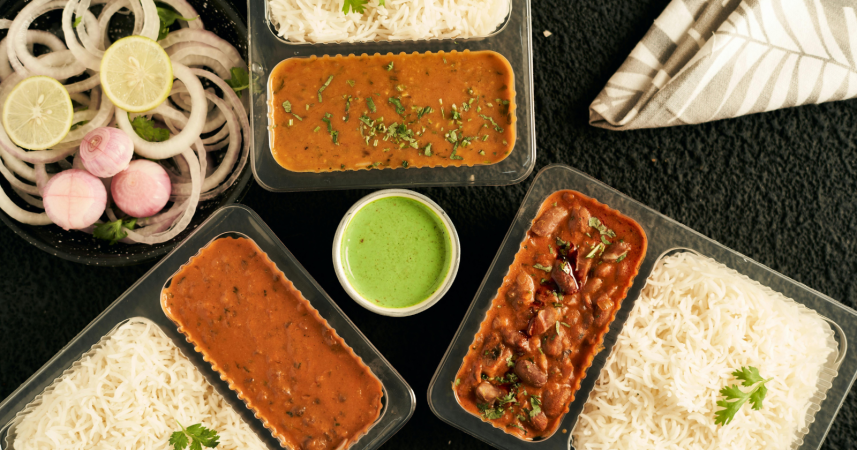
Channa Masala
This one made me stop scrolling and pay attention.
The spice balance is confident but not aggressive, the chickpeas hold their bite, and the gravy tastes like it actually simmered instead of being rushed. It’s deeply savory, warm with cumin and coriander, with just enough chili to keep you engaged. Most important: it eats like a complete dish. I didn’t miss anything.
The satiety test was where it surprised me the most. Two hours later, I still felt steady. No snacky restlessness. That’s rare for frozen meals and a big deal for weeknights when your brain wants to do anything except cook.
Verdict: shockingly good. I’d serve this to a friend with a bowl of rice and feel zero apology about it. It cleared the bar of “good for frozen” and landed in “good, period.”
The one I wouldn’t buy again
Vegan Tikka Masala
I wanted to love it. The aroma out of the microwave whispered “comfort.” But the sauce leaned too sweet for my taste, the texture bordered on soupy, and the overall profile felt flattened—like someone turned the treble down on the spices.
It’s not terrible. It’s just the kind of meal that reminds you you’re eating a compromise. And in the frozen aisle, compromises are fine… until you meet a dish like the Channa Masala that proves you don’t always have to make them.
Verdict: pass. If I want this flavor zone on a Tuesday, I’ll grab the Channa instead or batch-cook a quick lentil dal on the weekend and freeze portions.
What this taught me about choices (not just food)
Here’s where the frozen aisle turns into a mirror.
Expectation management matters. If I walk in believing “frozen equals mediocre,” I’ll taste confirmation. If I walk in curious, I’m more accurate. When I slowed down and named what I expected before each meal, I noticed the bias in real time. The moment I wrote, “This pizza will be salty and samey,” I stopped punishing it for being exactly that and simply rated whether it still earned a spot for speed and price.
Satisfaction lives in contrast. In food and in life, sameness dulls joy. The pizza was fine, but it lacked contrast—acid, heat, something green. I’ve mentioned this before, but the same principle shows up in habits: if every day hits the same notes, motivation slides. Add a little contrast and your brain wakes up.
“Good enough” is a powerful category. The two mid meals weren’t wastes—they were tools. They showed me where the minimum viable dinner lives for me: tasty enough, zero brainpower, 12–15 minutes start to finish. That’s valuable. “Good enough” clears space for the workouts, the reading, the call with a friend.
One clear winner beats five maybes. I’d rather keep one frozen star I’m genuinely excited about than clutter the freezer with a crowd of maybes. Less choice means faster decisions. Faster decisions mean fewer excuses.
How to run your own frozen-meal experiment
You don’t need a spreadsheet (though I won’t judge if you make one). Just set three or four rules and treat it like a mini project.
-
Pick a purpose. Is this about speed, price, nutrition, or “I need something comforting after late meetings”? Make the purpose explicit so you don’t judge a soup for not being a salad.
-
Fix the variables. Same cooking method. Same time of day. Same add-ons or none at all. You want a fair read on the product.
-
Score quickly. Right after you eat, jot down three bullet points: best thing, worst thing, how you felt two hours later. That “two-hour check-in” will change how you shop.
-
Decide on one keeper. Don’t build a museum. Choose one repeat buy per category (stew, pasta, bowl, pizza) and move on.
Optional bonus: photograph the box in your notes app and tag it “keeper” or “mid.” You’ll thank yourself on your next grocery run.
My rankings, from Tuesday-night brain to yours
Here’s how my week shook out:
-
Channa Masala — Shockingly good. Balanced spice, satisfying, tastes like real cooking snuck into the microwave. Immediate re-buy.
-
Cauliflower Gnocchi — Mid with potential. A blank canvas that needs a partner. If I’ve got pesto or a garlicky white bean mash, it earns its keep.
-
Vegan Meatless Meat Eater’s Pizza — Mid, utility player. Salty, samey, and fast. I won’t crave it, but I’ll keep one for emergencies.
-
Vegan Tikka Masala — Pass. Too sweet, too flat. It reminded me that “almost” is still a no.
The takeaway I’ll actually use
Food decisions aren’t trivial. They’re practice reps for bigger choices.
The lesson I’m carrying forward: design the decision before you decide. Define the job a food has to do, run a tiny experiment, keep the winner, and release the rest without drama.
When you do this over and over—whether it’s in your freezer, your calendar, or your workouts—you start building a life that tastes better, costs less (in money and in mental clutter), and quietly supports the person you want to be.
And that, more than any single meal, is the point.