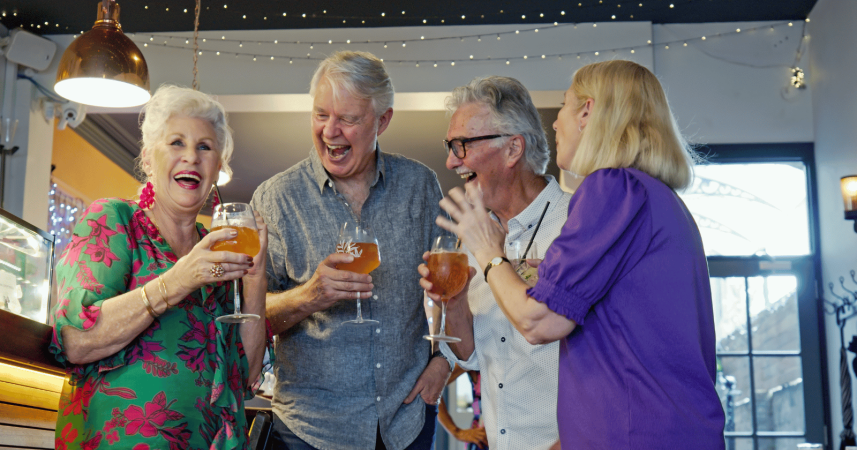
Your wardrobe communicates your expectations before you even sit down, and restaurant staff are reading those signals the moment you walk through the door.
Ever notice how some people walk into a restaurant and immediately get the best table, attentive service, and genuine warmth from the staff, while others seem to get shuffled to the corner and forgotten?
It's not random.
During my years working in fine dining and luxury hospitality, I watched this play out thousands of times. The moment someone walked through the door, the entire staff made instant assessments that influenced everything from seating assignments to service quality.
And clothing was one of the biggest tells.
I'm not talking about expensive clothes versus cheap ones. Some of our best-dressed guests wore simple outfits that cost less than what others paid for a single logo-covered polo. It wasn't about price tags. It was about awareness of context and contemporary norms.
Here's what I noticed: certain wardrobe choices, particularly common among Baby Boomers, immediately signal to restaurant staff that you're disconnected from modern dining culture. Fair or not, that perception shapes your entire experience.
Let's talk about what those choices are and why they matter.
1) Oversized logo gear and branded merchandise
Walk into any upscale restaurant and you'll spot them immediately: the folks wearing shirts plastered with enormous brand logos, resort names, or cruise line merchandise.
I saw this constantly during my fine-dining years. Someone would walk in wearing a shirt with "CARIBBEAN CRUISE 2019" sprawled across the chest or a polo with a logo so large it looked like a billboard.
Here's the thing: in contemporary dining culture, especially at higher-end establishments, loud branding reads as out of touch. It signals you're not familiar with the unspoken dress codes that exist in these spaces.
The staff won't refuse you service, obviously. But there's a subtle shift in how you're perceived and, consequently, treated. You might get seated near the kitchen or bathroom. Your server might not mention the off-menu specials. Small things that add up to a different experience.
Modern restaurant culture favors understated elegance. Think plain fabrics, minimal branding, clothes that let you be the focal point rather than your wardrobe shouting for attention.
2) Athletic sneakers with dress clothes
I get it. Comfort matters, especially as you get older.
But pairing white athletic sneakers with dress pants and a button-up shirt creates a jarring visual disconnect that immediately dates you.
This combination was everywhere in the 90s and early 2000s. Now it's a telltale sign you haven't updated your style in decades.
The issue isn't the sneakers themselves. Plenty of fashionable people wear sneakers to nice restaurants. The difference is they're wearing sleek, minimal sneakers designed to look polished. Think leather or suede in neutral colors, not chunky running shoes with neon accents.
When I managed service teams, we were trained to read guests the moment they walked in. Athletic sneakers with dress clothes signaled "doesn't eat out at nice places often" which, fair or not, influenced everything from where you were seated to how attentively you were served.
Want comfort without sacrificing style? Invest in leather loafers, Chelsea boots, or minimal leather sneakers. Your feet will thank you, and so will your experience.
3) Vacation-themed clothing and tropical prints
Hawaiian shirts. Loud floral prints. Anything that screams "I'm on vacation even though I'm in my hometown."
This is such a common pattern that servers have a name for it: "permanent vacation mode."
During my years in luxury hospitality, I served plenty of ultra-wealthy clients. You know what they never wore? Loud tropical prints to dinner. The truly sophisticated understand that restaurant dining, even casual dining, has context. You dress for where you are, not where you wish you were.
Vacation clothing belongs on vacation. When you wear it in your local restaurant scene, it broadcasts a lack of awareness about social settings.
The modern approach is context-appropriate dressing. Casual restaurants get casual clothes, but even casual has evolved. Clean lines, solid colors, and well-fitting basics will always serve you better than looking like you're dressed for a luau.
I'm not saying you need to wear a suit. Just that there's a middle ground between formal and looking like you raided a gift shop.
4) Ill-fitting clothing from another era
Baggy pleated khakis. Oversized polo shirts. Jeans that sit way too high or way too low.
Fashion changes, and that's fine. The problem isn't wearing older styles; it's wearing clothes that don't fit properly because sizing standards have evolved.
I remember a regular guest at one of my restaurants who always wore the same style of pants he'd been wearing since 1985. They were clean, pressed, and expensive when he bought them. But the cut was so dated that he looked like he'd time-traveled from another decade.
Modern clothing fits differently. Pants are slimmer. Shirts are more tailored. Even casual wear has a more structured silhouette now.
You don't need to follow every trend, but wearing clothes that actually fit your current body in a contemporary cut makes an enormous difference in how you're perceived.
When I moved back from Thailand, I had to completely rebuild my wardrobe. Everything I'd left behind looked wrong. Not because it was bad quality, but because the proportions had changed. Updating wasn't about being trendy; it was about looking current and put-together.
5) Fanny packs and outdated accessories
Look, I understand the utility of a fanny pack. You need somewhere to put your stuff.
But wearing one to a restaurant, especially a nice restaurant, is like announcing you're a tourist in modern dining culture.
The thing about accessories is they're highly visible signals of how connected you are to current norms. Fanny packs had a brief ironic comeback among younger crowds a few years ago, but even that trend has passed.
What reads as particularly out of touch is wearing functional travel gear in non-travel settings. The same goes for those neck wallets, cargo vests, or phone holsters clipped to your belt.
I once watched a couple get bumped from their reserved table because "something came up" with the reservation system. The reality? The host saw an opportunity to reseat them somewhere less visible after they walked in wearing matching fanny packs and cargo shorts. Was it fair? No. Did it happen? Absolutely.
Modern alternatives exist that serve the same purpose. A small leather crossbody bag. A slim wallet. A lightweight jacket with pockets. All functional, none screaming "I haven't updated my style since 1997."
6) Visors and baseball caps indoors
This one's particularly interesting because it's both a style issue and an etiquette issue.
Wearing hats indoors, especially at the table, used to be considered universally rude. That's softened somewhat in casual settings. But baseball caps and visors still carry a specific connotation in restaurant settings: you're not taking the experience seriously.
During my hospitality years, we had regulars who would wear caps to casual lunch spots. Fine. But they'd remove them for dinner, even at the same restaurant. They understood context.
The problem with keeping a cap on throughout your meal is it signals you view the restaurant as purely functional. Somewhere to refuel, not an experience to enjoy. Restaurant staff pick up on this immediately.
I'm not saying you need to treat every meal like a formal occasion. But there's something to be said for acknowledging the space you're in and the people serving you by making a small effort.
When I host dinner parties now, I notice who takes off their hat and who doesn't. The ones who do are usually the ones who understand dining as a social ritual, not just consumption.
Finally, here's the big one that ties everything else together.
7) Treating restaurants like casual obligations rather than experiences
The wardrobe choices matter, but they're symptoms of a larger disconnect: viewing restaurants purely as places to eat rather than social and cultural spaces.
I've noticed this pattern constantly. The guests who dressed like they were running errands were also the ones who complained the most, enjoyed the experience the least, and got the poorest service.
Not because servers were being snobby, but because your presentation communicates your expectations. When you dress like you don't care about the experience, the staff assumes you don't care about the experience.
This philosophy shift has been huge for me personally. After returning from Thailand, where meals were treated as community rituals, I couldn't go back to viewing restaurants as mere fuel stops. The way I dressed reflected that shift. Simple clothes, but intentional. Present, not distracted.
I've been reading Rudá Iandê's "Laughing in the Face of Chaos: A Politically Incorrect Shamanic Guide for Modern Life" recently, and one insight really landed: "When we let go of the need to be perfect, we free ourselves to live fully—embracing the mess, complexity, and richness of a life that's delightfully real."
That applies here. You don't need perfect style or expensive clothes. But showing up with intention, with presence, with recognition that dining out is about more than just eating, that changes everything.
The book pushed me to examine where I was just going through motions versus actually engaging with experiences. Restaurant dining is one of those areas where a small shift in approach dramatically improves the outcome.
Moving forward
None of this is about judging anyone or suggesting you need a complete wardrobe overhaul.
It's about awareness. Understanding that restaurants, especially nicer ones, have evolved cultures with unspoken expectations. You don't have to follow every rule, but knowing they exist helps you make informed choices about how you want to show up.
The clothes you wear communicate volumes before you say a word. They tell restaurant staff how familiar you are with dining culture, how seriously you take the experience, and what level of service you expect.
Want better treatment? Start by treating the space, the staff, and the experience with a bit more intention. That begins with how you present yourself.
Your wardrobe doesn't need to be expensive. It just needs to be current, well-fitting, and appropriate for the setting. Those three things will transform how you're perceived and, consequently, how you're treated.
Trust me, after a decade in fine dining and countless nights observing how this plays out, the difference is remarkable.
If You Were a Healing Herb, Which Would You Be?
Each herb holds a unique kind of magic — soothing, awakening, grounding, or clarifying.
This 9-question quiz reveals the healing plant that mirrors your energy right now and what it says about your natural rhythm.
✨ Instant results. Deeply insightful.