Your makeup bag could be hiding the reason you look more tired than you feel.

Add VegOut to your Google News feed. 
We all want to look like the best version of ourselves, no matter our age. Makeup should help us feel fresh, confident, and vibrant—not weighed down or washed out. But here’s the thing: some of the habits that worked beautifully in our thirties or forties don’t always do us justice after sixty.
In fact, a few common slip-ups can unintentionally add years instead of softening them. The good news? They’re all easy fixes once you know what to look for.
I’ve pulled together the most common culprits I see women over 60 making with their makeup, along with practical tweaks that make a world of difference.
Let’s dive in.
1. Using a heavy foundation
Have you ever noticed how a thick layer of foundation can actually highlight lines instead of hiding them?
The instinct is understandable—you want coverage. But heavy foundation often settles into fine lines and draws attention to the very things you’d like to minimize.
The solution isn’t to ditch coverage altogether—it’s to shift formulas. Think sheer foundations, tinted moisturizers, or BB creams that hydrate and even out tone without masking skin. Adding a drop of facial oil to your base can also create a softer finish.
As makeup artist Bobbi Brown has said, “Skin should look like skin—not makeup.” That means letting your natural texture shine through, freckles included. At this stage in life, less really is more.
And here’s the psychological layer: when you stop hiding behind heavy products, you often feel more comfortable in your own skin—literally and emotionally. Confidence, after all, is more flattering than any full-coverage foundation.
2. Ignoring the importance of primer
Primer isn’t just for Instagram beauty influencers. It creates a smoother surface, helps makeup last longer, and keeps foundation from sinking into lines.
Skipping it can make skin look uneven, especially if it’s a little drier than it used to be. A good hydrating primer can act almost like a blur filter—softening edges and creating a radiant base.
I think of primer as the difference between painting directly on rough drywall versus a smooth, prepped surface. The finished result may technically use the same colors, but one looks professional while the other looks unfinished.
Dermatologist Dr. Shereene Idriss has noted, “The right primer can serve as skincare and makeup in one—locking in hydration while giving your products more staying power.” A smart, simple step that pays off all day long.
3. Applying powder everywhere
Powder has its place. It can set makeup and reduce shine—but when it’s applied all over the face, it tends to settle in creases and create a flat, dull look.
I learned this firsthand at a family wedding. A well-meaning relative used heavy powder to “set” her look, but by the end of the night, it clung to every smile line. She looked older and more tired than she actually was.
The fix? Use powder strategically—just in the T-zone or areas that truly need it. And opt for a finely milled, translucent version rather than a heavy, matte one. If your skin leans dry, you may not need powder at all—setting spray can do the trick without the chalky finish.
The bonus? Embracing a little natural radiance makes you look more alive. A touch of glow suggests health and vitality—two qualities our brains instinctively read as youthful.
4. Skipping brow definition
Our brows naturally thin as we age. The problem? Sparse or faded brows can make the face appear less structured, which in turn adds years.
Shaping and lightly filling in brows can completely transform the face—lifting the eye area and restoring balance. The trick is to keep it soft. Avoid harsh, blocky lines and instead use a pencil or powder in a shade close to your natural hair color.
As one esthetician told me years ago, “Brows are the frame of the face. Without a frame, the picture looks unfinished.” She wasn’t wrong.
I once worked with a friend who swore off makeup but agreed to let me fill in her brows one afternoon. She looked in the mirror and said, “I don’t know what just happened, but I suddenly look awake.” That’s the power of brows—they frame not just the face but your expression.
5. Overdoing dark eyeliner
Do you remember when a sharp black line across the upper lid was the go-to look? It can still be striking—but on mature eyes, it often looks harsh and can even make eyes appear smaller.
A softer alternative is using dark brown, gray, or even plum liner. Smudging it slightly also keeps the look modern and flattering. And don’t forget the lower lash line—skipping heavy liner there prevents the dreaded raccoon effect, which almost always adds age.
Another tip: tightlining (lining just the upper waterline close to the lashes) gives definition without the heavy look of a thick line. It’s subtle, elegant, and makes lashes appear fuller.
Psychologists who study facial perception note that eyes are one of the first features people notice when determining someone’s age. A harsh liner might actually “close” the eyes, while a softer approach opens them up and communicates vitality.
6. Sticking with the same old lipstick shades
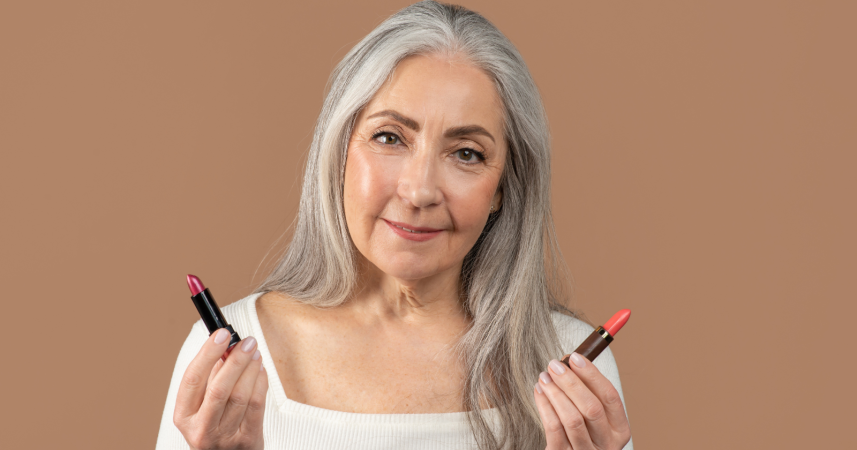
Here’s the truth: the lip colors that worked in your 30s don’t always translate decades later. Very dark or overly matte shades can make lips look thinner and draw attention to fine lines around the mouth.
Hydrating formulas in warmer pinks, corals, or berry tones tend to brighten the whole face. A little gloss or satin finish adds dimension too. Even a sheer lip balm with a hint of color can be incredibly flattering.
One study in Perception & Motor Skills found that lip color significantly affects the perceived lightness of facial skin—lip shades can make skin appear brighter or duller depending on the hue, saturation, and gloss. So yes, the right shade really can make you look instantly fresher.
I like to think of lip color as a mood enhancer. Some mornings, I’ll swipe on a rosy tint even if I’m just running errands—and it shifts how I feel about the day. Makeup isn’t just cosmetic; it’s psychological. The right color can lift both your look and your spirit.
7. Neglecting blush placement
Blush is one of the fastest ways to bring life back to the face. But placement matters. Putting blush too low on the cheeks can drag the face down, which is the opposite of what we want.
Instead, aim a little higher—on the apples of the cheeks and sweeping upward toward the temples. Cream blushes are particularly flattering, giving a natural, dewy finish instead of a powdery one.
I once swapped my powder blush for a cream version on a whim, and a friend immediately asked if I’d just come back from vacation. That’s how powerful blush placement and formula can be.
The psychology behind it? A touch of healthy flush signals energy and vitality. Just as pale, sallow skin can make us appear tired, a subtle glow reads as active and engaged with life.
8. Forgetting to update techniques
Perhaps the biggest mistake of all is sticking to the same makeup techniques we learned decades ago. Styles evolve, and so does skin. What worked in 1985—or even 2005—may not be serving you now.
Take eyeshadow, for instance. Frosty shades that were once trendy can now emphasize creases, while softer matte or satin shadows do the opposite. Or consider contouring—heavy stripes might look dated, but subtle bronzing can still shape the face beautifully.
Makeup is like fashion: updating it every so often keeps it current, fresh, and aligned with who you are today. It doesn’t mean chasing every TikTok trend—it means staying open to small adjustments that help you look and feel your best.
As author and aging researcher Ashton Applewhite has said, “Aging is not lost youth but a new stage of opportunity and strength.” Updating how we present ourselves is part of embracing that new stage.
Final thoughts
The real goal of makeup at any age isn’t to look younger—it’s to look like you at your best. These small shifts aren’t about chasing youth; they’re about enhancing your natural beauty and stepping into the confidence you’ve earned.
So next time you sit down at your vanity, ask yourself: Is this routine highlighting my features—or working against them? With a few tweaks, your makeup can reflect the vibrancy, wisdom, and strength you already carry.
Because here’s the truth: aging isn’t something to hide. It’s something to own—with grace, style, and maybe just a touch of cream blush.