What we wear isn’t just fabric—it carries the quiet lessons of survival, scarcity, and resilience passed down through generations.
Fashion isn’t always about runways or glossy magazines. For many of us, it was about what was affordable, practical, and—most importantly—what our families taught us to value.
I grew up watching these patterns play out in my own home and in the homes of friends. At the time, they just felt like “normal life.” But looking back, I can see how certain habits got passed down without anyone ever putting words to them.
These weren’t intentional “style lessons.” They were survival tactics that turned into family traditions. And whether we realize it or not, they’ve shaped how many of us shop, dress, and even think about clothing today.
Let’s break down some of these subtle fashion habits that lower-middle-class families often carried from one generation to the next.
1. Saving the “good clothes” for special occasions
Did you grow up with a set of “church clothes” or “company clothes”?
Many families had a strict divide: everyday wear versus the good outfit tucked away for weddings, holidays, or a cousin’s graduation. The funny thing is, those “good clothes” often sat in the closet unused, waiting for an event worthy enough to pull them out.
This habit came from practicality. When money was tight, you didn’t risk staining or wearing out the nicer items. The message was clear: nice things are only for others to see, not for you to enjoy on an ordinary Tuesday.
Psychological research on scarcity in social contexts reinforces this. The scarcity principle teaches that when resources feel rare, we place higher value on them and often hold them back from use. Whether it’s special clothing, cherished objects, or reserved experiences, we end up preserving instead of enjoying.
Even now, I sometimes hesitate to wear a new dress, telling myself I’ll “save it.” Old echoes of that mindset. It makes you wonder: how often do we keep our best things hidden away instead of allowing ourselves to feel good right now?
2. Passing down hand-me-downs
If you had older siblings—or cousins just a few years ahead—you probably know this one well.
Hand-me-downs weren’t just convenient; they were survival. A new jacket for one kid meant three kids would wear it before it was retired. Shoes, sweaters, winter coats—they all made the rounds.
For me, there was a certain magic in pulling out the “hand-me-down bag” each season. It felt like shopping, but the choices weren’t really mine. Sometimes I loved what I got; sometimes I hated it. Either way, it shaped how I saw clothes: as something inherited, not necessarily chosen.
The sociologist Juliet Schor explores how consumption patterns vary across class lines. Families balancing on the lower-middle-class spectrum often rely on practicality and share resources, while more affluent households emphasize individuality and newness. These habits don’t just influence fashion—they shape identity and values.
That difference doesn’t just influence fashion—it shapes identity. If you grew up in hand-me-downs, you probably learned to make peace with “good enough.” And you may still find yourself hesitating before splurging on something that feels “too just for me.”
3. Fixing instead of replacing
A missing button wasn’t a reason to toss something out—it was a reason to grab the sewing kit.
I remember my mom keeping a little tin of spare buttons and mismatched threads. Clothes weren’t disposable. A small tear? Patch it. Jeans too long? Hem them. Even socks got darned until the elastic completely gave out.
This repair-first mindset had roots in the Great Depression and wartime rationing, when families were taught to “make do and mend.” That philosophy lingered for decades, especially in households where budgets were tight.
The irony is that today, “visible mending” is trendy. People pay good money to have jeans repaired with colorful stitching or artistic patches. Back then, it wasn’t about creativity. It was about necessity.
Sometimes I catch myself instinctively checking whether something can be fixed before I consider replacing it. And honestly? That old habit probably makes me more sustainable than I realize.
4. Buying bigger sizes for kids
“Don’t worry, you’ll grow into it.”
That phrase echoes across households where every purchase needed to last. Instead of buying the perfect fit, parents bought clothes a size—or two—too big, so they’d still be wearable next year.
The result? Generations of kids with rolled-up sleeves, pants dragging under shoes, and shoes stuffed with extra socks.
I can still picture my school photos where my sweater sleeves were folded back twice. At the time, it felt slightly embarrassing to look different from kids whose parents bought new, fitted clothes each season. But looking back, it was just one more sign of resourcefulness.
Family economics explains this well. Parents balance limited budgets by anticipating growth, reducing pressure to constantly replace clothes.
Choosing garments with “room to grow” wasn’t just frugal—it was a way to preserve mental energy for more urgent needs. The clothing lived longer, and parents didn’t have to worry about fit every few months.
5. Prioritizing durability over trends
Fashion trends were something you might see on TV but rarely in your closet.
When shopping, the question wasn’t “Is this stylish?” but “Will this last?” Fabrics like denim, corduroy, and heavy cottons were chosen for their ability to survive playground scrapes and multiple washes.
A timeless cut was less about elegance and more about not looking dated five years later. A sturdy coat could last through multiple siblings, seasons, and hand-me-down cycles.
Of course, this came at a cost. Many of us grew up feeling a little out of sync with the “cool kids” who wore whatever was trendy that year. But the trade-off was stability: you knew your clothes would survive more than a few washes.
Ironically, that practicality has circled back around. In a world of fast fashion, durability is becoming fashionable again. Sustainability advocates remind us that the most eco-friendly wardrobe is one that lasts. Our parents weren’t chasing trends—they were ahead of them without realizing it.
6. Holding onto old clothes for “around the house”
T-shirts with stains? Jeans with holes in the knees? They didn’t go in the trash. They became house clothes, garden clothes, or painting clothes.
In fact, some of the most worn-out items became favorites because they were broken in and comfortable. Even today, I find myself creating that pile of “home-only” clothes without thinking twice—it’s a habit deeply ingrained.
There’s something psychological at play here too. The sunk cost fallacy shows that when we’ve invested time, energy, or money into something—even just through repeated wear—we struggle to let it go.
According to behavioral science research, our brains often overvalue items we’ve already “paid for,” leading to a stronger attachment even when the practical utility has faded.
And if you’ve ever noticed that you’re reluctant to toss old clothes even now, that’s probably the echo of this very habit.
7. Shopping sales and clearance racks like a sport
Growing up, shopping wasn’t just about picking something out—it was about the hunt.
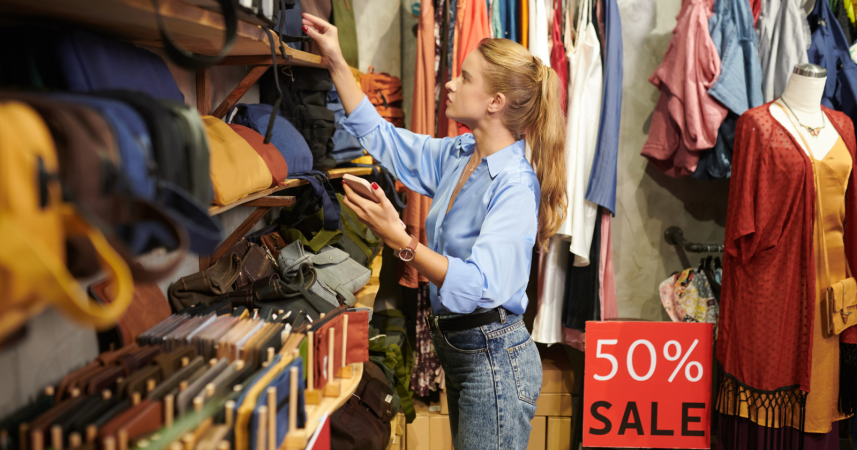
Clearance racks, discount outlets, and “buy one, get one half-off” signs were where the action happened. Scoring a good deal gave almost as much satisfaction as the clothes themselves.
I can still remember my aunt’s pride when she’d announce, “This sweater was 70% off!” as if the discount was part of the outfit. And in a way, it was. Finding bargains became a form of validation—proof that you were smart, resourceful, and savvy.
Even today, I catch myself heading straight to the sale section before browsing the rest of the store. The habit stuck: full price feels almost indulgent, even when I can afford it now.
Economists call this “anchoring”—when you’re used to low prices, paying more feels psychologically painful. That’s why so many of us still can’t shake the thrill of clearance shopping, even when we technically don’t need to.
8. Mixing formal and casual out of necessity
Sometimes the “wardrobe gaps” had to be filled with improvisation.
A kid might wear sneakers with a dressy outfit because dress shoes were a luxury. Or a sweatshirt over a collared shirt might be the best attempt at layering for a school photo. It wasn’t a fashion statement—it was just making do.
Looking back, though, I find it fascinating how this resourcefulness turned into style. What was once a matter of necessity—mixing casual and formal—has become celebrated as “high-low fashion.” Today, designers deliberately pair hoodies with blazers or sneakers with evening gowns.
Our parents and grandparents weren’t following trends—they were inventing them. They just didn’t call it fashion.
Final thoughts
Fashion is often framed as self-expression, but for lower-middle-class families, it was just as much about survival and practicality.
These habits weren’t chosen because they were stylish. They were chosen because they worked. And without realizing it, many of us carried these lessons into adulthood—whether it’s hesitating to wear our “nice” clothes too often, patching up an old jacket, or scanning the clearance rack before looking anywhere else.
They shaped not just how we dressed, but how we viewed value, effort, and even self-presentation.
So, here’s the question: which of these habits still shows up in your life today?
If You Were a Healing Herb, Which Would You Be?
Each herb holds a unique kind of magic — soothing, awakening, grounding, or clarifying.
This 9-question quiz reveals the healing plant that mirrors your energy right now and what it says about your natural rhythm.
✨ Instant results. Deeply insightful.