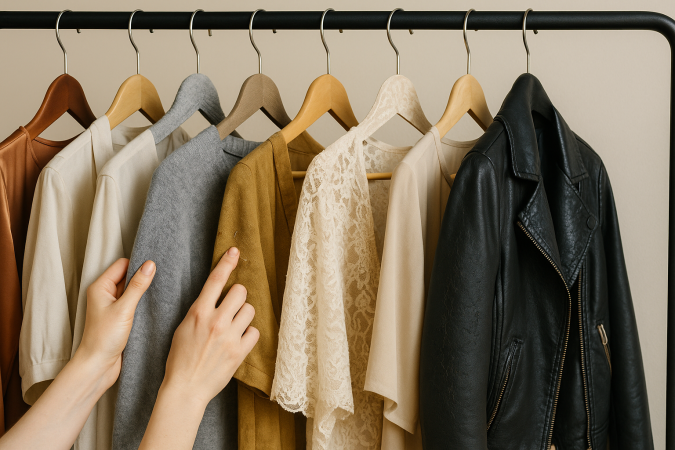
Even the most expensive outfit can fall flat if the fabric gives it away. These eight materials instantly cheapen your look, no matter the brand or price tag. Knowing what to avoid is the secret to dressing with true polish.

Add VegOut to your Google News feed. 
Ever bought something that looked amazing on the hanger, only to realize it somehow cheapens your whole outfit when you put it on? I’ve been there.
And it’s not always about the design or even the fit—it’s often the fabric.
Fabric is like the foundation of a dish.
Even if the plating is beautiful and the recipe sounds fancy, if the ingredients are poor, the whole thing falls flat. The same goes for clothes.
Here are fabrics that have a bad habit of dragging down your style, no matter how much you spent on them.
1) Polyester
Let’s start with the obvious one. Polyester is basically the fast food of fabrics—everywhere, cheap, and often unsatisfying.
Sure, it has its uses. It’s durable, wrinkle-resistant, and manufacturers love it because it costs next to nothing to produce. But let’s be real: it rarely looks refined.
Instead, it has that telltale synthetic shine, like plastic trying to impersonate silk. And after a couple of washes, it pills, clings, and traps odors.
Wearing polyester in a formal setting is like serving instant noodles at a dinner party. It might get the job done, but it doesn’t exactly scream quality.
2) Acrylic
Acrylic is marketed as a wool alternative, but if you’ve ever touched it, you know the difference immediately. It lacks the weight, warmth, and natural softness of wool.
Instead, it feels squeaky and thin, often making sweaters look flat and lifeless.
I remember buying an “affordable” cable knit years ago, only to realize the sleeves lost shape after two wears. It looked stretched out and sad, even though I had paid decent money for it.
That’s the trap of acrylic—it makes you think you’re getting a deal, but it never wears well.
If warmth and elegance are the goals, natural fibers like wool, cashmere, or even cotton blends will outshine acrylic every single time.
3) Rayon
Rayon has a tricky reputation. On paper, it sounds great—it’s semi-synthetic, breathable, and drapes nicely.
But in practice, it tends to wrinkle instantly, shrink in the wash, and lose its shape over time.
It’s the fabric equivalent of a one-hit wonder. Looks good in the store, maybe even for the first outing, but after that, it’s downhill.
A rayon blouse might look chic when you’re trying it on, but halfway through your day, it’ll be clinging to the wrong places and looking tired.
There’s a reason luxury brands don’t lean on rayon—it just doesn’t hold up under real-life conditions.
4) Nylon
Nylon has its place in workout gear and outerwear, but when it sneaks into everyday fashion, that’s where things get dicey.
Dresses, blouses, or even trousers with high nylon content often end up looking shiny and stiff.
And let’s not forget how it feels. Nylon doesn’t breathe. On a hot day, it’s like wearing a sauna suit. Even when it looks polished at first glance, that uncomfortable feel ruins the experience.
I once bought a pair of slim-fit pants that were mostly nylon.
They looked great for the first week. Then, within days, they stretched in strange places, got weird creases, and basically announced to the world, “I was made for $2 and it shows.”
5) Cheap lace
Lace can be stunning—it’s delicate, romantic, and timeless. But cheap lace? That’s a disaster waiting to happen.
Low-quality lace often looks more like plastic netting than fabric. It’s stiff, scratchy, and tears easily. Instead of evoking elegance, it gives off “Halloween costume” energy.
I’ve seen high-street dresses that use lace to try and add a “luxury” element, but when the lace is cheap, it does the opposite. It highlights the shortcuts.
If you want lace that elevates, go for pieces where the pattern is intricate and the texture is soft—not shiny or scratchy.
6) Faux leather (the bad kind)
Not all faux leather is created equal. Some modern vegan leathers are shockingly good—soft, flexible, and almost indistinguishable from the real thing.
But then there’s the bad kind.
You know the one: it’s plasticky, stiff, and cracks after a few wears. The surface starts peeling like cheap paint, and suddenly your “edgy” jacket looks like it belongs in the trash.
The problem is that low-quality faux leather tries too hard to mimic the real thing but doesn’t age gracefully. Real leather develops character over time; cheap faux leather falls apart.
If you’re going for cruelty-free, look for brands that use high-quality vegan leather alternatives, not the bargain-bin versions that squeak when you move.
7) Satin (when it’s synthetic)
Satin sounds luxurious, but here’s the catch: satin is a weave, not a fiber. Which means you can have satin made from silk (amazing) or satin made from polyester (not so much).
Synthetic satin often looks overly shiny—like gift-wrap. Instead of draping beautifully, it clings in weird spots and highlights every crease and bump.
It can also feel rough against the skin, which defeats the whole point of satin in the first place.
I once saw a satin slip dress that looked incredible on the mannequin. But when I tried it on, the shine caught the light in the worst way possible.
It looked cheap, even though the price tag wasn’t. Lesson learned: not all satin is created equal.
8) Jersey (the flimsy kind)
To be clear, jersey can be fantastic—your favorite t-shirt is probably jersey. But flimsy, low-quality jersey is a different story.
Thin jersey fabrics stretch out, lose shape, and cling in unflattering ways. They also tend to go see-through under bright light, which is never a good look.
Even expensive brands sometimes cut corners here, banking on the fact that customers won’t notice until it’s too late.
I’ve had jersey dresses that felt like wearing pajamas after one wash.
Comfortable? Yes. Stylish? Not in the slightest. If you want jersey that holds its own, look for thicker, structured versions.
The bottom line
Here’s the truth: you don’t have to spend a fortune to look put together. But you do need to be picky about fabrics.
The wrong fabric can betray even the best tailoring, while the right one can elevate the simplest outfit.
Think about it like dining out: a simple pasta dish made with high-quality ingredients can outshine a complicated plate built on shortcuts.
If you start paying attention to the materials in your wardrobe—checking labels, feeling textures, noticing how things age—you’ll quickly see which fabrics make you feel sharp and which ones make you feel sloppy.
Invest in the good stuff where it counts, avoid the usual suspects I just mentioned, and you’ll never have to worry about your outfit looking cheap again.
If You Were a Healing Herb, Which Would You Be?
Each herb holds a unique kind of magic — soothing, awakening, grounding, or clarifying.
This 9-question quiz reveals the healing plant that mirrors your energy right now and what it says about your natural rhythm.
✨ Instant results. Deeply insightful.

Adam Kelton
Adam Kelton is a writer and culinary professional with deep experience in luxury food and beverage. He began his career in fine-dining restaurants and boutique hotels, training under seasoned chefs and learning classical European technique, menu development, and service precision. He later managed small kitchen teams, coordinated wine programs, and designed seasonal tasting menus that balanced creativity with consistency.
After more than a decade in hospitality, Adam transitioned into private-chef work and food consulting. His clients have included executives, wellness retreats, and lifestyle brands looking to develop flavor-forward, plant-focused menus. He has also advised on recipe testing, product launches, and brand storytelling for food and beverage startups.
At VegOut, Adam brings this experience to his writing on personal development, entrepreneurship, relationships, and food culture. He connects lessons from the kitchen with principles of growth, discipline, and self-mastery.
Outside of work, Adam enjoys strength training, exploring food scenes around the world, and reading nonfiction about psychology, leadership, and creativity. He believes that excellence in cooking and in life comes from attention to detail, curiosity, and consistent practice.
More Articles by Adam