From interview clothes to first apartment furniture, these eight thrift store purchases quietly reveal the reality of lower middle class life and the resourcefulness that comes with it.
Thrift stores mean different things to different people.
For some, they are a treasure hunt for vintage gems or a way to shop sustainably.
For others, they are a necessary part of life, especially when budgets are tight and new items are a luxury.
Lower middle class households often rely on thrift stores not for fun but for practical survival.
The goal is not about “finding cool vintage” but about stretching every dollar and making life work.
While thrifting has become trendy in recent years, certain purchases still reveal who is shopping for style and who is shopping out of necessity.
If you have ever bought these eight specific items from a thrift store, chances are you know what it means to live lower-middle-class life.
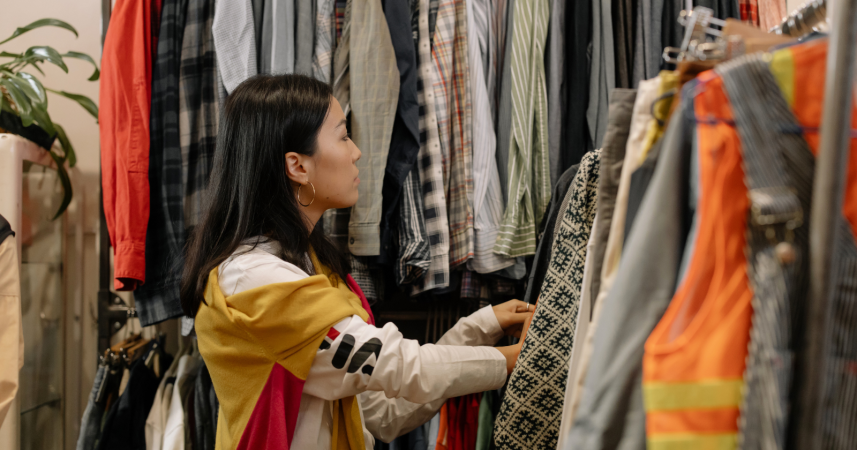
1. Work pants for a job interview
Buying clothing for a job interview from a thrift store is a quiet reality for many lower middle class people.
Not everyone can afford a brand new professional outfit just to impress a hiring manager.
So they check the thrift racks for black slacks, a button down, or a “good enough” pair of dress shoes.
These outfits are often a mix of mismatched brands and questionable fits, but they serve their purpose.
It is not about fashion. It is about survival and opportunity.
People in upper classes rarely understand this kind of preparation pressure.
But for lower middle class workers, thrift store interview clothes are a rite of passage.
It is a reminder that ambition does not always come with resources.
2. Plates, cups, and random kitchenware
When money is tight, kitchen basics are not bought as matching sets.
They are collected piece by piece from thrift stores.
A chipped mug here, an old Corelle plate there, a fork that does not match anything.
It is a practical solution to needing dishes without being able to afford brand new sets.
Lower middle class kitchens often have an eclectic mix of dinnerware that tells a story of years of improvising.
Function always comes before appearance.
No one cares if the plate has a floral pattern from 1992 - as long as it works.
And that is the truth that thrift store shoppers understand better than anyone.
3. School clothes for kids
Kids grow fast. Shoes wear out faster. Clothes stain, rip, and disappear.
For lower middle class families, buying everything new for every school year is impossible.
Thrift stores become the place to find jeans, jackets, polos, and backpacks at a fraction of the price.
Hand me downs are normal. Thrift finds are celebrated.
Sometimes, parents buy clothes a size or two bigger so they last longer.
This is not negligence. It is strategy.
Families do what they must to stretch every season on a budget.
School does not wait for payday. So thrift stores fill the gap.
4. Furniture for a first apartment
Everyone remembers their first couch that smelled faintly like someone else’s life.
Or the wobbly kitchen table that came from a thrift store or a curbside pickup.
For lower middle class people, buying furniture new is a dream reserved for later in life.
Early adulthood means learning how to live with mismatched tables and squeaky dresser drawers.
Thrift store furniture becomes a badge of independence.
It is not glamorous, but it gets the job done.
People with money furnish apartments for aesthetics.
People without money furnish apartments for function and survival.
5. Winter coats and boots
Winter gear is expensive.
Warm coats and durable boots can cost hundreds of dollars in retail stores.
Lower middle class families know the stress of trying to stay warm on a tight budget.
So thrift stores become essential in cold weather.
Finding a good coat secondhand is considered a major win.
Even if it is slightly outdated or worn, warmth matters more than style.
Practicality trumps fashion every single time.
And no one forgets the thrift store coat that got them through three winters.
6. Formal wear for weddings or funerals
Not many people admit this out loud, but thrift stores are a go to for emergency formal outfits.
Lower middle class people often cannot afford last minute shopping sprees for weddings, funerals, or special occasions.
They look for dresses, ties, dress shoes, and blazers that look presentable enough.
Sometimes the items do not fit perfectly, but alterations are too expensive.
So they make do.
The goal is to show up respectfully, even if it means wearing a borrowed or thrifted outfit.
Upper class etiquette might focus on designer labels.
Lower middle class etiquette is about showing up, no matter what it takes.
7. Small appliances
Microwaves, coffee makers, old crockpots, and toasters are classic thrift store finds.
Lower middle class households often replace appliances only when they break, not because they want upgrades.
Buying brand new is a luxury.
So people hunt for working appliances at thrift shops, checking cords and buttons before buying.
These items are not glamorous but they are essential to daily life.
Nothing says thrift shopper survival like proudly buying a used toaster for 4 dollars.
For someone on a tight budget, a working appliance at a cheap price is a victory.
It is resourcefulness in action.
8. Halloween costumes
Halloween is a fun holiday, but it can also be a costly one.
Lower middle class families do not spend 40 or more on a costume that will be worn once.
Instead, they build costumes from thrift store clothes and creative hacks.
A child becomes a cowboy with a thrifted flannel.
A teen becomes a zombie with torn jeans and makeup.
A parent throws on a blazer and becomes a politician for the night.
Creativity replaces money.
And for many families, thrift store Halloween is a tradition.
Final thoughts: thrift stores tell a story
Thrifting is not something to be ashamed of.
For the lower middle class, it is a way of life built on practicality and resilience.
While others may shop for fun, lower middle class people shop with purpose.
They know how to stretch a dollar and make things work even when money is tight.
These purchases may seem small, but they represent hard work, sacrifice, and grit.
Being resourceful is not a sign of lack. It is a sign of strength.
If You Were a Healing Herb, Which Would You Be?
Each herb holds a unique kind of magic — soothing, awakening, grounding, or clarifying.
This 9-question quiz reveals the healing plant that mirrors your energy right now and what it says about your natural rhythm.
✨ Instant results. Deeply insightful.