
The best part about choosing a reliable uniform is forgetting about it the moment you step into your life.
If you default to “smart casual” for most situations, I’m willing to bet it’s not laziness but, rather, just a quiet strategy.
It’s how you move through the world without overthinking what shirt to wear to brunch or whether a blazer is “too much” for a team offsite.
Here are seven traits that you likely have that default you to wear "smart casual" for every occassion:
1) Versatility first
Smart casual is the Swiss Army knife of style.
If you reach for it by default, you’re probably optimizing for one thing above all else: Range.
You want clothes that flex from coffee to keynote, gallery to grocery run.
That choice isn’t trivial as it hints at a brain that’s constantly managing trade-offs.
Behavioral scientists call this “satisficing”—choosing a good-enough option that works across contexts to save time and mental energy.
You’ve built a uniform that keeps you adaptable.
Ever notice how teams trust the person who can glide from a client lunch to a messy whiteboard session without a wardrobe change? That’s you.
You’ve signaled, without saying a word, “I can operate anywhere.”
I’ve found this especially useful when I’m out with my camera.
One hour I’m kneeling on a curb to get the light right, the next I’m meeting a friend at a new vegan spot.
A clean tee, structured overshirt, dark denim, low-profile sneakers—it all holds up.
2) Situational awareness
Defaulting to smart casual suggests you read rooms fast.
Clothes are social cues: Too formal and you broadcast distance, while too casual and you risk friction with people who equate polish with respect.
Smart casual threads the needle as it’s a calibration tool for mixed environments where you don’t know the dress code—or where the dress code shifts by the hour.
That implies you aren’t just thinking about yourself.
You’re thinking about the people you’ll meet—how to put them at ease, how to avoid being the distraction in the room.
That’s social intelligence, not style obsession.
Ask yourself: Before a meeting, do you picture the space, the light, the tempo, and do you quickly scan who’s present and adjust your tone?
If yes, that’s the same muscle you’re using with your wardrobe.
I once landed at a tech panel after shooting photos at a street fair, and the panelists ranged from founders in hoodies to an investor in a suit.
My middle lane outfit made my transition seamless.
I could talk shop, then grab dumplings with the indie band playing down the block, no costume change required.
3) Comfortable polish
Some people use clothes as armor, while others use them as a nap.
If you lean smart casual, you probably aim for a third path: comfort that still respects the room.
You know that if your shoulders pinch or your shoes blister, your brain will burn energy on discomfort instead of ideas—you want ease in your body so you can be present.
It’s a performance choice, if you think about it.
Think of athletes choosing gear that fits, breathes, and moves.
You’re doing a version of that for work, relationships, and everyday life.
Personally, going vegan years ago forced me to rethink the materials that touch my skin.
I started paying attention to breathability, weight, and drape.
The upshot? Jackets I can wear all day, non-leather sneakers that don’t look like I just left the gym, and shirts that hold shape after a long shoot.
In the end, the comfort lowers friction and the polish keeps conversations focused where they should be.
4) Time efficiency
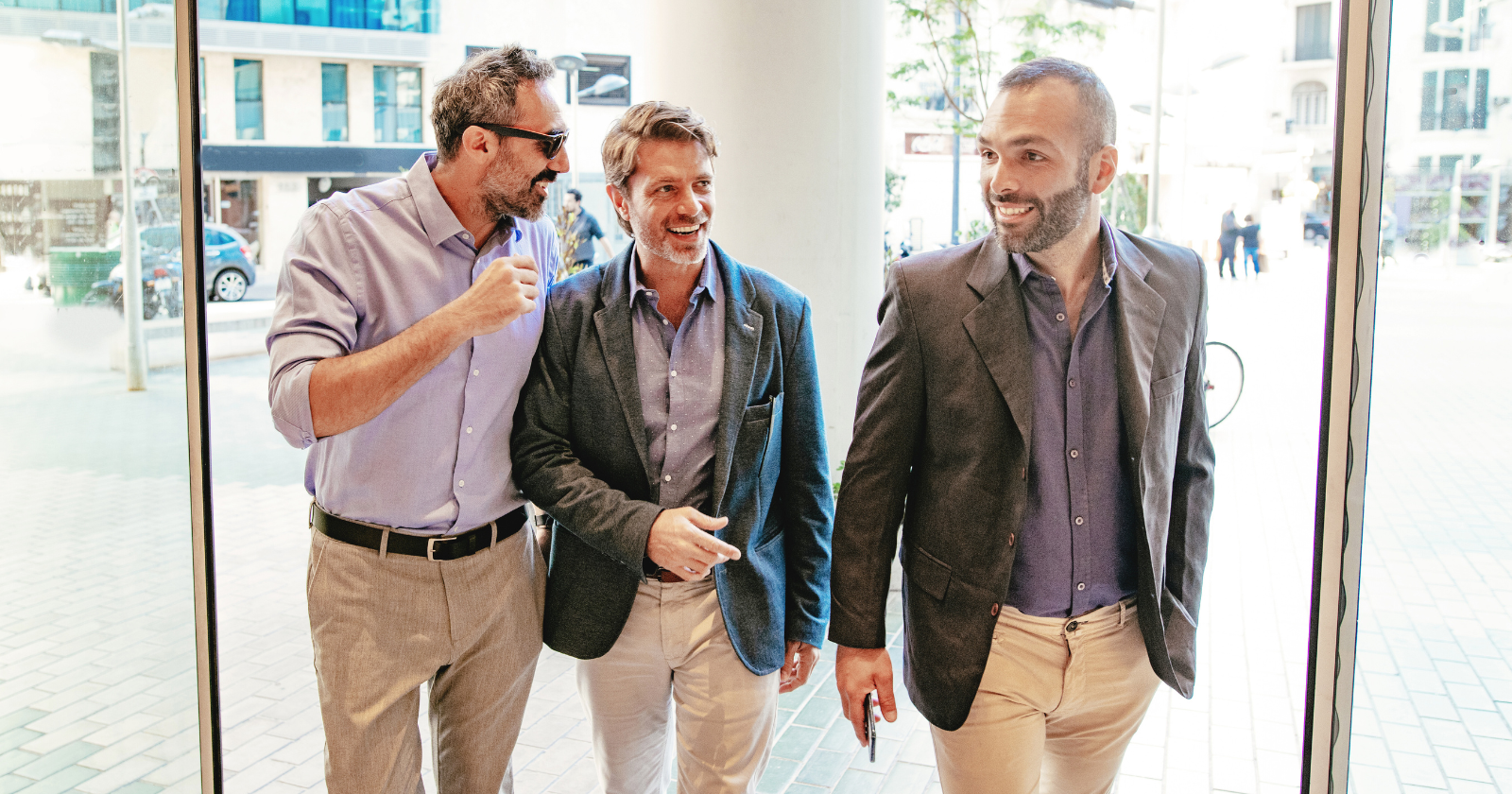
Here’s a quiet truth: You don’t want style to be your part-time job.
You’re likely someone who protects attention like a scarce resource.
Defaulting to smart casual trims micro-decisions from your morning and from every calendar ping you accept on the fly.
It’s a capsule-wardrobe mindset, even if you’ve never used that term.
Decision fatigue is real; every “Should I wear X or Y?” burns cognitive fuel you could use for writing, problem-solving, or showing up well for a friend.
This is why your closet probably contains repeatable pieces: Neutral tees, well-cut chinos or denim, two jackets that do 80% of the work, shoes that survive rain and still look like you tried.
It’s not minimalism for minimalism’s sake but, rather, it’s design for a life you actually live.
When your default works in 8 out of 10 settings, you free time for the two that genuinely require special effort—a wedding, a formal pitch, a black-tie fundraiser.
You can go big where it counts because you didn’t waste the morning on “big” when it didn’t.
5) Identity coherence
Your default isn’t just practical. It’s a signature.
You probably like your outside to match your inside—competent, relaxed, curious.
Smart casual communicates that you take things seriously, including yourself, but not to the point of stiffness.
The look becomes a shorthand for how you operate.
Think of it like editing a photo: You pick a color profile that suits your eye, and you adjust exposure, contrast, and grain to reflect how you saw the scene.
Over time, people recognize your look even before they see your name—clothes can do that too.
I’ll rotate fabrics with the seasons and swap sneakers for boots when the mood shifts, but the silhouette stays mine.
That continuity is stabilizing, and it tells my brain, “You know who you are.”
When your self-concept is consistent, you spend less time self-monitoring and more time doing the work that matters.
6) Social bridging
Smart casual people often end up as connectors.
Why? Because you can cross scenes without changing costume.
You’re at home in the startup coworking space, the local art opening, the nonprofit mixer, the family birthday dinner, the late-night studio session.
Your clothes never shout, “I don’t belong here.”
That matters for building community; when you bridge groups, you carry ideas and introductions across boundaries.
You expand your network without feeling like a networker.
People invite you in because you don’t make them adjust to you; you meet them halfway.
On a trip through Tokyo, I bounced from a photography bookstore to a plant-based ramen shop to a small jazz bar in the same evening.
Same outfit and curiosity, yet wildly different rooms.
I ended up talking with a designer about sustainable textiles and swapped playlists with a bartender who also produced indie bands.
None of that happens if I look like I wandered out of the wrong movie.
If you default to the middle lane, you give yourself more rooms to walk into—and more chances to connect people who need to meet.
7) Values-aligned quality
A lot of smart casual defaults come with another quiet trait: you care about what your choices say about your values.
You gravitate toward pieces that last, that are repairable, that were made by companies trying—however imperfectly—to do better.
You’d rather have one jacket that looks great for five years than five jackets that fall apart in six months. You care about the supply chain, the fibers, the footprint.
This is where personal ethics and everyday life shake hands.
In my case, I look for vegan, cruelty-free materials.
Not the squeaky plastic of a 90s alt-brand, but modern plant-based or recycled options that wear like the real thing and age with character.
What I’m trying to say is that the default becomes a map: Fewer, better things that align with how you want to move through the world.
Quality is also a social signal.
You’re not buying logos to impress anyone; you’re choosing well-made objects because you respect yourself and the people you show up for.
The blazer holds its line, the sneakers keep their shape, and the knit doesn’t pill after three wears.
You look like you planned to be here, and you plan to come back.
Final reflection
Could you wear a suit? Sure.
Could you show up in sweats? Also sure.
However, your default is the middle path that lets you shift gears without switching identities.
That’s not indecision—it’s wisdom.
Ask yourself two quick questions the next time you get dressed: What am I optimizing for today, and what do I want my presence to do for the room?
If your answer is “range, respect, and ease,” then your default makes perfect sense.
Keep it, evolve it, let it work for you, and then get on with living.
The best part about choosing a reliable uniform is forgetting about it the moment you step into your life.
What’s Your Plant-Powered Archetype?
Ever wonder what your everyday habits say about your deeper purpose—and how they ripple out to impact the planet?
This 90-second quiz reveals the plant-powered role you’re here to play, and the tiny shift that makes it even more powerful.
12 fun questions. Instant results. Surprisingly accurate.