Vacation outfits aren’t just fabric. They’re social signals. And for the upper-middle-class, certain fashion choices give away more than they realize—subtle (and not-so-subtle) ways of saying, “We’re not tourists like the rest of you.”
Clothes talk.
Sometimes they whisper wealth. Sometimes they scream insecurity.
And sometimes—on vacation—they broadcast entitlement so loudly you can practically hear it from across the pool.
For upper-middle-class travelers, wardrobe isn’t accidental.
It’s curated, deliberate, and often dripping with signals that say, We belong here—and maybe you don’t.
Here are ten of the most glaring examples.
1. Resort-logo baseball caps
Nothing screams entitlement like wearing a cap embroidered with the name of the five-star resort you’re currently staying at.
It’s not sun protection. It’s branding.
A wearable receipt that says, I paid for this exclusive experience, and I’d like everyone to know.
The quiet cringe comes when these hats show up outside the resort—back home, at Whole Foods, at Pilates class—as if the trip wasn’t just a vacation but a personality trait.
It’s less about blocking the sun, more about broadcasting the club you think you’re in.
2. Crisp white linen everything
White linen is practical in hot climates—but only for those with the time and money to replace or dry-clean it constantly.
On upper-middle-class vacationers, it becomes less clothing and more theater.
Flowing pants, button-downs, kaftans—all styled to say, I’m breezy and carefree, unlike you sweaty mortals.
But here’s the thing: white linen is fragile. It stains, wrinkles, and demands maintenance.
Wearing it everywhere reads as, “I don’t actually have to do anything messy. I’m here to float through paradise while others work.”
The entitlement isn’t in the fabric. It’s in the assumption that your leisure is spotless too.
3. Expensive athleisure at breakfast buffets
Hotel buffets are a great equalizer—everyone piles scrambled eggs onto plates.
But upper-middle-class vacationers show up in $400 matching athleisure sets, signaling that even their “casual” wear is aspirational.
It’s not about comfort. It’s about differentiation. A way of saying, Yes, we’re all eating the same eggs, but look at me—I’m doing it in Lululemon’s luxury cousin.
The irony?
They’ll change again before lunch. Because God forbid someone mistakes their breakfast sweats for actual workout clothes.
4. Matching family polos or monogrammed T-shirts
Coordinated outfits might look like unity, but they also scream performance.
Families strolling through airports in identical pastel polos or custom tees with “Smith Family Trip 2025” printed on the back are staging a show: We are together, we are important, we are branded.
It’s less about bonding and more about optics.
The entitlement shows up in the assumption that everyone else wants to watch your family vacation play out in uniform. Spoiler: they don’t.
5. Overdesigned luxury sandals
There are sandals.
And then there are sandals plastered with visible designer logos, gold buckles, or rhinestones that cost more than most people’s rent.
Upper-middle-class travelers love these because they’re “practical” and “stylish.” Translation: they’re supposed to scream casual wealth.
But the louder the logo, the more desperate the signal.
These shoes aren’t about walking—they’re about stomping status into every tile of the resort lobby.
And when paired with poolside cocktails, they read less like effortless elegance and more like costume jewelry for the feet.
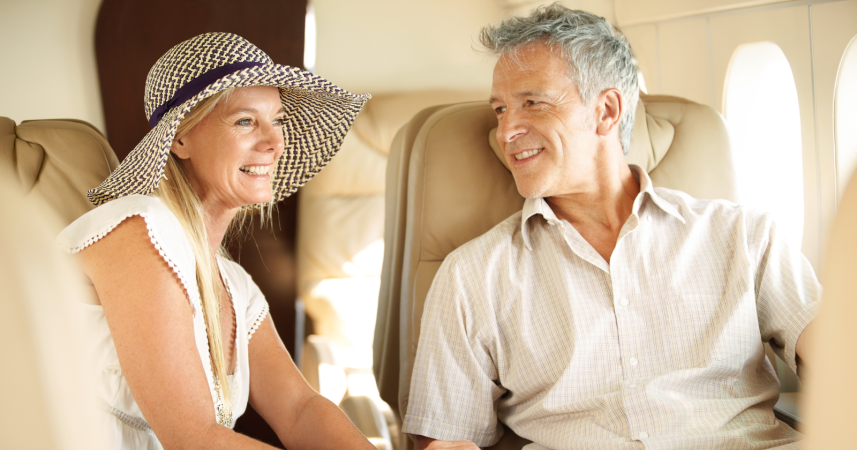
6. Giant floppy hats that block everyone else’s view
Yes, sun protection matters.
But when your hat is so wide it eclipses other people’s sunsets, we’ve crossed into entitlement territory.
These hats are less about shade and more about spectacle.
They say, My vacation is cinematic, and I need the accessories to match.
The cringe moment is always the same: someone trying to take a group photo while an upper-middle-class hat intrudes into half the frame.
Sun safety is noble. Turning it into a fashion obstruction is something else entirely.
7. Gold jewelry at the beach
Minimal jewelry at the beach is one thing.
But thick gold chains, dangling hoops, or stacks of bangles while swimming? That’s not accessorizing. That’s flexing.
The entitlement is twofold.
First, it assumes beach trips are photo ops, not actual sand-and-salt activities. Second, it broadcasts, I can afford to ruin this. Can you?
Most people wear swimsuits.
Upper-middle-class travelers accessorize like they’re auditioning for a jewelry campaign.
It doesn’t say wealth as much as it says, I don’t have to be practical because my life isn’t practical.
8. Designer tote bags as beach bags
There’s nothing wrong with a sturdy tote.
But when it’s a Dior, Prada, or Louis Vuitton tote stuffed with sunscreen and damp towels, it’s not practicality—it’s performance.
These bags are more delicate than they look.
Sunscreen stains, sand, and saltwater destroy them. Which means the wearer isn’t really there to swim—they’re there to parade.
The entitlement here is the assumption that the beach itself is just another runway. That the point isn’t enjoying nature, but accessorizing against it.
9. Resort-branded loungewear
Buying the robe, slippers, or sweats from the resort boutique isn’t about comfort. It’s about broadcasting access.
When upper-middle-class people wear resort-branded loungewear, they’re extending the vacation into an identity. It’s less “I was there” and more “I belong there.”
And the kicker?
They wear it loudly—on planes, in airports, even in casual settings back home.
It’s entitlement disguised as leisurewear, a way of turning private luxury into public display.
10. Sunglasses indoors
Yes, you just walked in from the sun.
But keeping your designer shades on at the bar or at the airport lounge isn’t about light sensitivity. It’s about hierarchy.
Sunglasses indoors say, I don’t have to play by the rules of social space.
They also create distance: you can’t see the person’s eyes, so the interaction feels less human and more like you’re a background extra in their curated life.
The entitlement isn’t in the sunglasses themselves. It’s in the insistence on shielding, performing, and separating—always with a silent reminder: I’m not like you.
The bigger picture
Clothing is language.
And while upper-middle-class vacationers may think they’re speaking “style,” often what comes across is “status.”
The entitlement isn’t always malicious. Sometimes it’s oblivious. But either way, the wardrobe tells on them: from monogrammed polos to Dior beach bags, the outfits aren’t just about fashion. They’re about broadcasting identity.
True style whispers. But entitlement? It shouts.
Closing thought
Vacations should be escapes.
But for the upper-middle-class, they’re often stages—and clothes are the script.
The irony is this: the louder the wardrobe, the less relaxed the person usually is. Because ease doesn’t need costumes.
And real confidence? It never screams.
What’s Your Plant-Powered Archetype?
Ever wonder what your everyday habits say about your deeper purpose—and how they ripple out to impact the planet?
This 90-second quiz reveals the plant-powered role you’re here to play, and the tiny shift that makes it even more powerful.
12 fun questions. Instant results. Surprisingly accurate.