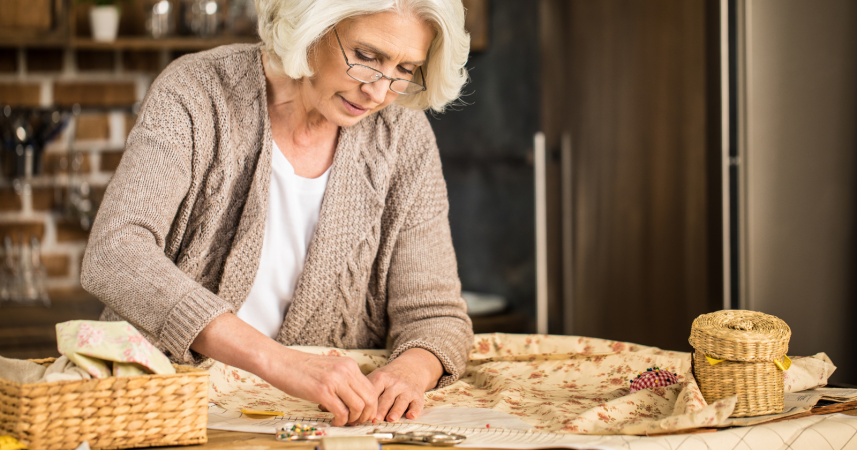
Clothes today are cheap, disposable, and designed to fall apart after a season or two. But women over 70 grew up in a completely different era—one where you didn’t toss out a shirt because it lost a button or ditch a sweater because of a tiny hole.

Add VegOut to your Google News feed. 
Back then, every piece of clothing had value.
A new coat wasn’t an impulse buy from an online sale.
It was a carefully chosen purchase that you expected to last for years—maybe even decades.
Because of that, women learned to stretch the life of their wardrobes in ways that today’s fast-fashion generation could barely imagine.
Some of these tricks are practical.
Some are downright ingenious.
And while they were born out of necessity, they also represent a mindset: respect for what you own and resourcefulness in how you care for it.
Here are ten wardrobe hacks that lower-middle-class women over 70 still use to this day.
1. Sewing on buttons instead of tossing the garment
In a world where people throw away a shirt the moment a button pops off, this one feels almost radical.
Women over 70 know that a missing button isn’t the end of a garment—it’s a quick fix.
They keep jars of spare buttons, neatly sorted by size and color, ready for just such emergencies.
Many even keep the extra buttons that come with new clothes, stored away for years “just in case.”
Sewing on a button takes five minutes, costs nothing, and instantly restores a piece of clothing to wearable condition.
It’s simple, but it’s a perfect example of refusing to waste something that’s still perfectly good.
2. Adding patches to cover small holes
A small hole or tear isn’t a tragedy.
It’s an opportunity for creativity.
Women in this generation know how to make a flaw look intentional by adding a patch in a way that feels decorative rather than desperate.
Sometimes it’s a subtle, color-matched fabric that blends in seamlessly.
Other times, it’s a bold, contrasting patch that turns the imperfection into a design feature.
This hack doesn’t just save money.
It adds character to clothes, giving them a unique, lived-in charm you’ll never find in a mall store.
3. Line-drying clothes to prevent wear and tear
Dryers are convenient, but they’re also ruthless.
The heat fades colors, shrinks fabrics, and weakens elastic over time.
Lower-middle-class women over 70 know this, which is why many of them still line-dry their clothes whenever possible.
Whether it’s a backyard clothesline, a drying rack in the laundry room, or even a shower curtain rod, air-drying keeps garments looking newer for longer.
Plus, there’s something oddly satisfying about seeing a row of neatly hung clothes fluttering in the breeze—a quiet reminder of care and patience.
4. Using a bar of soap to fix a stuck zipper
This is one of those old-school tricks that feels like magic the first time you see it.
When a zipper gets stuck or starts catching on the fabric, a quick rub with a plain bar of soap can work wonders.
The soap acts as a lubricant, allowing the zipper to glide smoothly again without replacing it or buying a new item.
It’s a tiny fix that prevents countless jackets, dresses, and bags from being prematurely discarded.
And it costs absolutely nothing.
5. Storing shoes with newspaper to keep their shape
Expensive shoe trees are great, but lower-middle-class women found a simpler, cheaper solution: newspaper.
By stuffing shoes with crumpled newspaper when they’re not being worn, they prevent the leather or fabric from collapsing and developing creases.
The paper also absorbs moisture and odors, keeping shoes fresh between wears.
It’s practical, effective, and completely free—a true hallmark of this generation’s ingenuity.
6. Turning worn-out clothes into cleaning rags
When a shirt or pair of leggings is truly beyond repair, it doesn’t go straight into the trash.
It gets a second life as a cleaning rag.
Soft, worn-in fabric is perfect for dusting furniture, polishing windows, or scrubbing down kitchen counters.
This habit ensures that every last bit of value is squeezed out of a garment before it leaves the home.
In a way, it’s both frugal and deeply respectful—a final thank-you to the item for its years of service.
7. Reviving faded blacks with a home dye kit
Nothing ages a wardrobe faster than black clothes that have faded to a sad, washed-out gray.
Women over 70 have a simple fix: fabric dye.
Instead of tossing faded pieces, they give them a quick color refresh in the washing machine or a large sink.
A single packet of dye can bring multiple items back to life, making them look practically new again.
This hack is especially beloved for black jeans, sweaters, and dresses that still fit perfectly but need a visual boost.
8. Swapping out elastic instead of replacing the garment
Elastic wears out long before the rest of a garment does.
Waistbands lose their stretch, sleeves get saggy, and suddenly something that used to fit perfectly starts slipping or bunching.
Instead of giving up on the piece, these women simply replace the elastic.
It’s a minor sewing project, but it extends the life of everything from sweatpants to nightgowns to fitted skirts.
This is the kind of fix most people don’t even think of—but once you know it, you’ll never look at stretched-out waistbands the same way again.
9. Using vinegar to keep clothes soft and fresh
Fabric softener is expensive and full of chemicals.
Vinegar, on the other hand, is cheap, natural, and incredibly effective.
Adding a small splash of white vinegar to the rinse cycle softens fabrics, removes lingering odors, and even helps prevent detergent buildup.
It’s an old-fashioned trick that works better than most modern products—and for a fraction of the cost.
Plus, the clothes come out feeling fresh without the heavy, artificial scents many store-bought softeners leave behind.
10. Storing off-season clothes carefully to prevent damage
One of the biggest mistakes people make today is leaving everything crammed together in the closet year-round.
Women over 70 know better.
When the season changes, they carefully wash, fold, and store clothes they won’t be wearing for months.
They use garment bags, cedar blocks, and even old pillowcases to keep fabrics safe from moths and dust.
By giving clothes a proper “rest” between seasons, they extend their lifespan dramatically.
It’s a small act of care that pays off year after year.
The bigger picture
These hacks aren’t just about frugality.
They’re about mindset.
In a throwaway culture, lower-middle-class women over 70 stand out for their refusal to treat clothing as disposable.
Every stitch, every patch, every small act of repair says, “This has value. This is worth keeping.”
It’s a slower, more thoughtful approach to fashion—one that today’s world could benefit from remembering.
While fast fashion encourages constant buying, these women quietly prove that style isn’t about how much you own.
It’s about how well you care for what you have.
Closing thought
These wardrobe hacks are more than just practical tips.
They’re a glimpse into a generation that understood the power of resourcefulness.
For them, stretching clothes longer wasn’t just about saving money—it was about honoring the time, effort, and memories woven into every garment.
And while you don’t need to adopt every single habit, even a few of these tricks can transform the way you see your wardrobe.
Because when you treat clothes with care, they don’t just last longer.
They tell a richer, more meaningful story.