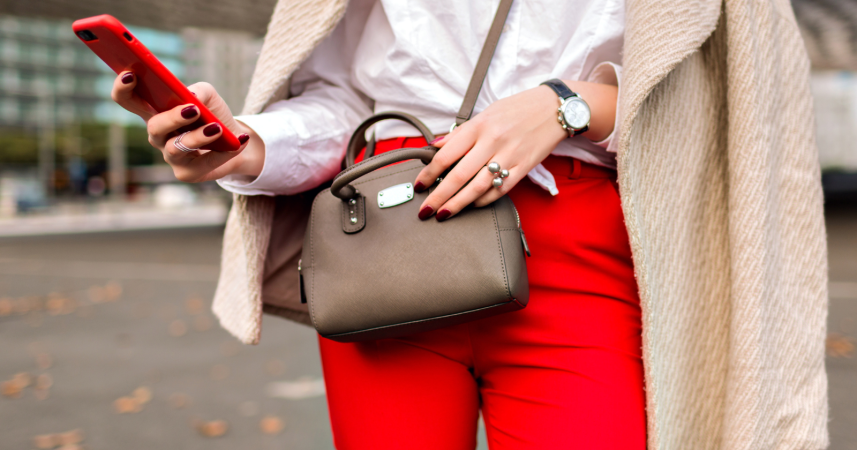
A roast of logos that mistake price tags for personality—and a reminder that real elegance doesn’t need a megaphone
Let’s get one thing straight: “rich” and “elegant” are not synonyms. You can have money and still have the taste of a raccoon let loose in a HomeGoods clearance aisle.
Elegance is restraint, proportion, context. Wannabe-rich energy is the opposite—loud where it should whisper, indiscriminate where it should edit, desperate where it should be unbothered. It’s the sartorial equivalent of revving a rented Lambo at a red light: technically impressive, emotionally bankrupt.
Below are ten brands that, fairly or unfairly, have become shorthand for that “I Googled ‘luxury’ and sorted by price and logo size” aesthetic. If you love any of these, life is short—wear what makes you happy. But if you’re chasing genuine elegance, consider this your friendly nudge to recalibrate.
1) Michael Kors
A case study in how mainstream success can sour into mall-tier peacocking. Michael Kors makes plenty of competent, usable stuff; that’s the problem. Elegance doesn’t scream from a back wall of outlet stores, flanked by buy-one-get-one tote bags with hardware big enough to anchor a yacht.
The brand’s monogram phase taught an entire generation that luxury equals surface area: the more MKs you can tessellate across a handbag, the richer you must be. Real elegance usually does the opposite—clean leather, good structure, a logo so discreet you’d need a microscope and a permission slip to find it.
Upgrade path: Skip the billboard bag. Look for MK’s quieter lines or go vintage no-logo from an under-the-radar leather house where the craft is inside the seams, not blasted across the exterior.
2) MCM
MCM is like the influencer starter kit: a cognac-colored backpack tattooed in logos, frothed milk foam of “I made it, mom!” energy. Is it bad? Not inherently.
But the uniformity is the tell. When a brand’s most recognizable item is the exact same piece on every airport carousel, that’s not elegance—that’s merch. True luxury is personal and somewhat inconvenient; it asks you to try things on, learn which proportions flatter you, and maybe—gasp—choose a color other than “viral.”
Upgrade path: If you love the MCM grid, temper it. Go for a small accessory, or flip to their less-shouted lines. Or, if what you really want is a travel bag that looks expensive without acting like a foghorn, explore unbranded full-grain options with thoughtful hardware and no contractually obligated selfie wall.
3) Philipp Plein
Imagine if rhinestones could form an LLC. That’s Philipp Plein. The brand’s aesthetic is a maximalist mood board of skulls, chrome, and nightclub fog—perfect if your interior life is a champagne saber and an afterparty wristband. The clothes have a fitness-influencer arrogance: impossible to ignore, yet begging for validation.
Elegance, meanwhile, hates to beg. It doesn’t need skull-studded reminders that money changed hands; it just sits there, cut well, trustworthy, and smugly silent.
Upgrade path: If you crave theatrics, pivot to pieces where the drama is in the silhouette or the fabric—sharp shoulders, mohair knits, hand-finished denim—rather than glittering signage shouting “CHECK THE PRICE TAG.”
4) Hublot
In watch circles, Hublot is the air horn at a string quartet. Burly dimensions, bus-route dial text, and materials that read like a chopped-and-screwed science fair: sapphire! ceramic! rubber!
The watches are expensive in the way an over-optioned pickup is expensive—impressive, yes, but subtle as a stadium blimp. Elegance in horology is proportion and restraint: a calm dial, a case that fits under a shirt cuff, the kind of finishing you only see at the angle of a secret handshake.
Upgrade path: If you love modern sport watches, look to references that balance heft with harmony. Or embrace the quiet flex: a slim, three-hand piece from a heritage maker that whispers lineage instead of blaring MSRP.
5) Maserati
Maserati is the LinkedIn of luxury cars—lots of aspirational quotes, questionable follow-through. The trident has pedigree, but current street perception skews “lease special with loud pipes.”
It’s not the badge; it’s the signaling pattern. Genuine elegance in cars shows up in understatement: a spec that isn’t the dealer demo, paint without a metallic glitter bomb, a cabin that reads as “coach-built” not “casino lounge.”
Upgrade path: If you love Italian drama, spec with taste. Skip the shouty wheels, choose a dark, deep paint color, and keep the interior from looking like a bachelorette party. Or—controversial take—consider a well-kept sleeper sedan with craftsmanship above clout.
6) Daniel Wellington
Minimalist watches turned marketing masterclass. The DW proposition is simple: give everyone the same slim, clean dial and NATO strap, and let Instagram do the rest. The result: a million wrists broadcasting “first nice watch” energy.
There’s nothing wrong with that—everyone starts somewhere—but elegance isn’t a template. It’s attention to detail: handset length, case profile, the feel of the crown when you set the time. A fashion-watch shell with a quartz heartbeat you could buy in bulk doesn’t exactly hum with old-money gravitas.
Upgrade path: For similar aesthetics with actual soul, look at entry-level mechanicals from reputable brands. Or go vintage—there’s a universe of understated, sub-36mm pieces that do quiet power better than any grid-feed sponsorship.
7) Balmain (the logo era)
Balmain at its best is couture-level structure. Balmain at peak Instagram was biker denim with knee cording and a T-shirt that read BALMAIN in font size “auditioning for a billboard.”
The runway became a selfie backdrop; the brand became a hashtag. When your clothing’s job is to identify its manufacturer before you enter the room, elegance packed her things and took a later flight.
Upgrade path: If Balmain’s sharp shoulders and military tailoring speak to you, hunt their quieter pieces—or tailor a less flashy blazer to fit like Balmain without shouting like Balmain. Edit the letters, keep the architecture.
8) Armani Exchange (A|X)
A|X is the distant cousin who borrowed the Armani last name and now sells club tees next to an LED guitar wall. The clothes often hang boxy and shiny, optimized for mall lighting more than human anatomy. It’s not that accessible fashion can’t be elegant; it can. But when the brand equity is rented from a more formal parent, you get label cosplay: we promise elegance, we deliver nightclub flyer.
Upgrade path: If you want that ’90s-Euro sleekness, search Emporio’s tailoring or even non-Armani brands that cut a clean line without spraying the logo across your sternum. In the hierarchy of elegance, fit outranks family name.
9) Ed Hardy
The nostalgia flex for anyone whose personality peaked with bottle service and a Bluetooth earpiece. Ed Hardy had a cultural moment—tattoo-flash prints, rhinestones, graphics that could be seen from space. Today it reads like a period costume for “Guy Who High-Fived a Bouncer in 2008.”
Elegance ages; gimmicks don’t. Anything built on quantity (of studs, of prints, of bedazzled tigers) tends to calcify into costume once the party ends.
Upgrade path: If you genuinely love tattoo art, collaborate quietly with actual artists or seek out small labels that translate that line work into wearable textiles. Keep one loud piece, ground the rest. Let the art speak without the shirt smirking.
10) Clase Azul
Yes, the tequila. Clase Azul is proof that packaging can win the night even when taste buds clock out. Those ceramic decanters are gorgeous and basically engineered to be photographed; they also telegraph “I ordered the bottle that looks expensive” more than “I know what I’m drinking.” Elegance at the table is curiosity: ask the bartender what they’re proud of, try a highland vs. lowland, learn why someone prefers blanco to extra añejo. The bottle shouldn’t be more sophisticated than the palate.
Upgrade path: Keep the pretty bottle on your shelf if it sparks joy, but pour what you love because it’s good, not because it’s photogenic. Explore smaller producers and sip neat from a proper glass. Elegance is in the ritual as much as the receipt.
The pattern behind “wannabe rich” energy
If there’s a unifying thread here, it’s performativity. Wannabe-rich branding is a stage whisper to strangers: Notice me. Understand me immediately. Assume I paid a lot. That’s the opposite of real elegance, which is private before it’s public. Elegance assumes you’ll either get it or you won’t—and either outcome is fine.
Some quick tells:
-
Logo as thesis statement. If the logo is the outfit, you’re not dressing; you’re advertising.
-
Price as personality. If the conversation starts and ends at “it was $$$,” you’ve bought a plot of land in Try-Hard County.
-
Uniform flex. If everyone flexes the same item the same way, it’s cosplay, not style.
-
Disposable hype. The faster something becomes ubiquitous, the quicker it curdles. Elegance compounds; hype evaporates.
And because it needs saying: expensive ≠ elegant, and accessible ≠ tacky. A $120 merino sweater that fits you perfectly will always look richer than a $2,400 logo sweater fighting your shoulders like it owes them money. Craft matters. Fit matters. Context matters. The richest-looking person in any room is the one whose clothes belong to them—proportions dialed in, materials chosen with intention, details that reward a second glance.
So what is genuine elegance?
-
Editing. Pick one idea per outfit. A strong shoe or a statement jacket, not both plus a logo belt plus a monogram scarf plus a watch that could land a helicopter.
-
Texture over text. Let the fabric do the talking: linen that creases beautifully, leather that patinas, wool with a dry hand.
-
Proportion fluency. Know your own architecture. The most “luxury” move is tailoring a mid-priced garment until it looks custom.
-
Personal continuity. Your closet should read like you, not like the algorithm’s explore page.
-
Comfort with silence. Wear things that don’t beg to be discussed. If someone notices, great. If they don’t, you’re still dressed well.
Parting thought
If you’re buying a brand to make a statement about yourself, check whether the statement is something you’d still want to make if nobody else recognized it. Elegance isn’t a spectator sport. It’s the quiet confidence that your taste doesn’t need training wheels, megaphones, or a marching band. And when you build a wardrobe from that place, you can pick up a piece from any brand—even one on this list—and make it look like money… not because of the label, but because you knew what to do with it.
What’s Your Plant-Powered Archetype?
Ever wonder what your everyday habits say about your deeper purpose—and how they ripple out to impact the planet?
This 90-second quiz reveals the plant-powered role you’re here to play, and the tiny shift that makes it even more powerful.
12 fun questions. Instant results. Surprisingly accurate.