American beauty shouts for the camera while European beauty whispers for the table—both can be gorgeous, just know which language you’re speaking

Add VegOut to your Google News feed. 
Let’s get one thing out of the way first: “never” is a big word.
Europe is a continent, not a monolith, and the U.S. is basically a dozen style nations duct-taped together by TSA bins and Target runs.
Still, after years of people-watching in airports, pharmacies, gyms, and cafés (plus a life spent around media and trends), I keep noticing the same split: there are beauty moves that are common in American culture but far less visible across much of Europe. Different playbooks, different finish lines.
Below are ten of those trends—what they look like, why they caught on, and what they say about the psychology behind our choices. No shaming. Just patterns.
1. Full-glam for daytime
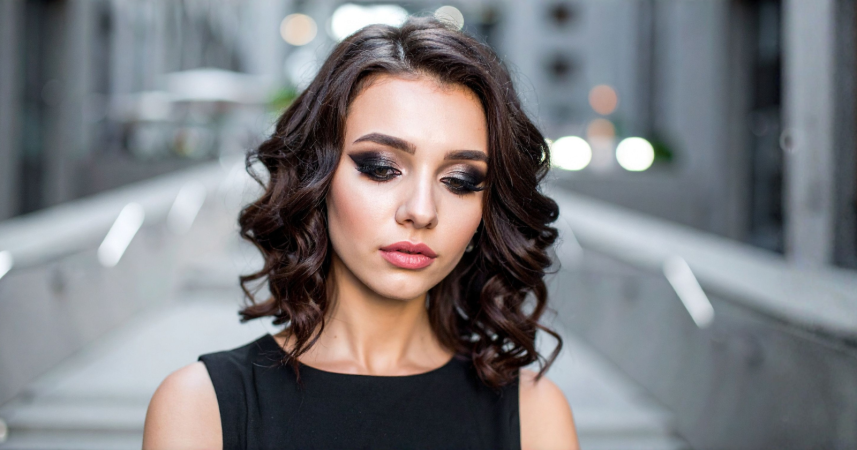
In a lot of big U.S. cities, you’ll see daytime makeup that reads red-carpet: heavy contour, “baking,” a sharp cut-crease, and false lashes before noon.
It photographs beautifully and signals effort. American culture rewards that show-your-work energy. You can read it as a kind of visual résumé: I put time in, I have skill, I care. Meanwhile, much of Europe favors “skin-first” for daytime—sheer bases, blurred edges, a lived-in brow. It’s not that European women don’t do glam; they just save it for the nights and rooms that ask for it. Different social norms around signaling.
When I flew into Paris a few months ago, I went straight to a café from the airport and counted three looks in a row that were essentially concealer, mascara, lip balm. Relaxed, polished, camera-agnostic. It’s a vibe.
2. The Instagram brow
The ultra-defined, squared-off, carved brow had a massive run on American feeds.
It’s meticulous and dramatic. It says, “I commit.” In much of Europe, brows skew softer—brushed up, a little asymmetric, sometimes even messy-on-purpose.
Laminated brows exist on both sides of the Atlantic, but the extreme “blocky” version is rarer in European streetwear. Part of that is the broader preference for permeability: features that look breathable, touchable, seasonal. The U.S. loves crisp borders; Europe often loves blurred ones.
I’ve had makeup artists in California walk me through a ten-minute brow alone. In Lisbon, a stylist told me, “Two strokes, brush, stop.” Both looked good—just different philosophies.
3. Big lips by any means
Overlined lips, lip fillers, and high-shine plumping gloss are normalized in many American scenes—especially entertainment hubs.
Lips have become a canvas for optimization. It’s not purely vanity; it’s trend math. Social platforms magnify features that read clearly on small screens. Full lips read clearly. In Europe, fillers are present too, but you’ll see subtler edges and fewer cartoonish proportions. The cultural tolerance for visible “work” is lower in many cities; the ideal is improvement that doesn’t announce itself.
There’s a psychological undertow here: American culture is more comfortable with visible ambition. Europe tends to prize the illusion of effortlessness. Neither is morally better, but they do lead to different finish lines.
4. Extra-long nails
Coil-long acrylics with ornate nail art are an American art form.
They’re fun, loud, and meticulously engineered. They also announce identity: glam, maximalist, not afraid to claim space. In parts of Europe, nail trends lean shorter—rounded gels, milky neutrals, or a single bold color.
Yes, you’ll find intricate nail art in London or Milan, but you’ll just see less of the day-to-day talon as a lifestyle. Shorter nails map to a “hands-on” aesthetic where function and fashion shake hands.
I noticed this in Berlin last summer: cafés filled with short, clean manis that looked like they could bike to work, tinker with a camera, and still look polished at dinner.
5. Veneer-white smiles
The “Hollywood smile”—perfectly uniform, paper-white veneers or aggressive whitening—sits squarely in the American beauty pantheon.
Straight, bright teeth signal health and status here. In much of Europe, smiles are whiter than the cliché suggests, but not refrigerator-white. Slight variation in shade and shape isn’t a social emergency. The cultural wiring cares more about harmony with the face than perfection in the mouth.
That difference comes down to what a smile is for. In the U.S., it’s part of branding—professional, photogenic. In Europe, it’s part of conversation—human, proportionate.
6. Year-round bronze
Spray tans, self-tanners, and a deep bronze in February are very normal in a lot of American circles, especially where the “healthy glow” is considered a baseline.
Europe certainly tans (ask Ibiza), and the U.K. loves its self-tan aisle, but the expect-everyone-to-be-bronzed year-round vibe is less universal on the continent. Nordic countries, for example, embrace natural winter skin tones the way they embrace wool: it’s seasonal, it’s honest, it’s fine.
I’m plant-based and keep sunscreen in every bag, so I end up talking about tone a lot. The most comfortable folks I see are the ones who treat color like weather—changeable, not a moral project.
7. Preventative injectables as a default
“Baby Botox” in your mid-to-late 20s is practically a normalized wellness errand in many American cities now, lumped in with pilates and green juice.
The pitch is preventive maintenance—immobilize early, wrinkle less later. In plenty of European communities, injectables are there, just used later, lighter, or more privately. The philosophy leans toward treating things when they bother you, not when a dermatologist’s marketing calendar says they might someday.
I’m not anti-procedure. I’m pro-choice-with-eyes-open. Ask three questions: Do I want this, or do I want to look like I want this? Does my face still move the way I like? Would future-me thank present-me?
8. Maximum-length hair extensions
Waist-length waves achieved with taped-in or keratin-bonded extensions are a hallmark of American glam.
They photograph like a shampoo commercial and carry a clear “big night” signal even at brunch. European hair culture often elevates the mid-length cut, natural texture, and air-dried finishes. A French bob in the wild is basically a manifesto: shape over length, movement over mass.
I walked into a Madrid salon with a mood board of glossy, long layers and left with a shoulder-length cut that made my face look sharper and my mornings faster. The stylist said, “Hair should be a rhythm, not a burden.” I think about that a lot.
9. Loud fragrance
Body sprays, strong gourmand scents, and generous clouding—very American.
Fragrance here is often about projection: other people should notice it. In much of Europe, perfume is a closeness ritual. You catch it in a hug, not a room. The olfactory culture can skew drier, woodier, subtler. It’s less “announce” and more “discover.” Again, social norms: the U.S. celebrates broadcast; Europe, in many places, celebrates intimacy.
If you’ve ever walked into a small elevator in Milan and caught a whisper of something herbaceous that vanished by floor three, you know the feeling. It invites people in; it doesn’t push out.
10. Maximalist skincare routines
The 8–12 step routine has deep American roots now—actives layered over actives, morning and night, with weekly extras.
It scratches our optimization itch. If one serum is good, five might be excellent. In much of Europe, pharmacy culture rules: a gentle cleanser, a single active, a moisturizer, a high-SPF sunscreen. Consistency over choreography. Fewer products, fewer reactions, fewer returns. It’s not that European women don’t love skincare; they just don’t treat the bathroom like a lab unless there’s a clear reason.
I’ve mentioned this before but defaults have gravity. If your default is a short, proven routine, you’ll stick with it. If your default is a chemistry set, you’ll ping-pong between miracles and micro-dermatitis.
Why the split?
Underneath the products, you’ll find psychology and context.
-
Visibility vs. proximity. American beauty often optimizes for the camera: stage lights, selfies, the “readable at a glance” face. European beauty often optimizes for the table: dinner, conversation, the “looks good from a foot away” face. Different distances, different decisions.
-
Effort signaling. In the U.S., obvious effort is often appreciated. In much of Europe, obvious effort can break the spell. The story isn’t “she works so hard” but “she looks like herself.”
-
Market mechanics. The American beauty market is huge, fast, and influencer-driven. Novelty moves units. Europe’s fragmented markets give more oxygen to pharmacy staples and heritage houses. When the distribution changes, so do the trends.
-
Climate and commuting. Extreme heat, car culture, and indoor AC matter. So do damp winters, biking to work, and walking cities. Makeup and hair behave differently when you sweat in a pickup versus sprint for a tram.
None of this means one side “gets it” and the other doesn’t. It means culture writes style in pencil. We inherit defaults, then edit.
If you’re reading this in the U.S., a few experiments
Try them even if you love your current routine. Curiosity beats ideology.
-
Do a “conversation check.” Stand a foot from the mirror—the distance of a friend. Adjust anything that only worked at six inches. Soften an edge, blur a line, change a finish. See if it makes you feel more like you.
-
Cut your routine in half for a week. Keep sunscreen. Keep one active. Notice what your skin does when it gets a week off from the product carousel.
-
Swap projection for trail. One day, apply fragrance so only a hug would catch it. Ask yourself at night whether you missed being a cloud.
-
Trade length for shape. If you’re extension-curious or extension-tired, try a mid-length cut with movement. Notice how your clothes and energy change.
-
Pick one feature to relax. Brows less rigid, lips less overlined, lashes less theatrical—just once. See if your face tells a slightly different story.
If you’re reading this in Europe, flip the script for fun. Go maximal for a day and watch how the world responds. Sometimes the point of travel—across borders or across aesthetics—is to feel your habits again.
Bottom line
Beauty is a language, and languages have dialects.
American beauty often speaks in bold subtitles—crisp, bright, and camera-ready. Much of Europe speaks in undertones—soft, proportionate, and close-range.
Both can be gorgeous. Both can be overdone. What matters is choosing on purpose. If a choice makes you feel more you, keep it. If a choice makes you feel like you’re auditioning for a version of yourself you don’t even want, translate.
The happiest people I see don’t chase the “right” trend for their country. They build a personal glossary: a few moves that survive travel, weather, seasons, cameras, and moods.
They know when to turn the volume up and when to cut it entirely. They trust that their face—exactly as it is—can carry both.