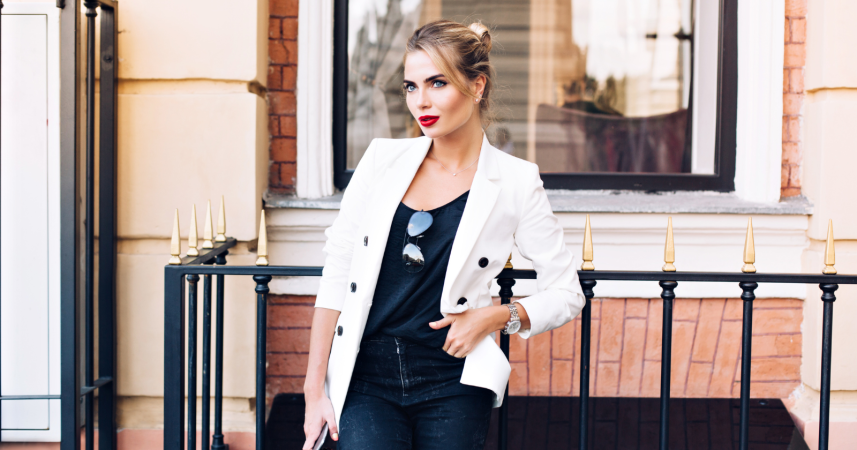
A $20 blazer with a $2 button upgrade and good tailoring can outshine designer.
Looking “expensive” doesn't mean dropping half your paycheck on labels.
It’s all in the choices: fabric, fit, color, and the way every piece plays with the next.
I learned this the hard way in my music-blogging days, when I had to look pulled together for interviews but had a shoestring budget and coffee-stained tote.
Over time, I built a small, tight lineup that does the heavy lifting. Think of it as a capsule with quiet-luxury energy—minus the quiet-luxury price tag.
Below is the 9-piece wardrobe cheat sheet I use and recommend. Every piece is budget-friendly if you shop secondhand, hunt end-of-season sales, or pick solid mid-tier brands.
Mix them and you’ll look like you planned your outfit (even when you didn’t).
I’ll keep this simple and to the point.
1. The blazer
A well-cut blazer is the ultimate elevator. Go for an unstructured or lightly structured style in navy, charcoal, or black.
Those colors read “confident” without shouting. If you find one thrifting that fits almost right, a tailor can tweak the sleeves and waist for not much money—and that small spend does more for your look than any logo ever will.
A matte finish looks pricier than high-shine synthetics, so feel the fabric. Wool blends or quality vegan alternatives with a bit of weight drape better and wrinkle less.
If you’re between sizes, choose the one that fits your shoulders—everything else is tweakable. One trick I swear by: swap the factory buttons for better ones (tortoiseshell or horn-effect).
Two dollars in buttons can make a $60 blazer read like $260.
2. The white tee
A crisp white tee is the fresh sheet of paper your outfit is drawn on.
I like a heavier-weight cotton or a structured plant-based knit with a tight crew neckline. It holds shape, hides what it should, and doesn’t go transparent under bright lights.
Size up one if you want a slightly boxy silhouette that layers under a blazer without bunching.
Care is half the look. Wash on cold, skip the dryer when you can, and store white tees away from darker fabrics so they don’t pick up lint. A steamer is your best friend.
I keep a travel steamer next to my desk because a smooth tee makes everything else look intentional.
3. The button-down
This is your shirt for “I have to look like I tried.” Oxford cloth feels relaxed and sturdy; poplin reads dressier and sleek.
White and light blue are the high-ROI choices because they match everything and photograph well (yes, even you, front-row selfie takers). I aim for a collar that stands up under a blazer and sleeves that hit right at the wrist bone.
Details matter here: a slightly longer back hem, clean stitching, no random logos. Roll the sleeves once or twice to break formality without losing polish.
If you wear jewelry, a slim chain against crisp cotton looks like you meant it.
4. Dark denim
If your jeans are doing the most—whiskers, rips, contrast stitching—you’re making your clothes the main character.
You want the fit to be the story instead. Choose a clean, dark indigo or near-black pair with minimal hardware.
Straight or slim-straight creates sharp lines that work with sneakers or boots.
The right break (where the hem hits your shoe) is a wealth signal people notice subconsciously. Too long looks sloppy; too short looks accidental. I hem mine to just graze the top of the shoe.
If there’s one change that upgrades denim instantly, it’s tailoring the length.
5. Tailored trousers
Nothing says “put together” like trousers with a clean drape. Flat-front reads modern; a single pleat can give extra room through the thigh and look refined.
Choose charcoal, black, or warm taupe in a medium-weight fabric with some structure. You’ll wear them way more than you expect.
I wear mine with the white tee and sneakers for daytime, then swap in the button-down and blazer at night. That simple switch is the kind of low-effort move that makes people think you always know what you’re doing. (I don’t. I just plan for easy upgrades.)
6. Minimal sneakers
Yes, sneakers can look expensive. The trick is minimalism: clean lines, low profile, and a solid color (white, black, or off-white).
Look for quality vegan leather or plant-based materials that wipe clean and keep their shape. No giant contrast logos; no neon. When in doubt, think “gallery-goer in a crisp tee.”
Keep them spotless. If you do nothing else, replace dingy laces, wipe the uppers, and use a magic eraser on the midsoles.
Fresh sneakers make a $30 tee feel like a statement piece.
7. Dress shoes or boots
A pair of loafers or sleek Chelsea boots carries more weight than people admit. In brown or black (match your belt if you wear one), they turn denim into dinner and trousers into “promotion energy.”
If leather’s not your thing, there are excellent vegan options that age gracefully—look for a slightly matte finish and stitch details that aren’t too contrasty.
Take care of them. A cheap shoe that’s polished and healed reads better than an expensive one that’s scuffed and tired. I’ve learned to drop my shoes at the cobbler the minute a heel wears down.
It’s a small habit with a big visual payoff.
8. The structured bag
A structured tote or crossbody in a simple silhouette is your day-long companion. Choose black, tan, or taupe and avoid dangling hardware.
The shape should hold on its own (slouchy can look tired fast).
A clean bag makes even chaotic days look composed, and it quietly says you care about your tools.
I used to carry a soft backpack that looked like it had done three cross-country tours… because it had. Swapping to a boxier, clean tote instantly made me feel five years more grown-up.
Bonus: it protects documents and keeps your laptop from digging into your blazer like a toddler on a sugar rush.
9. The watch or jewelry
This is your exclamation point. A slim, minimal watch or a considered piece of jewelry (a small hoop, a signet-style ring, or a delicate chain) adds intention without screaming for attention.
If you’re wearing a watch, keep the dial simple and the strap clean. If you’re going with jewelry, choose one or two pieces and keep the metals consistent across your look.
The rule I follow: if the outfit is simple, the accessory can carry a little more personality. If the outfit has a strong silhouette (blazer + trousers), keep the accessory quiet.
Either way, polish and proportion are what make small things look expensive.
How to combine the nine (without thinking too hard)
Let’s keep it practical. With these nine pieces, you can rotate through weeks of outfits that look like you own more than you do:
-
Tee + dark denim + sneakers = off-duty sharp.
-
Tee + trousers + sneakers = creative professional.
-
Button-down + denim + loafers = casual dinner ready.
-
Button-down + trousers + loafers = meeting mode.
-
Blazer over any of the above = the “I have standards” layer.
-
Watch/jewelry + structured bag = always the finishing touch.
I’ve mentioned this before but fit beats price. If your tee sits right at the shoulder, your trousers skim the shoe, and your blazer follows your frame, people assume the rest. That’s the psychology of signaling at work: our brains shortcut “neat lines + calm colors + confident posture” into “this person knows what they’re doing.”
Small upgrades that make everything look pricier
-
Tailor tiny things. Hem the pants, nip the waist, shorten sleeves. Those micro-adjustments do more than any flashy logo.
-
Steam, don’t iron (most of the time). A handheld steamer makes even budget fabric drape better.
-
Stick to a tight palette. Black, navy, gray, white, and one accent (olive or camel) help your closet behave like a team.
-
Swap default bits. Better buttons on blazers, cleaner laces on sneakers, a simple strap on your watch.
-
Mind texture. A knit tee under a matte blazer, a smooth tote against wool trousers—contrasts feel luxe.
-
Groom the clothes. Lint roller, sweater shaver, and a shoe brush. Ten minutes on maintenance saves you from spending $100 you don’t need to spend.
Budget strategies that actually work
-
Thrift for structure, buy basics new. Blazers, coats, and structured bags are thrift gold. Tees and underwear? Buy new so they last and feel right.
-
Shop end-of-season. Buy the blazer in February and the sneakers in late August when stores clear stock.
-
Use a one-in, one-out rule. It forces intentionality and keeps your closet from turning into a chaotic archive.
-
Choose the upgrade path. Start with the best you can afford now. Then, when you genuinely need a replacement (not just a dopamine hit), step one rung up.
Why this approach works
On the surface, it’s about clothes.
Underneath, it’s about signals. Simple lines, solid construction, and clean care routines tell a story about attention and self-respect. You’re not trying to fake status; you’re choosing clarity over noise.
That’s what reads as “rich” to most people—not the price tag, but the discipline.
And because I write for folks who care about impact, a nine-piece lineup is kinder to your wallet and the planet. Buying less, choosing well, and making it last isn’t just sustainable language—it actually helps you feel less stressed getting dressed.
Fewer choices. Better choices. More you.
What to do next
If you own a few of these pieces already, great. Pick one missing link (maybe the blazer or structured bag) and add it next.
If you’re starting from scratch, begin with the white tee and dark denim—those stabilize everything else. Then layer upward: sneakers, button-down, trousers, blazer, loafers/boots, bag, watch/jewelry.
Remember: looking expensive is mostly about subtraction—less logo noise, fewer colors, cleaner lines, and zero neglect. You don’t need to spend much to send the right message.
You just need the right nine pieces, cared for and worn with purpose.
That’s the whole cheat sheet.
Keep it tight, keep it clean, and let the fit do the flexing.
If You Were a Healing Herb, Which Would You Be?
Each herb holds a unique kind of magic — soothing, awakening, grounding, or clarifying.
This 9-question quiz reveals the healing plant that mirrors your energy right now and what it says about your natural rhythm.
✨ Instant results. Deeply insightful.