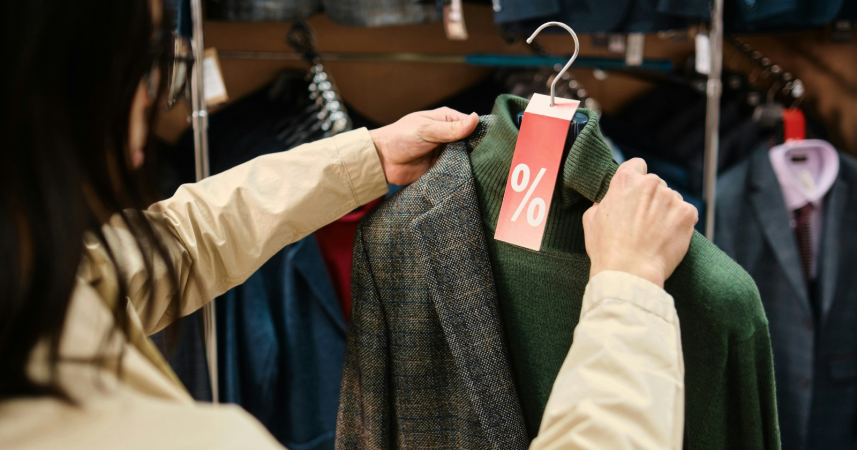
There are specific, tangible reasons why certain pieces get marked down, and understanding them can completely transform how you shop and dress.
Ever wonder why some clothes end up on the sale rack while others fly off the shelves at full price?
It's not just about trends or timing. There are specific, tangible reasons why certain pieces get marked down, and understanding them can completely transform how you shop and dress.
Today, we're diving into the seven tests that separate keeper pieces from sale rack rejects. Let's get into it.
1. The fabric doesn't feel right in your hands
Pick up any piece of clothing and run your fingers across it. What do you feel?
Sale rack items often fail the touch test immediately. The fabric might feel stiff, scratchy, or unnaturally slick. Maybe it's so thin you can see through it, or so synthetic it reminds you of a shower curtain.
Quality fabrics have a certain weight and texture that just feels good. Natural fibers like cotton, linen, and wool have a warmth to them. Even good synthetics should feel pleasant against your skin.
I learned this lesson the hard way with a blazer I bought in Barcelona. Looked great on the hanger, felt like cardboard on my body. It ended up in the back of my closet for two years before I finally donated it.
The fabric is the foundation of everything else. If it fails here, nothing else matters.
2. It doesn't move with your body
Here's a simple test: put the garment on and move around. Reach for something high. Bend down. Sit. Cross your arms.
Does the shirt ride up? Do the pants pull uncomfortably? Does the jacket restrict your shoulders?
Clothing that ends up discounted often looks fine when you're standing still in front of a mirror, but the moment you actually live in it, problems emerge. The armholes are too tight. The waist sits in the wrong place. The length is just slightly off.
Proper fit means the garment should allow natural movement without pulling, bunching, or creating uncomfortable pressure points.
Real life involves movement. Your clothes need to keep up.
3. The color makes you look tired
Stand in front of a mirror in natural light wearing the piece. Now look at your face.
Do you look vibrant and awake, or washed out and exhausted?
Certain colors drain the life right out of your complexion. Maybe that olive green turns your skin sallow. Perhaps that particular shade of pink makes you look ill. Colors that don't work for you will never work for you, no matter how trendy they are.
This is why sale racks are full of those weird in-between colors that don't quite work on anyone. That grayish-brown. That muddy purple. That orange that's somehow both too bright and too dull.
The right colors make your eyes pop and your skin glow. The wrong ones do the opposite. It's that simple.
4. The details are cheap or awkward
Look closely at the buttons. Check the zippers. Examine the seams and stitching.
Sale rack items often reveal their flaws in the details. Buttons that look like plastic toys. Zippers that catch or feel flimsy. Stitching that's already coming loose or looks uneven. Hems that are poorly finished.
I've mentioned this before, but details are where quality really shows itself. A well-made garment has buttons that feel substantial. The zipper glides smoothly. The seams are straight and reinforced at stress points.
Even decorative elements matter. That embellishment that seemed interesting on the rack might actually look cheap and dated in person. Those pockets placed in a weird spot. That collar that doesn't quite lay flat.
These details might seem small, but they're what people actually notice when they see you wearing something. And they're what determine whether a piece lasts one season or ten years.
5. It doesn't work with anything you own
Think about your closet right now. What would you wear this piece with?
If you're drawing a blank, that's a problem.
Successful clothing fits into your existing wardrobe. Sale rack rejects are usually those oddball pieces that require an entire new outfit built around them. That jacket in a shade of blue that doesn't match any of your pants. Those pants with a weird pattern that clashes with everything. That dress in a length that doesn't work with any of your shoes.
I used to think being adventurous with clothing meant buying things that didn't match anything else I owned. Turns out, I just ended up with a closet full of clothes I never wore.
The best pieces are versatile. They play well with others. They create multiple outfit options instead of just one.
6. The proportions are off for your body
Every body is different, and certain cuts just don't work for certain shapes. This has nothing to do with being a certain size and everything to do with proportions.
Maybe you have broad shoulders and that particular sleeve cut makes them look even broader. Perhaps you're petite and that midi length hits you at the widest part of your calf. Or you're tall and that "regular" length looks like it's meant for someone six inches shorter.
Wearing clothes that fit your body's proportions correctly can actually impact how confident you feel and how others perceive you.
Sale racks collect these proportion misfits. They're the pieces cut for an idealized body that doesn't match most real people. Or they're trendy cuts that only work on a narrow range of body types.
When proportions are right, you know it. The garment balances your frame. It creates a pleasing silhouette. It makes you look like the best version of yourself.
7. You can picture it getting old fast
Here's the final test: imagine this piece six months from now. A year from now.
Can you see the fabric pilling? The color fading? The shape warping after a few washes? The style suddenly looking dated?
Some clothing is designed to last a season and then fall apart. It's made from fabrics that degrade quickly. It's constructed in ways that don't hold up to regular wear and washing. Or it's so trendy that it'll look ridiculous once the moment passes.
During my travels through Japan, I noticed something interesting about how people there approach clothing. They invest in quality pieces that last years, even decades. The focus is on timeless style and construction that endures.
Meanwhile, fast fashion brands pump out pieces designed for obsolescence. They're meant to be worn a handful of times and then replaced. That's why they end up on sale racks so quickly, and why they're still not worth buying even at 70% off.
Quality clothing ages gracefully. It might fade a bit or soften with wear, but it maintains its structure and appeal. Poor quality clothing just looks progressively worse until you finally throw it out.
The bottom line
So there you have it. Seven tests that separate clothing worth buying from sale rack rejects.
The truth is, sale racks exist for a reason. They're where clothing goes when it fails to meet the standards that matter for how you actually look and feel.
Next time you're tempted by a steep discount, run through these tests first. Touch the fabric. Move around in it. Check the color against your skin. Examine the details. Think about your existing wardrobe. Consider the proportions. Picture it in six months.
If it passes all seven tests? Then maybe you've found a genuine bargain. If not, walk away. Your closet will thank you.
What’s Your Plant-Powered Archetype?
Ever wonder what your everyday habits say about your deeper purpose—and how they ripple out to impact the planet?
This 90-second quiz reveals the plant-powered role you’re here to play, and the tiny shift that makes it even more powerful.
12 fun questions. Instant results. Surprisingly accurate.