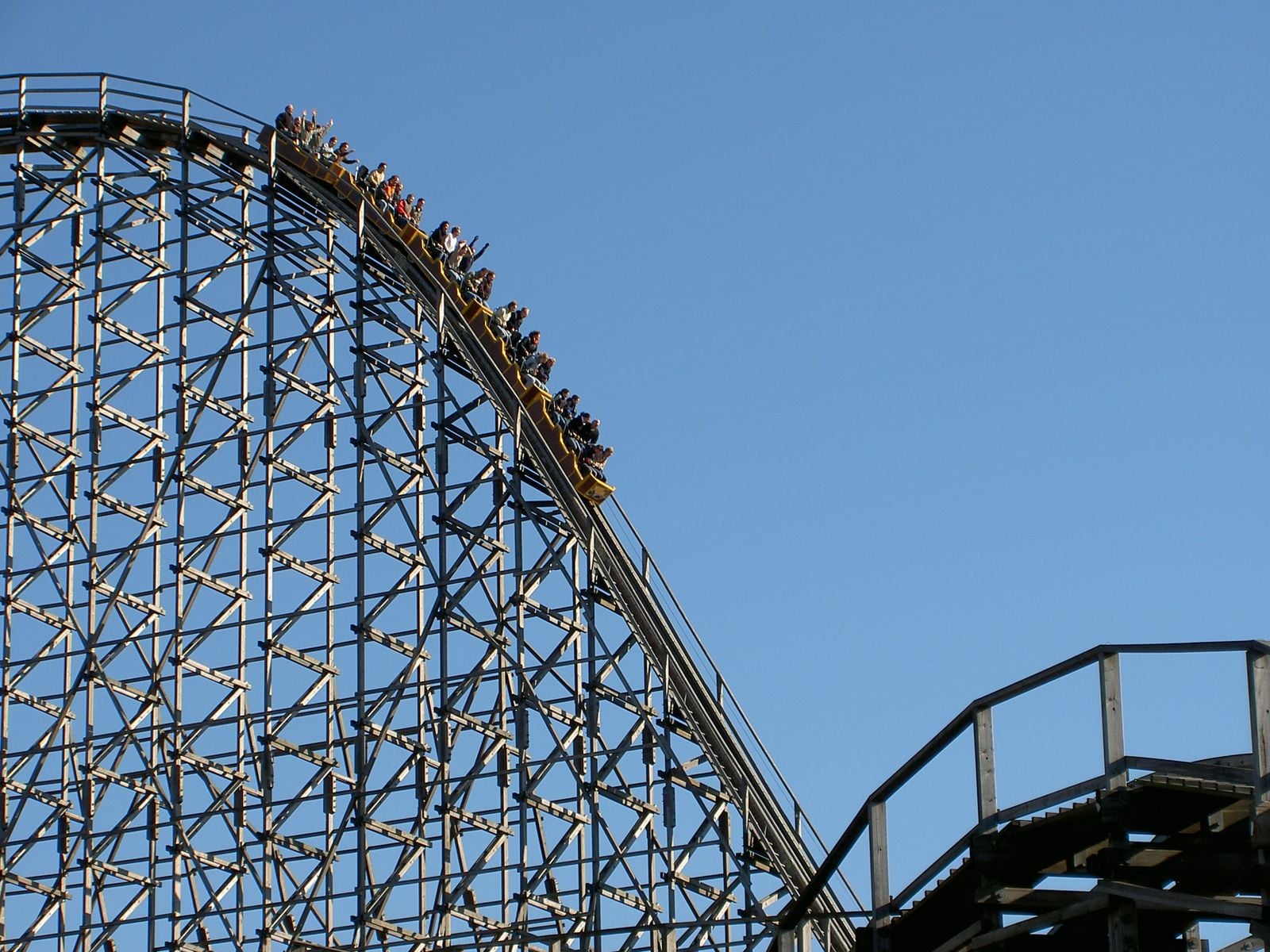
Pennsylvania is where the wooden roller coaster was born, refined, and — against every prediction about steel's inevitable takeover — kept alive. A cross-state tour of its surviving giants reads less like a theme-park itinerary and more like a working museum of American engineering, where 1920s timber lattices still rattle riders down 70-foot drops every summer afternoon.
The conventional assumption is that wooden coasters are nostalgia objects, lovingly maintained but technologically frozen. Atlas Obscura's recent travel feature makes the opposite case: Pennsylvania's parks are still producing some of the most ambitious wooden coasters built anywhere, and the form keeps evolving.
The pilgrimage starts at Kennywood, outside Pittsburgh.
According to Atlas Obscura, Kennywood's Jack Rabbit has been running since 1920, making it one of the oldest operating roller coasters in the world. Its 70-foot double-dip drop was engineered by John A. Miller, whose patented "underfriction" wheel technology — essentially, wheels that gripped the track from below — solved the problem that had kept coasters slow and cautious for decades.
That single innovation unlocked the speed, airtime, and inversions that defined the genre. Miller's fingerprints are all over the park; his 1927 Racer is a rare Mobius-loop design where two trains share a single continuous track. Thunderbolt, dating to 1924, still operates a few hundred feet away.
Eastward, at Dorney Park, the Thunderhawk debuted in 1923 under the name "the Coaster." Atlas Obscura reports it was designed by Herbert Paul Schmeck of the Philadelphia Toboggan Company and still runs at 45 miles per hour — a velocity that felt revolutionary a century ago and remains satisfyingly punishing today.
Schmeck's other surviving work, the Rollo Coaster at Idlewild & SoakZone, was built into a wooded Pennsylvania hillside in 1938. It's a family ride, scaled down and tucked into the trees, and it reveals something the bigger coasters obscure: these structures were designed in conversation with the landscape, not on top of it.
Then there's Knoebels, in central Pennsylvania, home to the Phoenix. The coaster was relocated from a defunct Texas park in the mid-1980s and rebuilt piece by piece. Atlas Obscura notes the Phoenix holds the record for the longest-running No. 1 wooden coaster ranking from Amusement Today's industry poll — a fan-voted distinction it has defended for years against newer, taller competition.
The modern chapter is where the story gets interesting. Hersheypark's Lightning Racer, opened in 2000, threads 3,400 feet of dueling track through a figure-eight in which two trains race side by side. Waldameer's Ravine Flyer II, which debuted in 2008, is the tallest and fastest wooden coaster in the state, with 120-foot and 105-foot drops that send trains across a public highway.
Neither could have been built without computer-aided design. Both still rely on the timber, bolts, and gravity that defined the form a century earlier.
What makes Pennsylvania's coaster corridor worth a deliberate trip — rather than a single park visit — is the continuity. Few places in the world let a traveler ride a 1920 Miller, a 1923 Schmeck, a 1938 hillside family coaster, and a 2008 record-setter inside the same long weekend. The state is marketing the experience as part of a broader push around small-town getaways and scenic backroads.
There's a sustainability angle worth naming. Wooden coasters are repaired, not replaced. Track sections get swapped out board by board over the off-season; the structure outlives the components. The Phoenix is literally a Texas coaster reborn in Pennsylvania. That kind of patient stewardship sits oddly well alongside conversations about how novel travel experiences shape memory and aging — the rides are old, but the experience is engineered to feel new every time.
The lesson, for travelers who care about where their dollars land, is that the cultural infrastructure worth protecting isn't always behind glass. Sometimes it's a wooden lattice in a Pittsburgh suburb, repainted every spring, still doing exactly what it was built to do in 1920.