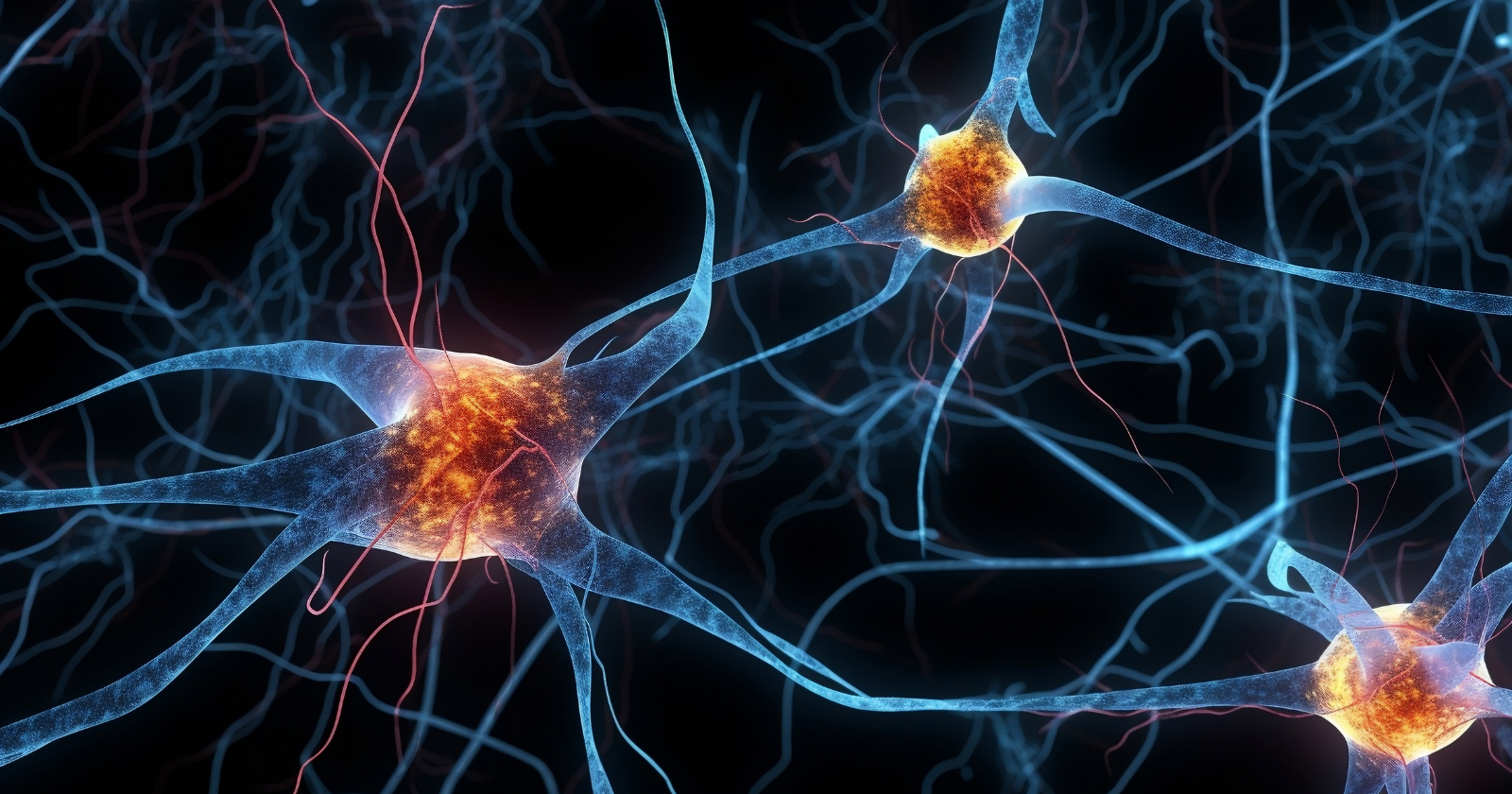
A molecule that does not attack Alzheimer's plaques directly — but instead reawakens the brain's own immune cells to deal with them — has shown promise in animal models, according to researchers in Spain and Switzerland. The compound, called OLE, appears to reprogram microglia, the brain's resident cleanup crew, so they regain protective abilities that fade as the disease progresses.
The work was led by José Vicente Sánchez Mut at the Institute for Neurosciences, a joint center of the Spanish National Research Council (CSIC) and Miguel Hernández University of Elche (UMH), together with Johannes Gräff at the École Polytechnique Fédérale de Lausanne (EPFL). Their findings were published in June 2026 in the journal Cell Death & Disease. It points to a different way of thinking about a disease that has frustrated drug developers for three decades.
The conventional approach has been to attack the plaques
Alzheimer's drug development has focused heavily on beta-amyloid, the sticky protein that clumps into plaques between neurons. The dominant strategy has been to design antibodies or small molecules that bind to amyloid and help remove it. Lecanemab and donanemab are approved drugs that work this way.
The results have been modest. These drugs slow cognitive decline somewhat in early-stage patients but do not stop or reverse the disease, and they carry risks of brain swelling and bleeding.
The OLE study asks a different question. Instead of attacking plaques directly with an outside agent, what if the brain's own cleanup crew could be switched back on?
What microglia do — and why they stop doing it
Microglia are the brain's resident immune cells. In a healthy brain, they patrol tissue, clear debris, prune unnecessary synapses, and respond to injury. They are also the cells responsible for surrounding and containing amyloid plaques when those plaques begin to form.
In Alzheimer's, microglia progressively lose this protective function. They become inflammatory, sluggish, and in some cases actively harmful to surrounding neurons. The disease, in part, is a story of the brain's immune system failing at its job.
What OLE actually does
OLE, short for N-oleoyl-Leucine, is a molecule derived from the PM20D1 gene, which earlier research had already linked to Alzheimer's. The researchers found that OLE can shift microglia back toward a more protective state. After treatment, the cells migrated toward beta-amyloid plaques and surrounded them, forming a barrier that limited contact between the plaques and nearby neurons and reduced their toxic impact on brain tissue.
The team tested the compound across several models. They began with genetically modified worms (C. elegans) engineered to produce beta-amyloid, where OLE reduced protein aggregation and improved movement. They then gave OLE to mouse models of Alzheimer's for three months. The treated animals performed better on memory tests and showed fewer beta-amyloid plaques than untreated mice. According to the paper, OLE prompted microglia to associate with amyloid plaques, reducing their size, number and toxicity while improving neuroprotection and cognition.
To work out how, the researchers profiled the activity of thousands of individual brain cells. Microglia turned out to be the cells most strongly affected by the treatment, activating pathways involved in clearing beta-amyloid and regaining their ability to move toward plaques and contain them. "One of the most significant findings is that we have identified a molecule capable of restoring microglia's protective function," Sánchez Mut said. The lab also reported evidence of the same OLE-driven response in human Alzheimer's brain tissue.
Why this matters beyond Alzheimer's
If an approach that reactivates the brain's own immune machinery proves effective in human trials — and that remains a significant if — it would represent a shift in how brain diseases are treated. Most current therapies for neurodegenerative conditions try to compensate for what the brain has lost or remove what is accumulating. Restarting the brain's own defense system is a different proposition.
It also has implications for other conditions involving microglial dysfunction, including Parkinson's, ALS, and forms of dementia where amyloid is not the primary culprit. The brain's immune system is increasingly understood as a central player in nearly every neurodegenerative disease.
There is a broader pattern worth noticing. Across multiple areas of medicine, from cancer immunotherapy to metabolic disease, many of the most promising recent advances have come from working with the body's existing systems rather than around them.
The caveats
Animal results do not reliably translate to humans, especially in Alzheimer's research. Many compounds have cleared plaques in mice and done nothing for patients. Three months in a mouse is not three months in a person, and rodent models of Alzheimer's are imperfect approximations of the human disease.
Human trials are the next step, and those typically take years. Safety has to be established before efficacy can be measured. Whether OLE can cross the blood-brain barrier reliably in people, whether it produces side effects when administered chronically, and whether it helps patients whose disease has already advanced are all open questions.
Still, the logic of the approach is compelling. The brain has a defense system. That system breaks down in Alzheimer's. A molecule that can restart it, if it works in people, would be a meaningful addition to a field that has needed new ideas.
What happens next
The findings are covered by two European patents, one of them owned by the CSIC, which the researchers say strengthens the translational potential of the work. From here, developing a therapy typically means partnership with pharmaceutical companies, preclinical safety studies, and eventually Phase 1 trials in healthy volunteers. The path from a promising mouse study to an approved drug spans many years, and most candidates fail somewhere along the way.
For people currently living with Alzheimer's or watching family members decline, that timeline is brutal. The honest read is that advances like this one, however genuine, are still years away from changing anyone's prognosis.
What the work changes immediately is how the field frames the problem. The brain's immune cells are not just bystanders in Alzheimer's. Their behavior, it appears, can be influenced — and possibly reversed.