Children who learned to read the weather inside their parents' faces before they learned to read books often grow into adults who can sense a shift in a room within seconds, and exhaust themselves mistaking that radar for empathy
Children born into emotionally volatile homes develop hypervigilance disguised as empathy, learning to read distress in others' faces before they can read words—a survival skill that often becomes a lifelong exhaustion.
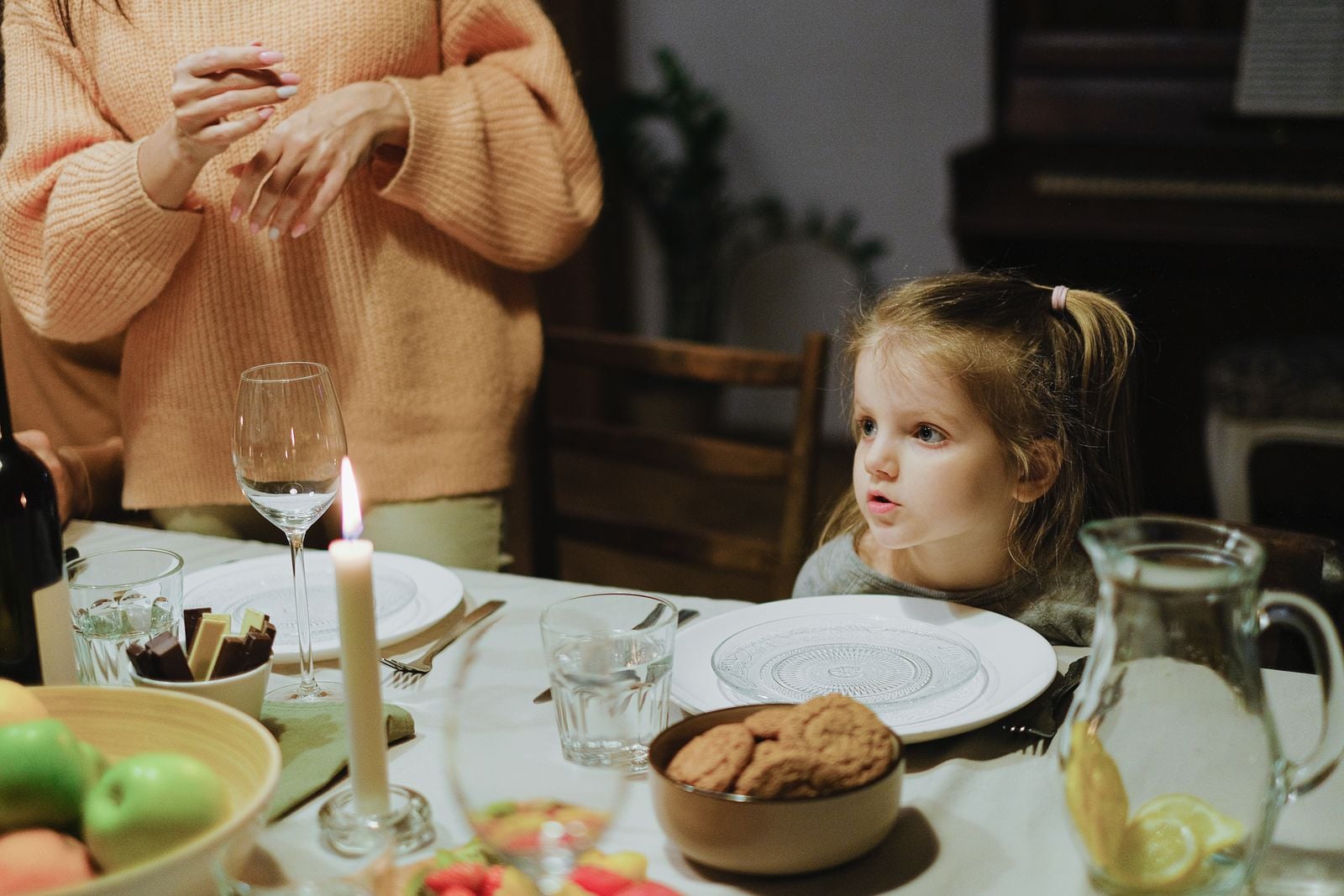
Some children learn the mood of a room before they learn the alphabet.
They know the difference between a parent who is quiet because they are tired and a parent who is quiet because the whole evening is about to change. They learn the face, the footsteps, the pause before a sentence, the way a cupboard door closes when the day has gone badly.
For some children, that sensitivity stays close to kindness. For others, it becomes a job.
The conventional wisdom about emotionally intuitive adults is that they were born sensitive, perhaps highly attuned by temperament, and grew into the role of the empath naturally. That framing flatters the trait but misses the mechanism. A lot of what gets called empathy in adulthood is scanning — a habit learned in childhood, in a household where reading a parent's face accurately could mean the difference between a calm afternoon and a bad one.
What scanning actually is
Scanning is the constant, low-level monitoring of other people's emotional states for signs of impending change. It is forecasting — predicting the weather inside another person so you can dress for it before it arrives.
Children develop it early, and they develop it best in homes where the adult mood is both unpredictable and consequential. If a parent's bad day determined whether dinner was warm or tense, whether questions were welcomed or punished, whether silence was safe or a warning, the child learns to treat micro-expressions as useful information.
This is an adaptation. It is not a personality flaw, and it is not proof that someone is somehow more emotionally evolved than everyone else. It is a skill built through repetition, usually in an environment where paying close attention made life feel a little more manageable.
Why the radar gets mistaken for empathy
Empathy, at its best, is the capacity to feel with another person while remaining anchored in yourself. Scanning is different. Scanning treats the other person's emotional state as the weather system you must navigate before it turns against you.
From the outside, the two can look almost identical. The scanner notices when a friend is quieter than usual, when a partner's shoulders tense before they speak, when a colleague's smile does not reach their eyes. Friends describe scanners as deeply intuitive, the ones who always know. Partners describe them as remarkably present.
What the scanner knows, and rarely says, is that none of this feels entirely like choice. The information arrives whether they want it or not. The body registers the shift before the conscious mind decides whether the moment deserves attention.
This is the part that exhausts people for decades. Real empathy has room for reciprocity. Scanning often does not. It can feel less like connection and more like surveillance, performed by a person who learned long ago that missing a cue had consequences.
The cost underneath the trait
The cost of chronic scanning is often not dramatic at first. It looks like tiredness after social plans, irritability after a tense meeting, or the strange heaviness that follows spending time with someone whose mood has to be managed carefully.
Over time, the person may begin to notice a pattern. They do not simply listen to other people. They track them. They do not simply enter rooms. They assess them. They do not simply relax in relationships. They keep one part of themselves alert, just in case the atmosphere changes.
That kind of attention has a price. The original child may have needed it. The adult is still paying for it.
How the pattern gets installed
Children do not consciously decide to become scanners. The trait is installed by environment, repeatedly, across thousands of small interactions in which paying close attention to a parent's emotional state produced a better outcome than not paying attention.
The UCL research on non-inherited genetic effects on child development adds a useful layer here. The study looked at how parental traits and family environments can shape children's outcomes beyond the genes children directly inherit.
In ordinary language, that means children are not just shaped by what they are born with. They are also shaped by the atmosphere around them, the patterns they have to adapt to, and the emotional habits that become normal because normal is simply what happens every day.
A parent who struggles to regulate their own moods can create a household where the child learns to compensate. The child grows up to look, from the outside, like someone with unusual emotional intelligence. From the inside, they may grow up tired from having carried the emotional temperature of the room for too long.
This is the part the trait literature often misses. The skill is real. The cost is also real. And the cost is rarely acknowledged because the skill keeps producing social rewards — friends who feel deeply seen, partners who feel anticipated, employers who appreciate the person who reads the room before the meeting starts.
The relational tax
Adult scanners often end up in relationships where their attentiveness becomes the structural support of the connection. They are the ones who notice. They are the ones who adjust. They are the ones who anticipate the other person's discomfort and quietly remove it before it can be named.
The pattern is consistent. The radar that kept the child safe becomes the labour that holds the adult's relationships together. And because the labour is invisible — because no one sees the scanning, only the result — the scanner rarely receives the kind of reciprocity that would refill them.
The same dynamic appears in the way scanners notice small changes in other people — the haircut, the weight loss, the new quietness. The noticing is automatic. The cost of the noticing is private.
The exhaustion that finally arrives
For many adult scanners, the exhaustion does not announce itself until their thirties or forties. Before that, the skill is mostly an asset. It makes them good at their jobs, good in their friendships, good in early-stage relationships where attentiveness reads as romance.
The exhaustion arrives when the system has been running too long without replenishment. It often coincides with a life event that increases the load — a child, a demanding role, an aging parent, a partnership that requires more emotional infrastructure than the scanner can provide alone. The person who could once read every room in three seconds suddenly cannot bear to walk into one.
This idea connects to a video from Justin Brown about ayahuasca and spiritual seeking. He examines how people in that world can mistake intense experiences for actual transformation, which feels remarkably similar to confusing hypervigilant attention for empathy.
This collapse is often misread, both by the scanner and by the people around them, as burnout from work or a general slide toward introversion. Sometimes it is simpler than that. A way of paying attention that once protected the person has finally become too heavy to carry everywhere.
Untangling empathy from scanning
The work of differentiating these two — the genuine capacity for empathy from the trained habit of scanning — is slow and not particularly dramatic. It involves a lot of small experiments.
What happens when you walk into a room and choose not to read it? What happens when a friend's mood shifts and you let them name it instead of naming it first? What happens when you let a silence sit instead of filling it with a question designed to relieve the other person's discomfort?
Adults who can sit through a long silence without rushing to fill it often discover that the silence itself was the rest they had been asking for.
The point is not to become less caring. The point is to discover which part of the attunement was always going to be there because the person genuinely cares, and which part was installed by a childhood that needed the radar to stay safe.
What changes when the trait gets named
Naming the pattern does not eliminate it. A habit that began in childhood does not unravel simply because the adult finally understands its origin. But naming does something more practical. It allows the adult to start tracking the difference between empathy that feels like choice and scanning that feels like compulsion.
From there, the trait becomes usable in a way it was not before. The scanner can decide which rooms deserve the radar and which ones do not. They can decide which relationships earn the labour and which ones have been receiving it for free. They can begin to spend their attention deliberately rather than involuntarily.
This is the slow project of mid-life for a lot of people who grew up reading the weather. The radar still works. It may always work. What changes is whether the person treats it as their identity or as a tool — one that requires maintenance, that has a battery life, and that was never, despite what everyone around them assumed, the same thing as the heart underneath it.