Many women describe decades of juggling caregiving responsibilities — aging parents, children, and demanding jobs — that leave little room for personal choice. That sentence is the quiet shape of most women's adult lives. Cooking, planning, anticipating, accommodating. And then one day — the kids leave, the parents pass, the spouse retires or doesn't come home — and the kitchen belongs to one person for the first time in forty years.
That's the moment a lot of late-life dietary changes actually happen. Not at a doctor's office. Not after a documentary.
The cultural script around older adults going plant-based usually flattens the story into something tidy. Cholesterol numbers. A scare. A Netflix film. A grandchild who lectured them at Thanksgiving. The longevity industrial complex would love for everyone to believe this is about extending the warranty on the body, because that framing sells books, supplements, and clinic visits.
But the people who actually make the shift after sixty often tell a different story when asked carefully. It's a story about who they were cooking for, and who they're not cooking for anymore.
The lifetime of cooking what other people wanted
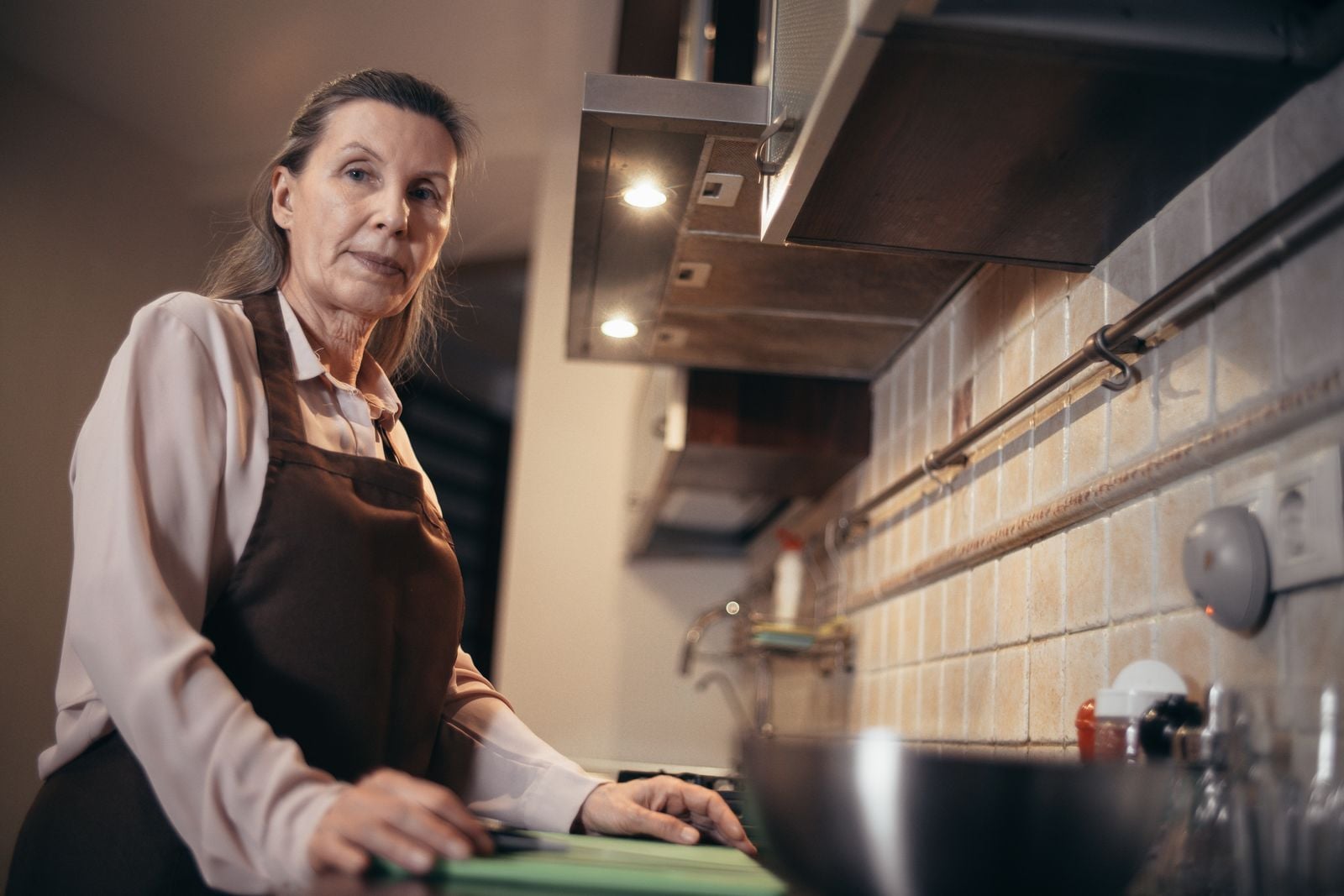
The number of American family caregivers has risen substantially over the past decade. That growth is overwhelmingly absorbed by women, and most of that absorption happens in the kitchen — three meals a day, every day, for decades, structured around what someone else will eat.
A woman who raised three kids learned to cook around the picky one. The one who hated mushrooms. The one with the nut allergy. The husband who needed his meat-and-potatoes after a long day. The mother-in-law who came over Sundays and didn't like garlic. None of this was framed as servitude. It was framed as love, and most of it genuinely was.
But love and habit braid together over forty years until they're indistinguishable. By sixty-five, the cook of the family doesn't quite know what she wants for dinner anymore, because the question hasn't been relevant in a very long time.
What independence actually means at this age
Independence in older adults encompasses self-determination, freedom from coercion, and freedom of thought, selection, and performance. Most discussions of senior independence focus on the physical version — can she still drive, still bathe herself, still climb the stairs.
The psychological version gets less airtime. It's the freedom to choose, and to have those choices register as legitimate.
For someone who spent forty years calibrating dinner around five other appetites, choosing what to put on her own plate is not a small act. It is, in a real sense, the first decision of a new life.
Quality of life in later years blends objective measures, such as functional ability and health status, with subjective evaluations, including life satisfaction and perceived autonomy. That word — autonomy — does a lot of work. It's the difference between a body that still functions and a life that still feels like yours.
Why the shift often looks like plants
Plant-based eating happens to be the dietary direction most often chosen because it's the one that was most often suppressed. Meat-centered cooking in mid-twentieth-century American households was not a personal preference for the cook. It was a structural feature of feeding a family on a budget, with husbands who expected it, and with cultural norms that treated a vegetable-heavy plate as somehow incomplete.
When the constraints lift, what surfaces underneath is sometimes a person who actually prefers a pot of white beans and braised greens to a roast. She didn't know that about herself for forty years because nobody asked.
This is not universal, and it would be condesccondescending to suggest every older woman is a secret plant-eater liberated by widowhood. Plenty of grandmothers love a steak and always will. The point isn't the food. The point is the authorship.
The longevity narrative is doing other work
The wellness industry has a strong financial interest in framing late-life dietary change as a health optimization story. It sells supplements, programs, books, and clinic visits. The use of dietary supplements has increased sharply over the past decade, with products often marketed as simple ways to boost energy, support immunity, protect brain health or even promote longevity — even though most people who already eat reasonably well don't benefit from them.
That marketing pressure shapes how older adults are asked to explain their own choices. A woman who switched to plant-based meals because she finally wanted to gets handed a script that says she did it for her heart. The script is easier to repeat at the doctor's office, easier to defend to skeptical adult children, easier to post about.
The autonomy story is harder to tell, because it implies a quieter grief underneath. The decades of feeding people who never quite noticed.
The taste buds change too
There's a physiological layer here worth naming. Older adults' relationship to salt, fat, and richness genuinely shifts. Dietary recalibration in later life can carry measurable cardiovascular benefit, particularly regarding long-standing patterns of salt consumption.
But measurable benefit isn't usually what drives the change. Most people don't restructure their plate because of a graph. They restructure it because heavy food no longer feels good in the body, and lighter food does, and for the first time in decades there's nobody at the table to perform appetite for.
The health follows the autonomy. Not the other way around.
What this looks like in practice
The shift rarely arrives as a manifesto. It arrives as small experiments. A Tuesday dinner of roasted vegetables and farro because nobody's asking where the chicken is. A Saturday lunch of toast and a perfect tomato. A pot of lentil soup that lasts three days because there's no one to complain about repetition.
For some, the change is partial and stays partial. They eat fish twice a week, eggs on weekends, a piece of cheese with an apple before bed. The label doesn't matter and was never the point.
This connects to a broader pattern — the way the most genuine form of minimalism usually arrives in the second half of life, a quieter practice of letting go of outdated identities and expectations. Late-life dietary change is often a kitchen version of the same thing.
The grief that nobody mentions
There's something underneath all of this that deserves to be said directly. For many women who spent forty years cooking for a family, the freedom to cook only for themselves arrives alongside loss. The kids moved out. The husband died, or the marriage ended, or both partners are still alive but the kitchen has gone quiet anyway because someone is sick, or distant, or simply older.
The new plate is liberating and lonely at the same time. The two feelings live in the same kitchen.
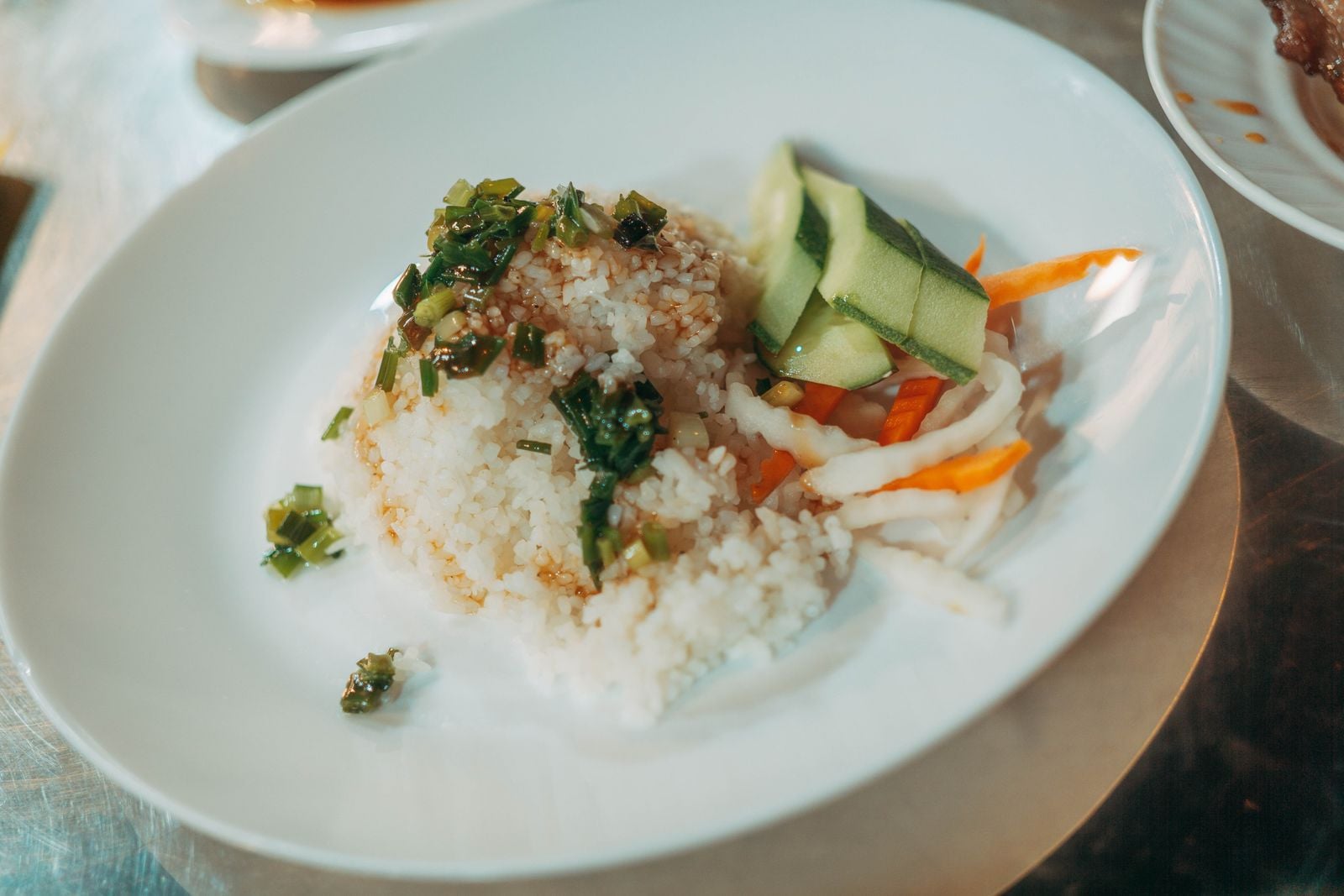
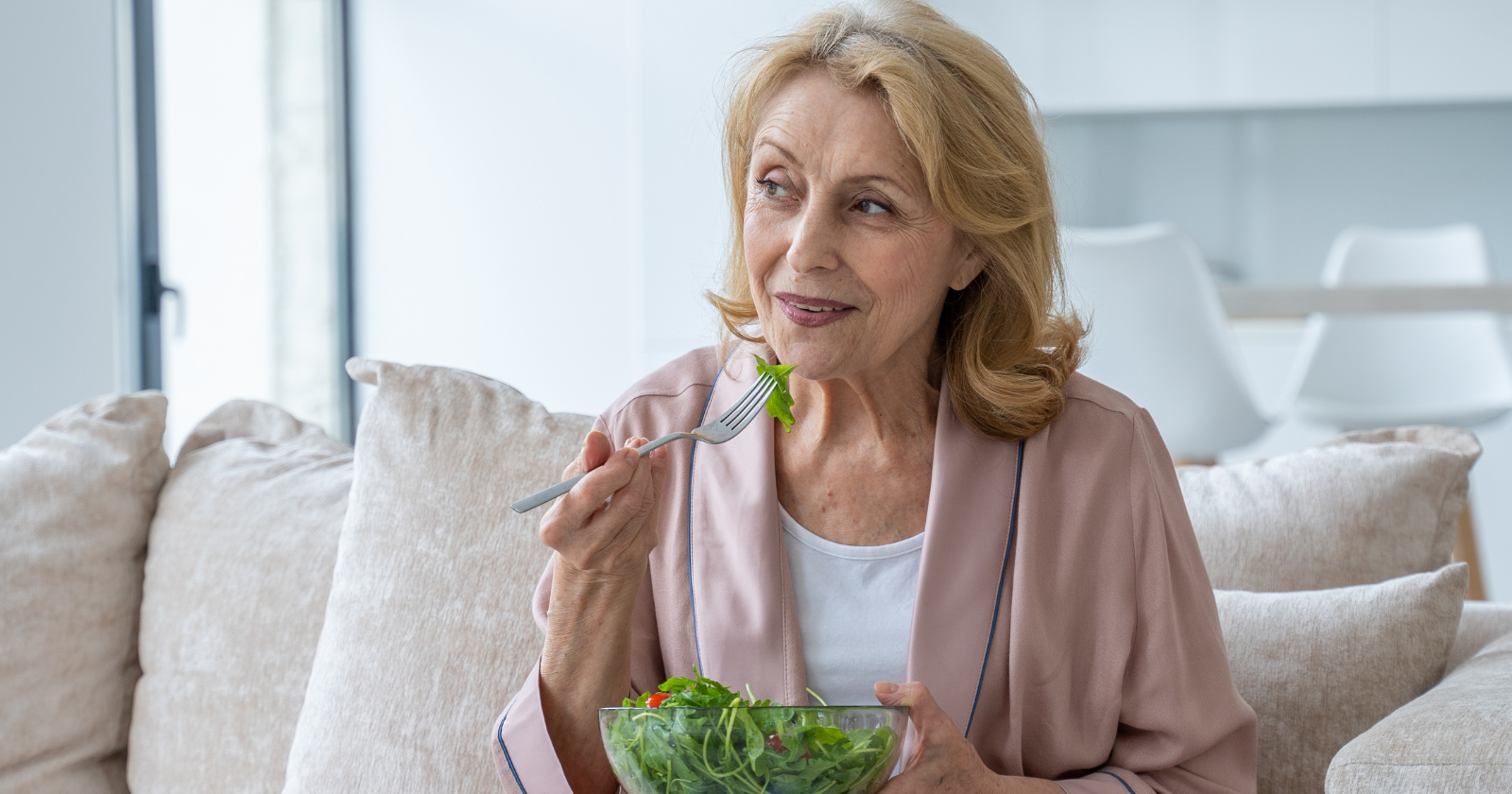
This is why framing the shift as a wellness trend misses so much. A woman eating roasted cauliflower alone at her kitchen table on a Wednesday night is doing something more complicated than optimizing her biomarkers. She's figuring out what she actually likes, possibly for the first time. She's also sitting with the fact that nobody is coming home to ask what's for dinner.
People who feel most at peace when alone aren't necessarily lonely; they have simply found the one environment in which the editing stops. The kitchen at sixty-five is often that environment.
Why the framing matters
How we describe these choices shapes how older adults are allowed to make them. If late-life plant-based eating is framed as a longevity hack, then the woman who chose it gets pulled into a marketplace of supplements, meal plans, and influencers selling her back the autonomy she already has.
If it's framed as autonomy — the simple right to finally cook what she wants — then the choice belongs to her. The companies that profit from selling her certainty have less of a foothold.
There's also a generational layer. The freedom to choose is itself a primary driver of well-being, separate from the content of the choice. The plate matters less than the fact that she picked it.
What this asks of the rest of us
If you have a mother, grandmother, or aunt who has quietly started eating differently in the last few years, the most respectful response is curiosity rather than explanation. Don't hand her the health script. Don't credit a documentary. Ask her what she's making for herself this week, and listen for the specifics — the soup she's been wanting to try, the bread she's been baking, the salad she had three times in a row because she could.
The answer is probably not about chasing longevity. It's probably about finally having a kitchen that answers to one person.
And that, more than any biomarker, is what successful aging actually looks like. A woman, alone at her table, eating exactly what she wants for the first time in forty years. Not performing health. Not performing virtue. Just eating.