Joseph Goldberger, an epidemiologist with the US Public Health Service, concluded that pellagra came from diet and poverty rather than from an infectious organism, a conclusion set against a rival commission's in a 2014 paper in the American Journal of Epidemiology by Stephen Mooney, Justin Knox and Alfredo Morabia on the cotton mill villages of South Carolina. Between 1906 and 1940 the disease reached epidemic proportions in the United States, with more than 3 million cases and 100,000 deaths, figures the paper takes from A. J. Bollet's 1992 history of the epidemic.
Pellagra, meaning "sour skin" in Italian, was known by its four Ds: dermatitis, diarrhea, dementia and death. Cases fell almost always among the very poor, and disproportionately among Black Americans and women. Goldberger's investigation, and the diets he traced the disease to, are taken up in the VegOut video below.
Goldberger and the orphanage diets
Congress demanded action on pellagra and asked the surgeon general to investigate. In 1914 Goldberger, then employed by the Hygienic Laboratory, the forerunner of the National Institutes of Health, was assigned the task of determining the cause, according to the NIH Office of History's account in The NIH Catalyst. He began with orphanages and prisons, which had the highest numbers of cases.
The pattern there did not fit an infectious agent. Caregivers, physicians and prison guards in daily contact with patients did not fall ill. In the orphanages, children under six and those over 12 were spared, and only the seven- to 11-year-olds were sick. The diets differed by age. On top of a basic diet of biscuits, cornmeal mash, grits, molasses, sowbelly and gravy, the youngest children had milk and those over 12 were given meat. The group in between had neither. Goldberger asked that the seven- to 11-year-olds be given a glass of milk daily, and existing skin lesions cleared while incidence fell.
He repeated the observation in a prison whose diet included cornmeal but no protein and few vegetables, using broad dietary changes to cause pellagra and then to cure it. He also worked to rule out infection directly, using nasal secretions, scabs, blood, urine and feces from patients in attempts to transmit the disease to willing subjects, including himself, his wife and close associates, by ingestion and by injection. None of the attempts succeeded.
The earlier Thompson-McFadden Commission, which worked in the Spartanburg area from 1912 to 1914, had reached the opposite conclusion. It canvassed every household in six mill villages, found no association between pellagra and most foods, including corn, and dismissed an observed negative association with milk because milk's "use did not fully insure against the development of the disease." It also classified every house by distance from a case and found incidence falling with that distance, which it read as support for an infectious cause. Goldberger's conclusion was rejected by much of the medical establishment and by Southern political leaders. He spent the last 15 years of his life trying to isolate the unknown nutrient and never accomplished the goal. Niacin, also called vitamin B3, was proven in 1937 to be the specific missing component.
What lime-cooking does, and what is still argued
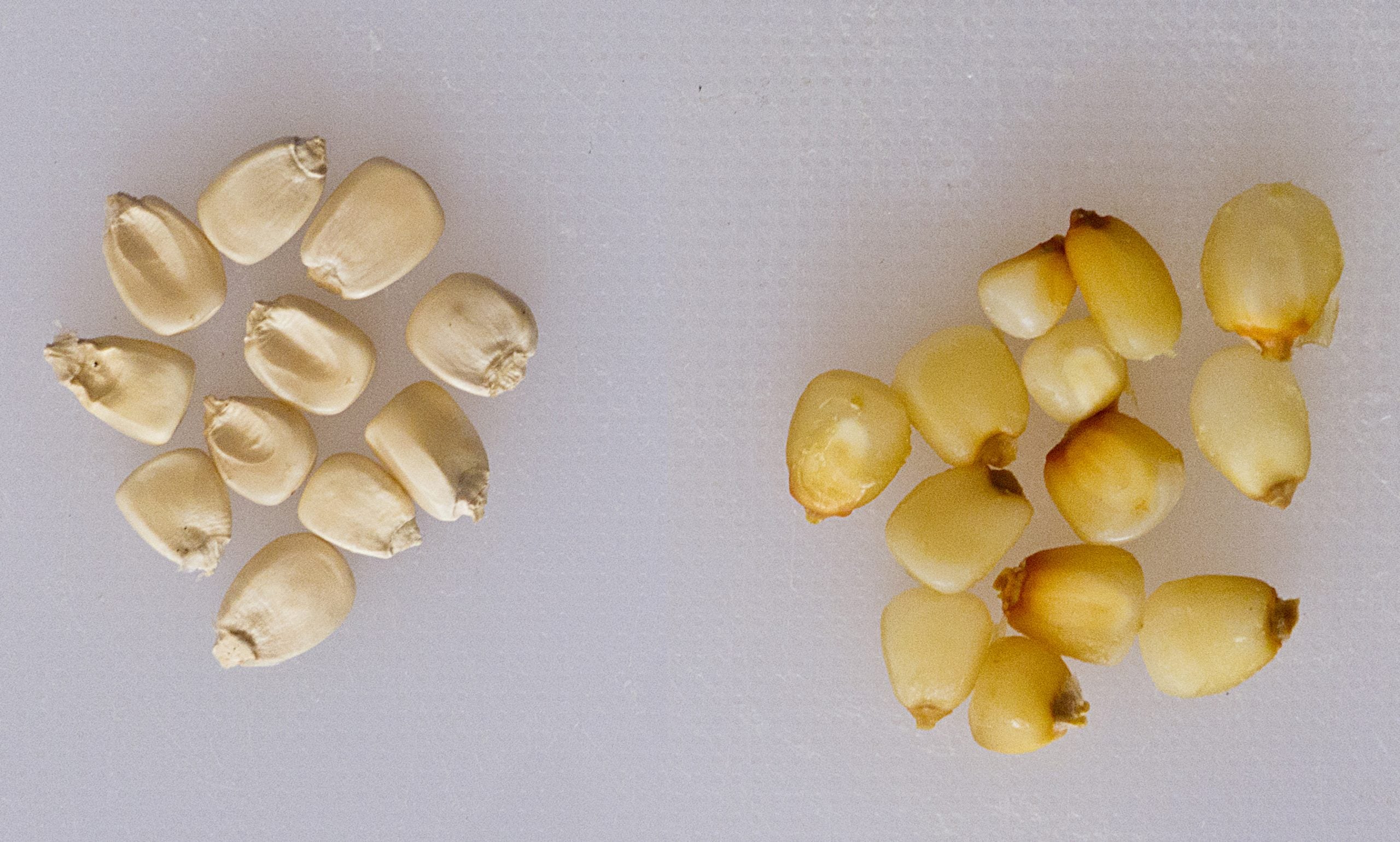
"Niacin is normally present in meat, meat products, and green vegetables, but not in untreated corn," the NIH account says. Nixtamalization is the treatment named in that last phrase: cooking corn in an alkaline lime solution, the step that produces masa, the corn dough. Corn reaching Southern tables as cornmeal and grits in the early twentieth century had not been through it.
The standard nutritional-history account sets the two patterns of eating against each other. Diets built on lime-cooked maize did not produce the epidemic recorded in the cotton mill South, where cornmeal was a staple in households that could afford little milk or meat and where Goldberger found pellagra concentrated. The biochemistry behind that contrast is less settled than the history. The Food and Agriculture Organization's chapter on maize processing records a debate over whether alkaline cooking releases niacin that is otherwise bound in the grain, or whether the benefit comes mainly from a change in the amino acid balance of the corn.
Milling, politics and what reaches the table now
Bollet's 1992 paper in the Yale Journal of Biology and Medicine points to a change in milling as the likely trigger. Degermination, which began shortly after 1900, probably accounted for the appearance of the epidemic, he wrote, and such a process was suggested at the time, but the suggestion was ignored. At its peak, he records, the epidemic "produced at least 250,000 cases and caused 7,000 deaths a year for several decades in 15 southern states." It also filled hospital wards in other states, which had a similar incidence but refused to report their cases.
Politics shaped the response as much as the science did. Surveillance of the disease, its study, recognition of its cause and the introduction of preventive measures were all obstructed, Bollet wrote, because politicians and the general public found it more acceptable for pellagra to be infectious than for it to be a form of malnutrition, a result of poverty and thus an embarrassing social problem.
Pellagra nearly disappeared in the United States after Goldberger's work, the NIH account says. Corn still arrives at the American holiday table in forms such as the cornbread stuffing listed in VegOut's vegan Thanksgiving meal guide, and the arguments over the centerpiece now run on other measures, among them the emissions figures VegOut set out for turkey, ham and a plant-based roast. In the masa aisle, the alkaline lime cooking that sat behind the historical contrast remains the first step in making the dough.