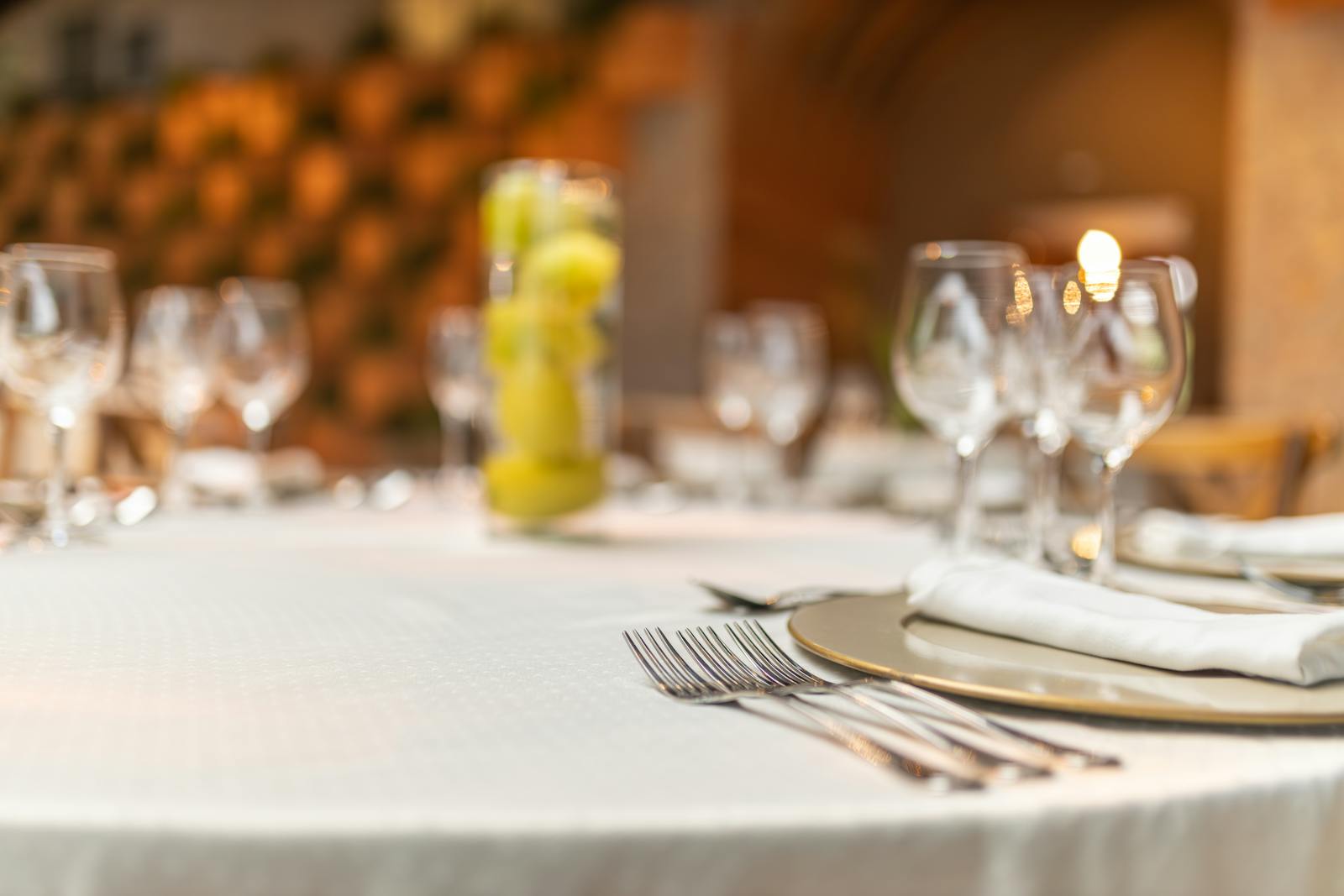
The common explanation is that expensive restaurants make people from modest backgrounds uncomfortable because of the money. The bill feels absurd. The wine list reads like a second mortgage. The whole place seems engineered to remind a person that they can't really afford to be there. That's the story people tell, and it's not wrong exactly, but it misses what's actually happening at the table.
Because most people who grew up lower middle class aren't actually doing math when they sit down at a tasting menu. They're watching. They're watching which fork, which glass, whether the bread plate is on the left or the right, whether you're supposed to lay the napkin flat or fold it, whether the waiter is hovering because something is wrong or because that's just the job. And they're doing all of this while trying to look like someone who isn't doing any of it.
That is what the discomfort is. It's not poverty. It's performance.
The diner isn't cheaper, it's legible
A diner is comfortable for a specific reason, and it isn't the prices. It's that the rules are public. You know where to sit. You know the menu is on the table. You know coffee comes in a mug and refills are free and the waitress calls you honey and nobody is tracking your movements. The social script is visible to everyone at once, which means nobody is being tested.
An expensive restaurant is the opposite. The rules exist, but they're unmarked. You're supposed to already know them. And the people who already know them rarely remember learning them, which is why they often cannot explain what's making someone else uncomfortable. They assume the issue is the price.
It's not the price. It's the quiet exam.
Self-focused attention is the real tax
There's a body of clinical work on what happens to people in social situations where they feel observed but unsure of the rules. The short version is that attention gets pulled inward. A person stops processing the room and starts processing themselves processing the room. This creates a loop where they're monitoring their own performance in real time while trying to perform normally.
That loop is exhausting. It's also why people who grew up without exposure to a particular social context often leave those contexts feeling more tired than the event warranted. It wasn't the dinner. It was the four hours of silent self-surveillance underneath the dinner.
And the people who grew up inside that context? They didn't do any of that work. They just ate.
Why lower middle class specifically
This is where the class detail matters, and it's worth being precise. People who grew up in genuine poverty often have a different relationship with expensive spaces, because the gap is so large the pretense collapses. They're not trying to pass. They're visitors, and everyone knows it, and they know it, and there's a strange freedom in that. People who grew up with real money don't feel the discomfort at all, because the rules were absorbed before they were conscious of being taught anything. Lower middle class is the squeeze in the middle. Close enough to the upper tiers to occasionally end up in those rooms. Far enough that they didn't grow up rehearsing them. They have the clothes. They have the vocabulary, mostly. They can pass at a glance. Which means the stakes of being caught out are higher, because they've entered the room as someone who might belong, and now every small slip is a potential reveal. That's a specific kind of pressure. It's the pressure of almost-passing.
It looks like impostor syndrome because it is
The pattern has a lot in common with what's usually called impostor syndrome, and it shows up most strongly in people who've crossed a class line their parents didn't cross. A piece in IJNet on impostor syndrome among journalists of color captured something important about this. P. Kim Bui, a former senior director at the Arizona Republic, has described the pressure of feeling like failure isn't an option while simultaneously experiencing imposter syndrome in professional settings. She described experiencing feelings of not belonging and fearing her success was undeserved. That combination, she noted, creates a harmful psychological cycle.
Swap out the newsroom and put it in a restaurant with three wine glasses and a sommelier who wants to talk about the soil, and the same spiral emerges. A person doesn't want to fail. They don't know the rules well enough to be sure they won't. So they go quiet. They over-tip. They order what the person across from them orders. They say everything is great.
Many people have experienced impostor-type feelings at some point, and the pattern runs higher among people whose backgrounds weren't the default in the room they ended up in. That isn't about being underqualified. It's about being unrehearsed.
The problem isn't money, it's the audience
A useful test: how do the same people feel when they eat an expensive meal alone, or with their closest friend, or on a trip where nobody knows them? Usually, fine. Often, great. The food is good. The room is pretty. Nobody is watching, or the watching doesn't carry social weight.
Now put them at a work dinner with their boss's boss, or at a meal with a partner's wealthy parents, or at a table where someone is quietly evaluating them. The food hasn't changed. The prices haven't changed. What changed is that there is now an audience whose judgment matters, and the rules for passing that judgment are not fully known.
That's where the discomfort lives. A Self piece on social anxiety describes the physical reality of this