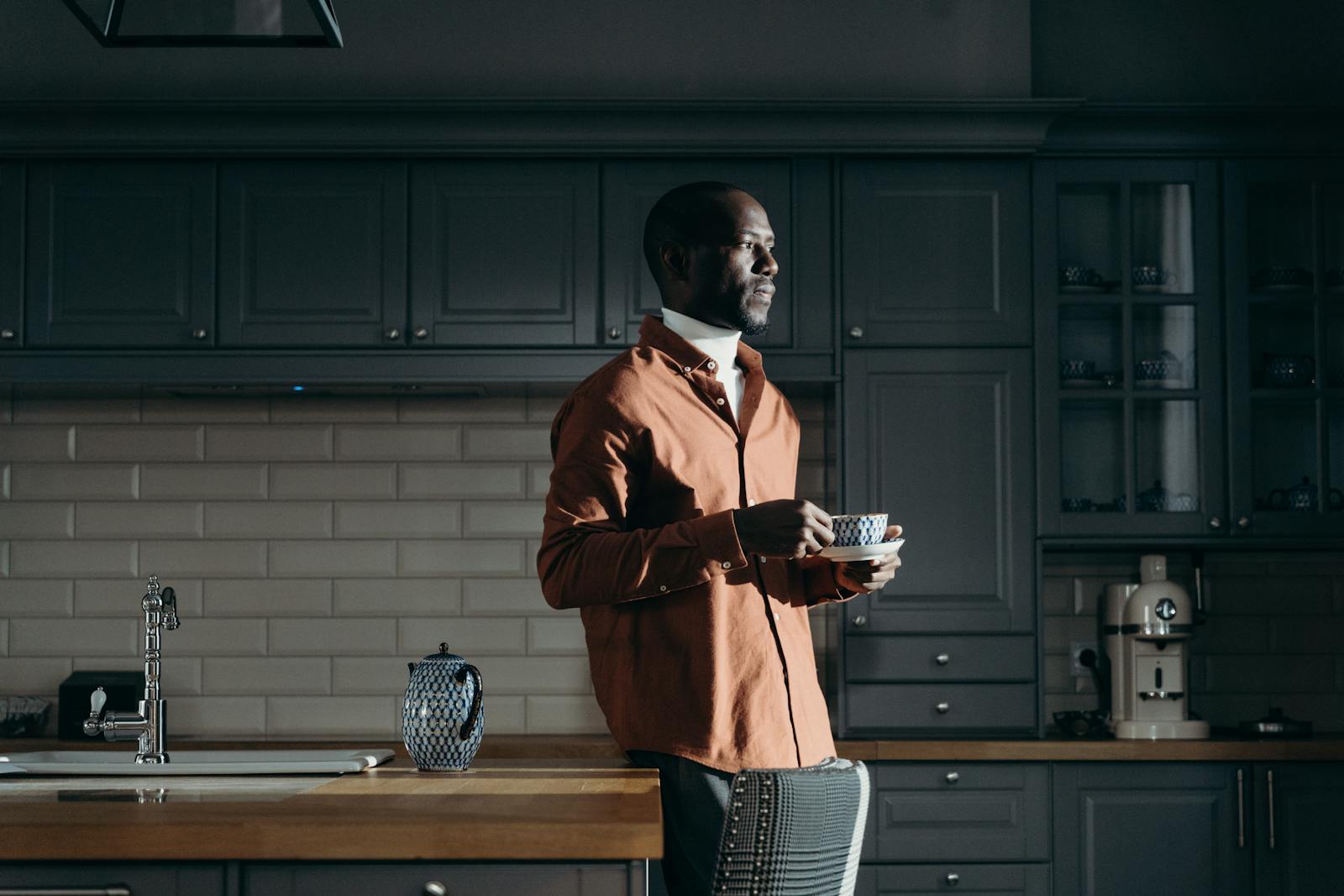
The kettle clicks off, the water pours, and the kitchen goes quiet in a way no one was expecting. No music, no podcast, no one in the next room. Just the sound of the tea steeping and the fridge humming and a magpie outside doing whatever magpies do at 4pm. Some people will stand there and feel something close to contentment settle into their shoulders. Others will have their phone in their hand before the tea has finished brewing, not because they wanted to check anything, but because the silence felt like a question they didn't want to answer.
That gap between those two responses is one of the most underrated dividing lines in adult life.
The conventional explanation is that some people are introverts and some are extroverts, and that's the whole story. It isn't. There are plenty of extroverts who can sit alone with a book for three hours and feel like they've been refilled, and plenty of introverts who can't be in their own kitchen for ninety seconds without reaching for stimulation. The introvert/extrovert frame is too clean. What's actually going on is older and stranger than that.
What silence actually does to the brain
When you stop feeding your brain external input, a particular network switches on. It's called the default mode network, and it's the part of you that handles remembering the past, imagining the future, thinking about yourself, and turning over unresolved feelings. The default mode network isn't a single uniform thing. It contains different subregions that handle different kinds of internal work. Some pull in perception, others drive memory-based thought.
Translation: when the room goes quiet, your brain doesn't just go quiet with it. It starts running the inner program. For some people that program is mostly pleasant. Memory, daydream, the soft drift of a Sunday afternoon mind. For others it's mostly unfinished business. Old conversations, anxieties, things they meant to do, people they meant to call.
The phone reach isn't a character flaw. It's a person trying to outrun their own default mode network.
Why some default modes feel like home and others feel like a haunted house
Here's the part most people don't want to hear. Whether silence feels nourishing or threatening has very little to do with willpower and quite a lot to do with what a person's inner world has been allowed to settle into.
People who can sit alone in a quiet house for hours tend to share something specific. They've made some kind of peace, somewhere along the way, with the contents of their own mind. Not all of it. Nobody has all of it. But enough that when the inner program starts running, it's mostly stuff they can stand to be in the room with.
People who reach for the phone within ninety seconds tend to have an inner world that hasn't been processed so much as outrun. The silence isn't the problem. The silence is just the door that opens to whatever they've been keeping busy enough not to feel.
This isn't a moral observation. It's mechanical. The default mode network activates the moment external demands drop away, and what comes up is whatever's been waiting.
The childhood layer nobody mentions
This pattern shows up across generations within families. A grandmother who could sit on a verandah for an entire afternoon without speaking and look like the most settled person on earth. Cousins, raised on iPads from the age of three, who can't make it through a car ride without input. The difference isn't moral. It's that their nervous systems were trained on different baselines.
Children who grew up with stretches of unfilled time — long car trips before screens, summer afternoons with nothing to do, the boredom that adults of a certain generation talk about with weird nostalgia — learned that silence was survivable. They built the muscle without knowing it. Early environmental exposures and developmental experiences shape later capacity for regulation and reflection.
The 1960s and 70s produced resilient children almost by accident, mostly through boredom and consequence and the absence of constant emotional management. The capacity to sit alone in a quiet house is one of the quieter inheritances of that era. It wasn't taught. It was simply allowed to develop.
The real cost of never being alone with yourself
There's a study by Netta Weinstein and colleagues, covered in Psychology Today, that found something worth sitting with. Solitude both helps and harms wellbeing, depending on whether it's chosen or imposed. Chosen solitude was linked to autonomy, peace, and a sense of self. Imposed solitude was linked to loneliness and lower wellbeing. Same physical condition. Completely different inner experience.
This is the bit most people miss. The question isn't whether you're alone. It's whether you're alone on purpose.
People who fill every silence with input often think they're avoiding loneliness. They're not. They're avoiding the moment of choosing. The moment of deciding whether they actually want to be in this life, this job, this relationship, this version of themselves. The phone is faster than that decision. The phone always has somewhere else to be.
The ninety-second window
The first minute or two of quiet is often the hardest, because that's the threshold. Push through it and most people find the silence opens up. Don't push through it and you never find out.
What's noticeable about people who can't make it past that threshold is that they often don't know