
The cultural script for middle age has been relatively consistent for decades: a man buys a sports car, a woman dyes her hair, somebody has an affair, somebody else quits their job to open a bakery in Vermont. The midlife crisis, in this telling, is a problem of too much restlessness — a sudden surge of want crashing against the walls of a settled life. But the version that quietly happens to more people is the opposite: a crisis of looking around at the life you built, finding the walls have come down, and discovering you can no longer locate the want at all.
This version doesn't make for good cinema. There is no convertible, no tattoo, no dramatic exit. There is just a Saturday morning at fifty-two with a paid-off mortgage, grown or nearly-grown kids, a calendar that finally has white space on it, and a strange, low-grade hum of confusion about what to do with any of it. The reward arrived. The recipient went missing.
The promise that quietly delivered
For roughly two decades, a particular bargain organised the lives of most middle-class adults: defer now, collect later. Take the promotion, save the bonus, push through the years where the kids need rides and the parents need check-ins, and at some point in your early fifties a kind of personal sovereignty will arrive. More money than you need for the month. More time than is already spoken for. More freedom to choose how a Tuesday goes. The bargain, for a meaningful number of people, actually pays out. That's the part nobody warns you about.
What the script doesn't mention is that twenty years of deferral is also twenty years of practice in not asking certain questions. What do you want for dinner becomes a logistical question about what the kids will eat. What do you want to do this weekend becomes a question of whose birthday it is and whose roof needs fixing. The muscle that asks what you would actually choose if no one else were in the room gets very weak from disuse. And then one day the room empties.
The hedonic treadmill keeps running after the race ends
Part of what makes this disorienting is biological. The human brain is not built to register arrival. People return to a happiness baseline with remarkable speed. The promotion that was supposed to change everything stops feeling like much within months. The house that was supposed to be the finish line becomes the place where the dishwasher leaks. The freedom that was supposed to feel like emancipation arrives as a flat, slightly anxious Wednesday.
This is the hedonic treadmill, and it doesn't care that you spent twenty years climbing onto it. This pattern of conditional happiness in professional life—always being happy when something happens—leads to a cycle where the moment people get what they thought they wanted, having that thing becomes the new norm, and they automatically want more. The trouble in middle age is that the want has nowhere obvious to go. The career has plateaued or doesn't matter as much. The kids' milestones are no longer yours to orchestrate. The next rung on the ladder has either been reached or has stopped being interesting.
The identity that ate the person
The deeper problem is that an identity built almost entirely around productive striving doesn't translate well into the territory of unstructured freedom. The MIT philosopher Kieran Setiya, who has written extensively about midlife, describes the condition as a sense that something is missing—that even a life full of solved problems and met responsibilities can feel hollow because it has been almost entirely ameliorative. As one essayist working through Setiya's book observed, midlife restlessness often arrives not because people lack purpose but because they have been so good at attending to problems that they never made room for activities that have what Setiya describes as existential value.
The activities Setiya names are unglamorous: telling funny stories, listening to pop music, swimming, playing games with friends. These things matter precisely because they are not instrumental. They don't solve anything. They are not for anything beyond themselves. And a person who has spent twenty years measuring their days by what got solved often has no internal apparatus for valuing activity that resists that measurement.

Why this generation in particular
There is a structural piece to this that deserves to be named. The adults arriving at this stage now — primarily Gen X and younger boomers — were sold a specific version of the deal. Work hard, stay loyal, want little, and security would be the reward. As we've explored elsewhere, that bargain has frayed in obvious economic ways. But it has also frayed in a quieter, more personal way. For the people for whom the deal did pay out, the security arrives looking suspiciously like the absence of structure. The thing that organised the life is gone. What's left is whoever you became while not paying attention.
It's notable that younger generations seem to be intuiting this. Some cultural commentary suggests millennials may be less prone to the classic midlife crisis precisely because they've been less able to defer in the first place. When the bargain doesn't deliver, you don't get the disorienting arrival. You get something else, probably worse, but at least not this particular flavour of empty.
The thousand small deferrals come due
What surfaces in the white space is not, usually, a single dramatic regret. It is the cumulative weight of small choices that were never really choices. The restaurant always picked because someone else preferred it. The Saturday given over to a hobby that wasn't yours. The fifteen years of coffee taken black because that's just how you took it, although no one is sure when that started. As we've written before, the deepest regret of late life is rarely about a specific decision. It's about a pattern of unnoticed deferrals that only becomes visible when the deferring stops.
This is the part that catches people off guard. The expectation was that freedom would feel like relief. Instead it feels like exposure. The structure was doing more work than anyone realised — not just organising the days but also obscuring the fact that the person inside the structure had stopped asking what they wanted somewhere around age thirty-four. The freedom doesn't restore the question. It just removes the cover that hid the absence of the question.
The career version of this
Recent reporting on what's being called the new mid-career crisis describes a version of this that has nothing to do with sports cars and everything to do with senior professionals who have hit their targets and discovered the targets were the wrong ones. The promotion, the title, the corner office — all delivered, all somehow not the thing. The complaint isn't burnout in the classic sense. It's the strange flatness of having arrived somewhere you no longer recognise as a destination you chose.
What's worth noting is that this is a predictable outcome of a system that rewards relentless forward motion and provides no apparatus for the moment when forward motion stops being the point. The career ladder doesn't include a rung for figuring out who you are. The 401(k) doesn't have a line item for existential reorientation. The systems that got you here are not the systems that will help you decide what here is for.
What actually helps, slowly
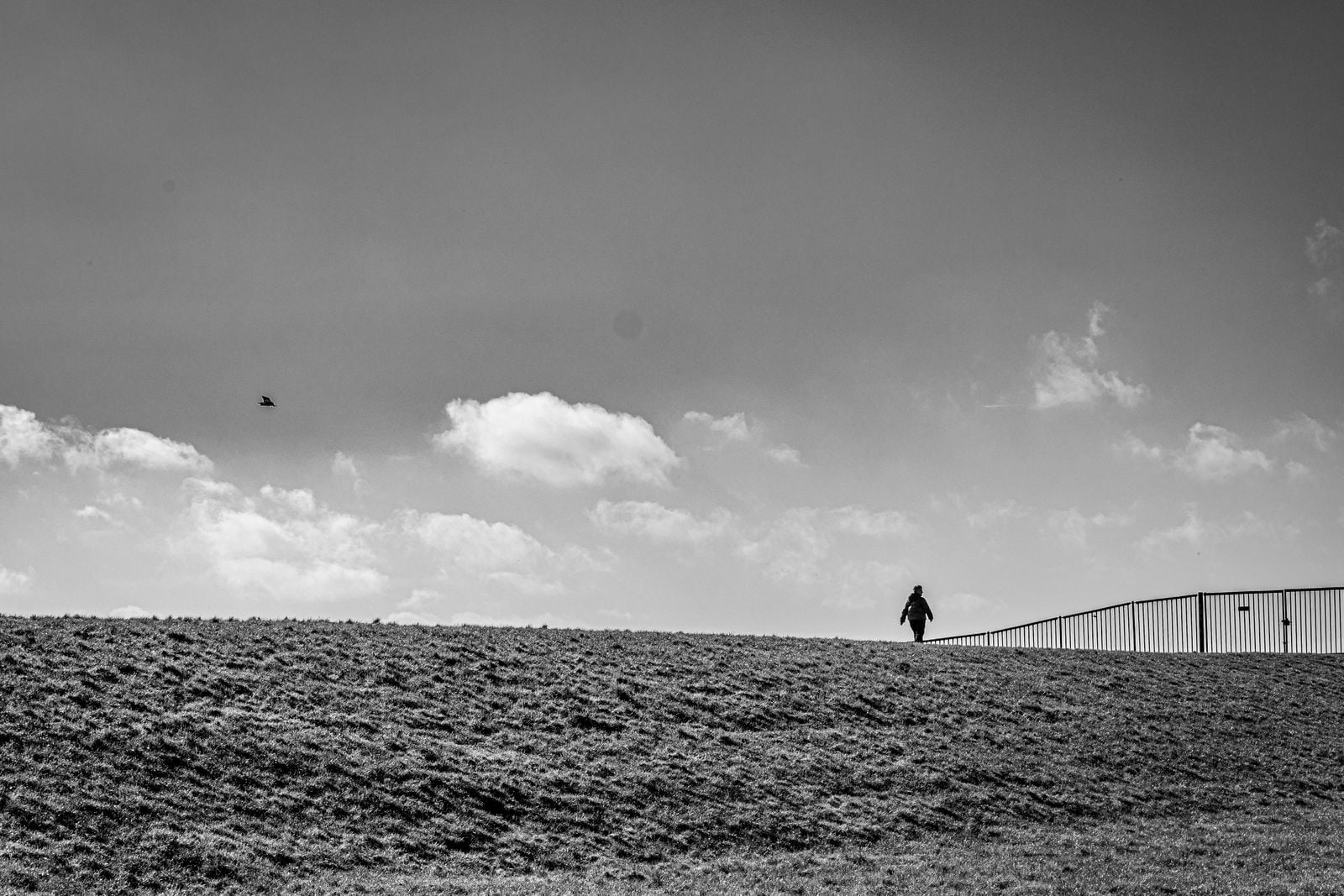
The way out, to the extent there is one, is not a purchase or a pivot. It's the slow, slightly embarrassing work of restarting a conversation with yourself that was paused for two decades. This looks less like a vision board and more like noticing what you reach for when no one is watching. What music plays when the house is empty. What food you'd cook if no one else were eating it. What you'd do with a Tuesday if no one would ever ask how it went.
As we've noted, the people who seem to come through this with the most equilibrium are often the ones who stopped negotiating with the parts of themselves that were never going to change and started building a day around them instead. That's not a glamorous answer. It doesn't sell a book or a coaching package. But it is closer to what work on meaning-making in adulthood actually points toward: meaning is not found by climbing higher. It's assembled, piece by piece, from the small acts a person chooses when nothing forces the choice.
The version nobody warned you about
The cultural fixation on the dramatic midlife crisis — the convertible, the affair, the bakery in Vermont — has obscured the much more common version, which is quieter and harder to name. It is the version where the deal pays out. Where the freedom arrives on schedule. Where the only thing missing is the person who was supposed to spend it.
That version doesn't need a crisis. It needs something slower and less narratively satisfying: permission to sit with the strangeness, curiosity about what surfaces when the structure recedes, and a willingness to take seriously the small, useless, existentially valuable activities that the productive years had no room for. The reward you spent twenty years working toward is real. You just have to meet it as someone, rather than as the engine that built it. That introduction takes a while. It is, for a lot of people, the actual work of the second half.