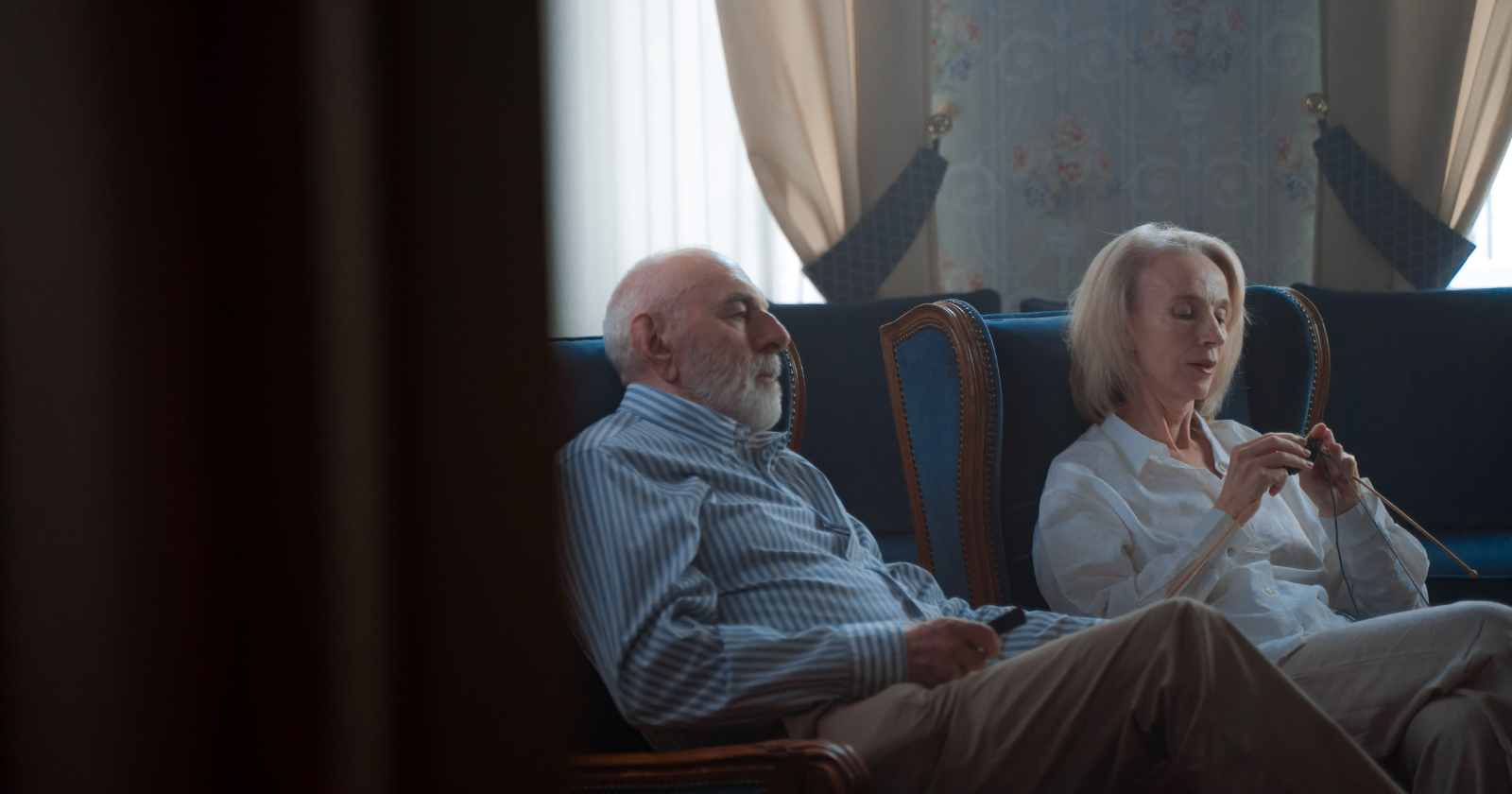
Parents in the first weekend of a newly emptied house tend to do a small set of predictable things. They wander into the bedroom that used to be loud and stand in the doorway. They wash dishes that don't need washing. They open the fridge twice in ten minutes without taking anything out. They text the child who just left and then apologize for texting. They sit down to read and find themselves staring at the wall instead. Most of them describe this state, when asked, as a kind of sadness — and then they reach for whatever distraction is closest.
The standard script calls this the empty nest transition and recommends staying busy through it.
But there's a different reading worth considering.
What if the heaviness isn't grief at all? What if it's the sensation of a machine warming back up after being left on standby for two and a half decades — the slow, almost uncomfortable hum of a self that hasn't been allowed to run in the foreground since before the kids were born?
The script parents are handed
The dominant framing around the empty nest is loss. The common advice treats the transition as an emotional range running from pride and joy to loneliness, and it often encourages parents to stay connected through rituals and follow the school's social media pages to keep tabs on their newly-launched kids.
That advice is reasonable. It's also revealing.
Notice what it assumes — that the parent's primary task in this moment is to maintain proximity to the child who just left, not to reacquaint themselves with the person they were before that child arrived. The framing treats the parent as a parent first, and a self second, even at the precise moment when the parental role has structurally ended.
This is where a lot of the misreading happens.
Twenty-five years on standby
A 2026 survey of 3,000 parents found that eight in ten parents spend almost every waking hour focused on someone else, not themselves, and more than two-thirds feel guilty for taking any time for themselves. Ninety percent have missed important life activities — time with friends, hobbies, travel — because of care demands.
Read that again. Eight in ten. Almost every waking hour.
That survey was of parents with younger children still at home, but the pattern it describes doesn't end when the children grow up — it just runs for longer. A self that spends twenty-five years routing its bandwidth through someone else's needs doesn't disappear, but it does go quiet. It learns to operate in the background. It stops volunteering opinions about what it wants for dinner, what music it likes, where it wants to spend a Saturday afternoon, because for years those questions have been answered by logistics rather than preference.
The same survey documented identity loss as one of the things parents report under sustained caregiving pressure, alongside burnout, lost sleep, and stalled careers.
What follows from that, once the load is removed, isn't grief alone. It's something stranger. A kind of reactivation. And reactivation, after a long enough dormancy, can feel almost identical to disorientation.
Why the quiet gets misread
Here's the thing about anything coming back online after years on standby — it doesn't boot up cleanly. It hums. It flickers. The first signals it sends are weird, fragmented, hard to interpret.
If you've spent two and a half decades organizing your days around someone else's schedule, the first weekend without that organizing principle isn't peaceful. It's loud in a way that has nothing to do with sound. Every old preference, every shelved interest, every "I used to love" sentence that got abandoned somewhere around the second pregnancy — it all starts pinging at once, asking whether it still counts.
Most people read that pinging as sadness, because sadness is the only template they've been handed for this moment.
But sadness and reactivation can feel nearly identical in the early hours. Tight chest. Restlessness. That feeling of standing in the middle of a room without knowing why you walked in. The difference is what they're pointing toward. Grief points backward. Reactivation points forward, but the forward isn't legible yet, so the body reads it as backward by default.
What the long-haul caregiving picture tells us
Look at the broader picture of long-term caregiving — most of it about people caring for aging parents rather than children, but the dynamics overlap — and the same theme keeps coming up. Years of organizing yourself around someone else's needs leaves a mark that the more familiar words, exhaustion and resentment, don't fully capture.
The orientation itself is the part worth noticing.
You spend long enough pointed outward, toward someone else's needs, and that becomes the default setting. When the setting no longer applies, you have to find a different one — and the finding is uncomfortable, because the old one had become automatic.
The scale of this is easy to underestimate. One recent health feature noted that 70% of caregivers ages 18 to 64 juggled paid work and caregiving in 2025 — a reminder of how many adults spend years with their attention permanently divided.
None of this is unique to parenting. But parenting is the longest-running version of it most adults will experience. Twenty-five years of being a primary node in someone else's developing life leaves something that takes time to undo.
The enmeshment problem in reverse

There's a parallel worth bringing in here. In discussions of parent-child relationships, enmeshment — usually framed from the child's side — describes when a parent's emotional reliance on a child prevents the child from having a separate life. In one account of this dynamic, some parents struggle to grant emotional permission for their children to develop separate lives at all.
The framing in that account is about the child's burden. Fair enough.
But flip it. The parent in that story is also stuck — stuck in a self-definition that requires the child's presence to remain coherent. When that's the structure, the empty nest isn't a transition. It's a collapse, because there's no self underneath the role waiting to power back on.
The parents who experience the first weekend as something other than grief — who feel the hum of reactivation rather than the void of loss — tend to be the ones who never fully merged their identity with the parental role in the first place. Or who, somewhere along the way, kept a small ember of pre-parent self alive even when the demands were heaviest.
The collapse risk is highest where the merging was deepest. The reactivation experience shows up where the parent kept even a thin thread of separate selfhood.
What the busy-yourself advice gets wrong
Most empty nest guidance follows the same playbook — pick up hobbies, travel, reconnect with your partner, volunteer, give the home a fresh start by rearranging a room. All of it sensible. All of it geared toward filling the space.
What the playbook misses is that the space is doing work.
The quiet of that first weekend isn't a problem to be solved. It's the inventory phase. It's the self taking stock of what's still there after twenty-five years of background operation. Rush to fill it and you may discover three months later that you've replaced one role-driven life with another — same shape, different cast.
The parents who handle this transition best are the ones who let themselves sit in the silence long enough to hear what's underneath it. Not stoically. Not as a discipline. Just long enough to let the inventory finish.
Reactivation isn't always pretty
It would be a mistake to romanticize this.
For some parents — and the numbers suggest more than we'd like to admit — what powers back on isn't a delightful pre-parent self full of forgotten passions. It's a self that was already struggling before the kids arrived, and the parenting role kept those struggles out of view for two decades. The empty nest doesn't manufacture difficulty, but it can make old difficulty visible again — an unhappy marriage, a career that stopped satisfying years ago, questions about what any of it has been for — the kind of thing that's easier to defer when there's always a school pickup to organize.
The same survey found 48% of partnered parents felt resentment toward their partner because of care pressures. When the pressure lifts, that resentment doesn't automatically dissolve. It often becomes legible for the first time.
So reactivation is real. And it's also, sometimes, the moment when things that have been on standby for a long time wake up too.
A different frame for the first weekend
A better version of the standard empty nest advice would start by removing the assumption that the parent's main task is to manage the absence of the child.
The main task is to attend to the presence of the self.
That's a different orientation entirely. It doesn't require staying busy or filling the room or following anyone's social media feed. It requires noticing what gets louder once the dominant signal is gone. Old music. Old questions. Books you abandoned. Friendships you let drift. A version of your handwriting from before you started signing permission slips.
Some of it will be worth reactivating. Some of it won't. The point is the noticing, not the verdict.
The parents who come through this well tend to describe the eighteenth month, not the first weekend, as the moment they actually understood what had happened. The first weekend was just the hum. By month eighteen, the inventory had finished, the self had finished waking up, and they could finally tell the difference between what they missed about their kids and what they missed about themselves.
That's a more honest timeline than the one the empty nest conversation usually offers.
The grief framing isn't wrong, exactly. It's just incomplete. Grief is part of what's happening in that quiet house — but it's the smaller part, and it's the part that gets all the attention because it's the only part the cultural script has language for.
The bigger part is harder to name. It sounds like a low electrical hum. It feels like standing in a doorway you haven't stood in for twenty-five years. And if you sit with it long enough, without rushing to fill it, you might find that what's coming back online isn't sadness at all.
It's you.