
Haruki Murakami, the novelist, has run almost every morning since 1982. In his memoir What I Talk About When I Talk About Running, he describes the ritual not as a feat of discipline but as a way of putting himself in working order before the day asks anything of him. He laces up in Tokyo summers and Hawaiian downpours and Massachusetts winters. The weather is not a variable he negotiates with. It is simply the room he steps into to do the thing that makes the rest of the day possible.
That distinction — between people who push through resistance and people who have arranged their lives so that resistance never quite arrives at the door — is the one most conversations about morning routines get wrong. The cultural script around early walkers tends to frame them as a separate species of human, equipped with some monastic willpower the rest of us were not issued at birth. The script sells books and apps. It also misses what is actually happening in the brain of someone who has been walking at 6:30am for eleven years.
The conventional wisdom gets the mechanism backwards
Most productivity writing treats the morning walk as an act of self-control: you override the soft warm pull of the duvet, you defeat the rain, you collect a small psychological trophy for being the kind of person who did the hard thing. The walk is framed as the cost. The clarity is framed as the reward. Under this model, the relevant trait is grit, and the relevant question is how to manufacture more of it.
The behavioural science points somewhere quieter. People who walk every morning, regardless of conditions, are not usually running on a higher grade of willpower than their neighbours. They have removed willpower from the equation entirely. The decision has already been made — years ago, in some cases — and what looks from the outside like iron discipline is, from the inside, closer to the absence of negotiation. There is nothing to push through because there is nothing being asked.
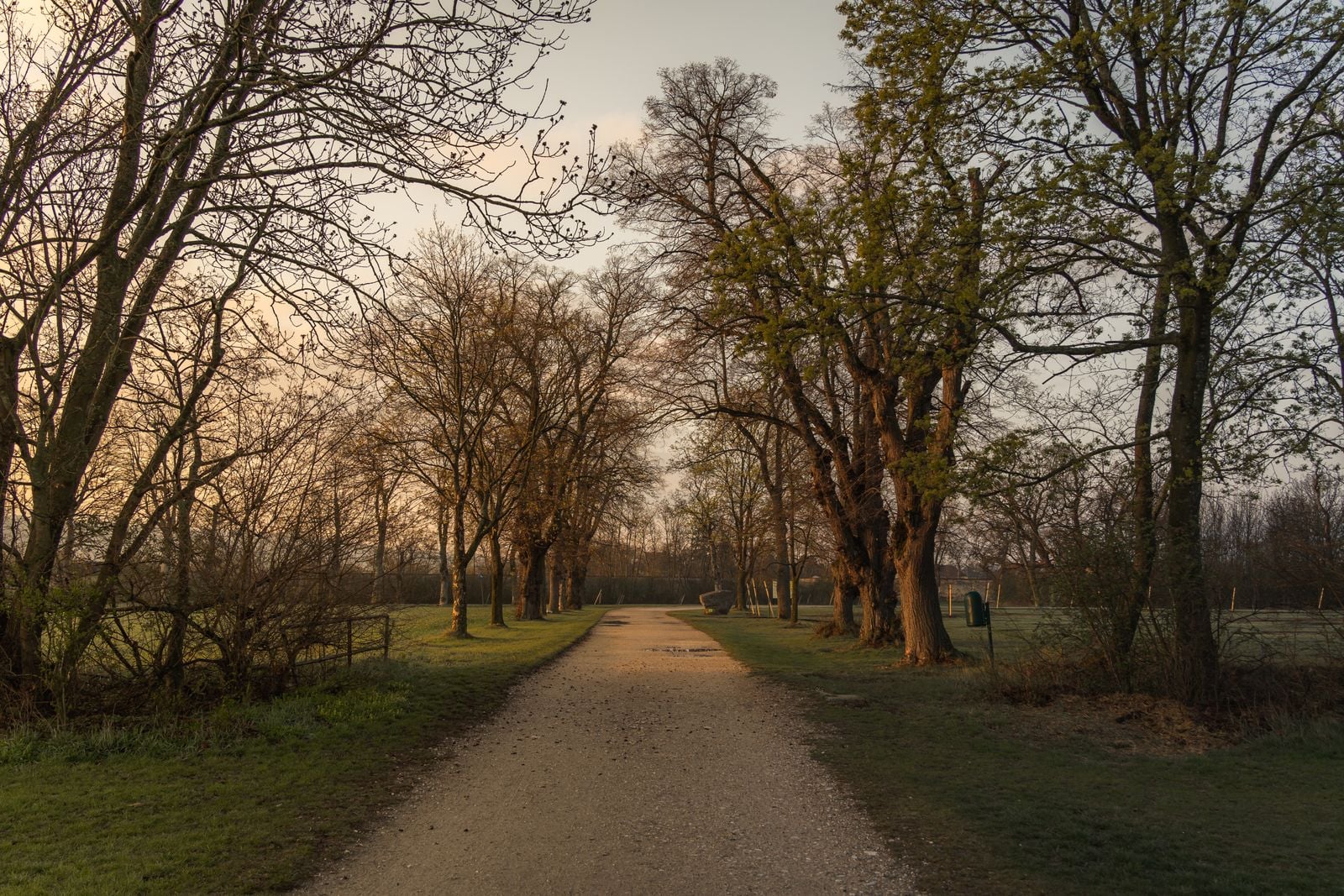
What "keystone habits" actually do to a day
Charles Duhigg's idea of the keystone habit has been kicking around for over a decade, and it has held up better than most pop-psychology frameworks because the underlying observation is mundane and verifiable. Certain habits, when established, change the architecture of the day around them. They are not virtuous in themselves. They are structural — load-bearing walls that hold up other rooms.
A 2025 Forbes piece describes keystone habits as appearing quiet and unimpressive at first, which is exactly why they work. A morning walk doesn't announce itself as transformative. It just makes the next decision, and the one after that, slightly easier to make well. Psychology Today's coverage of the same idea points out that only a handful of habits end up shaping the rhythm of a person's routine and most of the life choices they make inside it.
The walk is rarely the point. The walk is the anchor that holds the rest of the morning in a recognisable shape — which then holds the rest of the day. Coffee gets made at the same time. Breakfast becomes a decision made once, not negotiated daily. Work begins from a body that has already moved and a mind that has already been outside its own four walls. The compounding is not motivational. It is logistical.
Circadian timing is doing more work than the walk itself
There is a biological argument tangled up in the behavioural one. Morning light exposure, particularly within the first hour of waking, is one of the strongest signals the body uses to synchronise its internal clock. According to research summarised by Nature, misalignment between internal rhythms and the demands of the day — what chronobiologists call social jet lag — is associated with mood disturbances, impaired cognition, and a higher risk of psychiatric distress.
Walking outdoors first thing acts as a kind of daily recalibration. The body gets the light cue. The cardiovascular system gets a gentle wake-up. The cortisol curve, which is supposed to peak in the early morning, gets to do what it evolved to do instead of being smothered by an immediate scroll through a phone in a dark bedroom. None of this requires discipline. It requires being outside.
The same Nature summary notes that in studies of medical trainees wearing continuous monitors, mood varied systematically with both circadian phase and time spent awake — and that increasing wakefulness without proper light cues amplified the negative swings. The body is not neutral about when and how it gets going. Morning walkers are not stronger. They are just inadvertently giving their physiology the inputs it was designed for.
The agency loop
There is a third layer here, and it is the one that explains why morning walkers often describe the practice in language that sounds almost spiritual. The walk restores a sense of authorship over the day before the day has a chance to take it away.
An essay in Psychology Today describes the sense of agency as a brain function — a constant loop of intend, act, predict, confirm — that gives a person the feeling of being the cause of their own life. The essay was written about the risk of that loop decaying as more decisions get offloaded to algorithms, but the underlying mechanism applies just as well to mornings. When the first thing a person does is something they chose, executed, and completed, the loop closes cleanly. The day begins with evidence that they are the one driving.
When the first thing is a notification, an email, a doomscroll, a Slack ping — the loop opens with someone else's agenda. The brain registers this. The rest of the day inherits the posture.
Why consistency beats intensity
The regardless-of-weather aspect of the practice matters more than it sounds like it should. It is the variable that converts a behaviour into an identity, and an identity into a structure that no longer requires deliberation.
The parallel evidence from sleep research is instructive. A 2024 study from Penn State, published in the Journal of Developmental and Behavioral Pediatrics, found that children with consistent bedtimes — falling asleep at roughly the same time every night — showed better emotional and behavioural regulation than children whose bedtimes varied widely, even when total sleep duration was similar. The regularity itself was the active ingredient. Variability of as little as twenty minutes versus two hours predicted measurable differences in self-regulation.
The same logic operates on the other end of the day. A walk that happens on sunny Tuesdays but not rainy ones is not a keystone habit. It is a preference. The brain treats it accordingly — as a decision to be made fresh each morning, with all the cognitive overhead and weather-checking and bargaining that decisions involve. A walk that happens regardless is not a decision. It is a fact about the morning, the same way the morning itself is a fact.

The identity shift nobody mentions
There is a quiet thing that happens to people somewhere between year two and year five of a daily practice like this. They stop describing themselves as someone who walks every morning and start describing themselves as someone who walks every morning — the emphasis shifts from the verb to the noun.
The behaviour stops being something they do and becomes something they are. This is the same pattern we've explored in the context of people who stay genuinely fit into their seventies — the decisive shift isn't usually a burst of motivation, it's a quiet reclassification of movement from optional to constitutive.
This is also why telling someone to just start walking every morning rarely produces a person who walks every morning. The instruction is aimed at the behaviour. The thing doing the heavy lifting is upstream of the behaviour — it is the slow reorganisation of self-concept that happens when you do something often enough that stopping would feel like becoming a different person.
What this is not
It is worth being honest about the limits. Morning walks do not fix depression. They do not compensate for poor sleep, structural overwork, or the kind of grief that needs a therapist rather than a sunrise. The research on circadian rhythms and habit formation describes mechanisms that contribute to wellbeing — not a cure-all that overrides material conditions.
And the framing matters. The same essay on agency decay warns against the cultural tic of treating any single practice as transformative. The point of a morning walk is not that it produces optimised mornings. The point is that it gives the day a beginning that the walker has authored, before anyone else gets to author it for them.
The reframe
The interesting question is not how morning walkers find the discipline. The interesting question is what they discovered that the rest of us are still bargaining with. And the answer is structural rather than personal: a body that has moved handles stress differently than one that hasn't, a brain that has had morning light regulates mood differently than one that hasn't, and a person who has already done one thing they chose for themselves enters the day in a different posture than a person who has not.
This is closer to what genuine discipline actually looks like, once stripped of its performance — not the white-knuckled override of resistance, but the quiet engineering of a life where the resistance never quite has to be overridden because it has been designed out of the morning.
The walkers know this. They are not trying to win the day. They are just refusing to let the day start without them in it. The weather is not the obstacle. The weather is the proof that the practice is real.
If you ever try it — properly, not as a thirty-day challenge but as a thing you simply do — what tends to happen is unremarkable and total. The walk gets boring. The boredom gets comfortable. The comfortable gets necessary. Somewhere along the way, without anyone announcing it, the day starts handling you better, because you started handling it first.