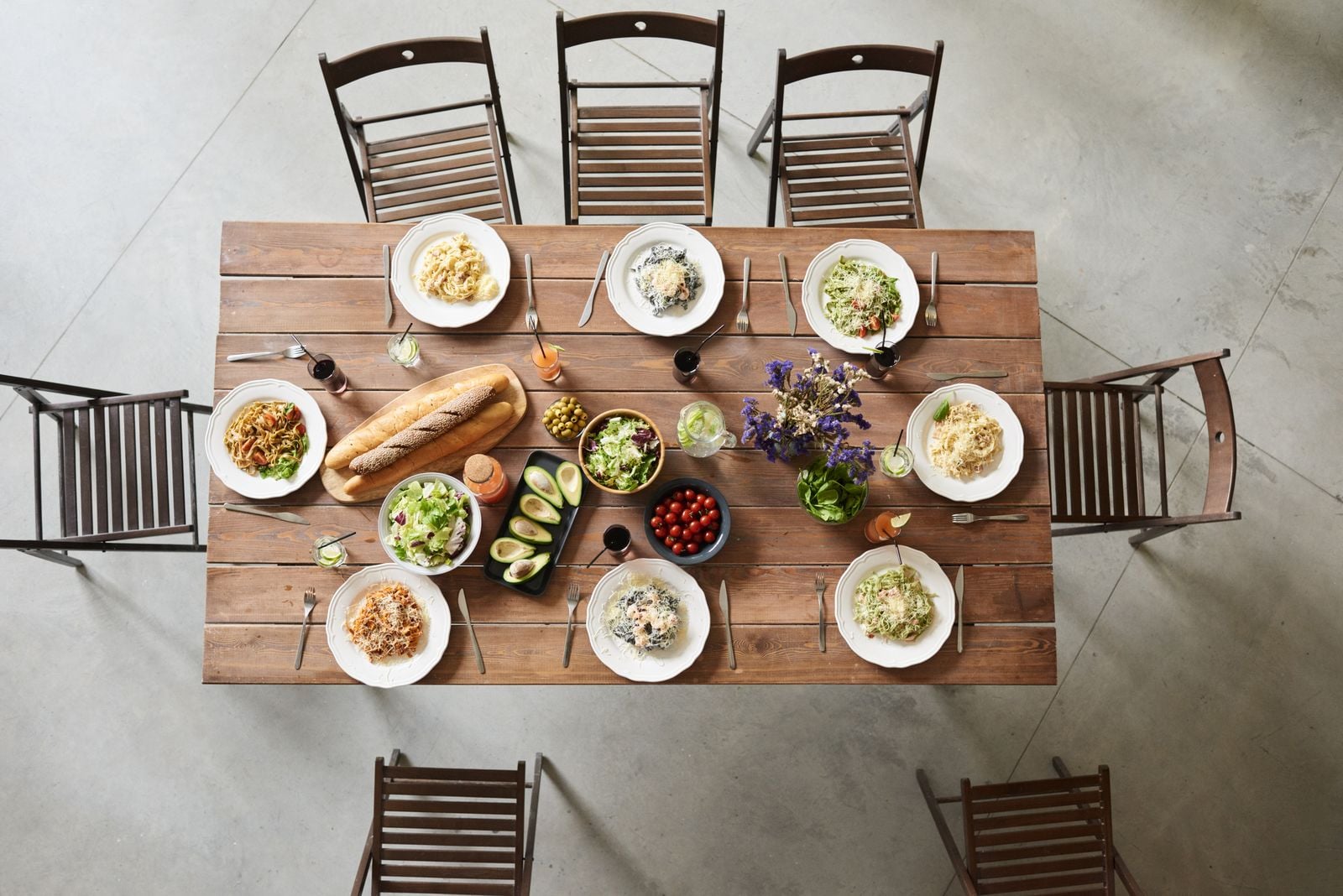
The lasagna pan that fed six people for twenty-three years still lives on the top shelf. The dinner that came out of the kitchen tonight was a single bowl of pasta with olive oil and lemon, eaten standing up.
Both of those things are true at the same time, and that gap — between the equipment of a former life and the food of a current one — is where a very specific kind of loneliness lives.
It's a sensory loneliness, the kind that arrives through muscle memory: the hand that still reaches for the big pot, the brain that still calculates four portions, the body that still listens for footsteps that aren't coming.
The conventional wisdom gets this one wrong
Most advice about cooking for one treats the problem as logistical. Buy smaller cuts. Freeze leftovers in single portions. Invest in a good toaster oven. The premise is that cooking for yourself is just cooking for a family, scaled down.
The people who treat it that way tend to struggle longest, because the transition is an identity problem dressed up as a grocery list.
Parents in the empty-nest phase grapple with uncertainties surrounding their identity and role, wondering who they are now and what to do with their time.
Cooking sits right in the center of those questions, because for decades it was the most reliable answer to both of them.
Why the first solo meal hits so hard
The first full meal you cook for yourself after years of cooking for others is a small ceremony, even if you don't notice it happening. You're not just feeding a body. You're closing a chapter.
The dinner table was the most consistent stage on which a parent performed their parenthood. Five nights a week, sometimes seven, for eighteen or twenty-five or thirty years. The role had a script. The script had ingredients. The ingredients had a grocery list, and the grocery list had a rhythm that organized the week.
Take all of that away, and what remains is a person standing in a kitchen at 6:47 p.m. trying to remember what they actually like to eat.
That moment is reportedly more disorienting than people expect. The emotional weight of the empty nest is often underestimated until daily routines start to surface it — meals especially. Financial advisors working with clients through this period note that the transition requires an approach that's both strategic and tactful precisely because clients are managing a range of emotions while also rebuilding a daily structure.
The people who adapt fastest do something counterintuitive
They don't keep the recipes the same.
The instinct is the opposite. Make the chicken parmesan you made every Tuesday for twenty years. Sit with it. Honor the past. The problem is that the chicken parmesan is a memorial. Eating it alone turns dinner into a small funeral every night.
The people who handle this transition well tend to do something subtle and a little radical: they start cooking food that the previous version of them would never have made.
Korean stews when the family was a meatloaf family. Fish for breakfast. A pile of roasted vegetables with tahini and pomegranate on a Tuesday. Pasta with anchovies, which the kids would have refused on sight. Single-skillet meals with three ingredients because three ingredients are enough.
This is about giving the new chapter its own vocabulary, so that dinner stops being a comparison.
The research on why this works
Roughly 11.8% of older adults experience loneliness, and the strategies that help most tend to involve meaningful, novel engagement — not repetition of old routines.
Cooking, when it becomes a small daily act of discovery rather than the muscle-memory production of a family dinner, can shift from a reminder of what's missing to evidence of what's still possible.
The same pattern shows up in clinical settings. Research on engagement for older adults in long-term care shows that design and delivery of activities matter as much as the activities themselves. The point isn't whether you eat dinner. It's how dinner is designed and delivered to yourself.
What the new recipes are actually doing
They're rebuilding the relationship between you and the kitchen as a one-person relationship.
When a recipe is new, you have to pay attention. You have to read the instructions, taste as you go, decide whether you like it. The cook becomes the audience again — not just the producer of dinner for other people.
That shift matters because the parenting-era kitchen was a kitchen of service. The new kitchen has to be a kitchen of curiosity, or it will remain a kitchen of absence.
This is the same psychological mechanism behind the observation that some people in their sixties suddenly become deeply interested in cooking — not because they have time, but because they finally have permission to treat a daily ritual as something that belongs to them. We've explored a version of this elsewhere: the happiest people after 70 tend to be the ones who stopped demanding that every day justify itself. Dinner is a small but powerful version of that same permission slip.
The middle ground most people miss
There's a temptation to swing all the way to the other side. Stop cooking entirely. Subsist on cereal and toast. Order delivery five nights a week. Tell yourself that since the audience is gone, the performance doesn't matter.
This path carries risks. Loneliness in older adults is associated with elevated risks for a range of physical and mental health concerns, and one of the most consistent buffers is daily structure built around meaningful activity. Skipping meals or outsourcing them entirely removes one of the most reliable structures the day still offers.
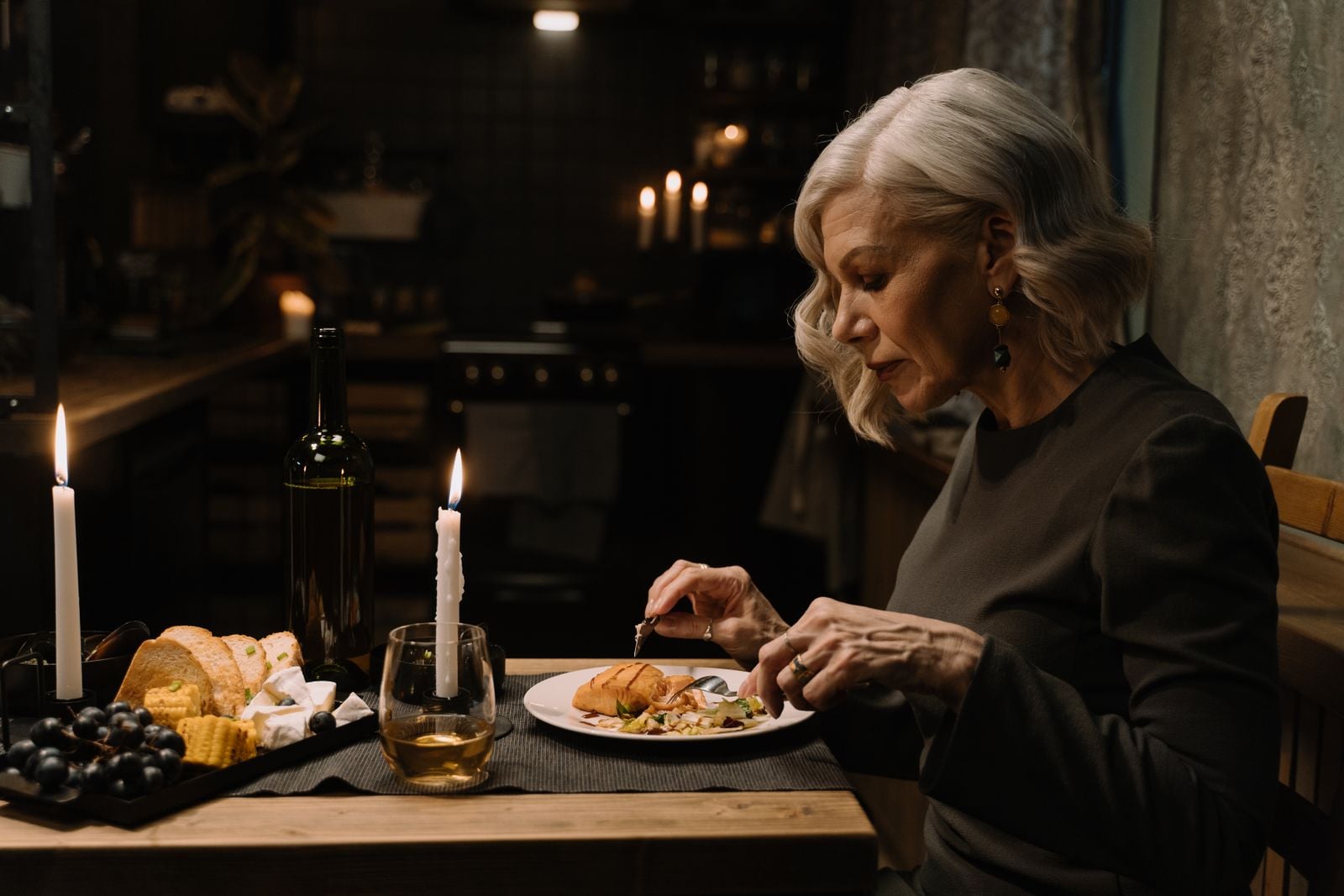
The middle ground is the one that works: keep the ritual, change the content. Real plate. Real glass. Something you actually want to eat. Maybe ten minutes of prep instead of forty-five. The point isn't the elaborate dinner. The point is that you were considered — by you.
This connects to something we've been investigating on our YouTube channel—how optimization can drain the humanity from daily rituals. We recently examined Bryan Johnson, who pursues extreme longevity protocols in an attempt to optimize his health, and discovered that his quest has left him eating entirely alone, trapped in the same kind of functional isolation that makes reheating last night's quinoa feel like an existential statement.
There's something worth noting here about nostalgia, too. A few old recipes still deserve a place on the schedule. Not because you're reenacting Sunday dinner at the kitchen table from 1998, but because some flavors are genuinely yours, separate from who you fed. (If you want a starting point that leans into that without staying stuck there, a few warm, familiar dishes recast for one can hold the door open without locking you in the past.)
The both/and of cooking for one
The empty-nest transition calls for accepting simultaneous contradictions: grief and freedom, loss and possibility. The same applies to dinner.
It is true that the loud kitchen is gone. It is also true that the quiet kitchen has its own pleasures, and they're not consolation prizes.
You can miss the noise and still discover that you actually prefer fish to chicken. You can grieve the family dinner table and also enjoy reading a book while you eat. You can keep the lasagna pan on the top shelf as a relic and still cook something tonight that has nothing in common with it.
Moving through this transition requires people to find new sources of meaning rather than reproduce the old ones at a smaller scale. Dinner is one of the most accessible places to practice that.
What it actually looks like to handle this transition well
It doesn't look like a Pinterest table set for one. It doesn't look like meal-prepped containers stacked in the fridge. Both of those can be performances of the old role in a new costume.
It looks more like this: a person who knows what they like, cooks accordingly, and isn't apologizing — to themselves or anyone else — for the smallness of the meal or the lack of an audience.
It looks like a kitchen that has been quietly renegotiated. The big pot stays for the rare nights when the kids come home. The small pan has earned a place at the front of the cabinet. The grocery list has shrunk and also gotten more interesting, because nobody else has to like the ingredients.
It looks like a dinner that the previous version of you would not have made, eaten with attention, on a real plate.
The loneliness doesn't fully leave. It softens into solitude, which is a different feeling — and a more workable one. The lasagna pan stays on the shelf. The new recipe goes on the counter. Both belong to the same person, who is still, against all the noise of an empty house, very much in the middle of becoming.