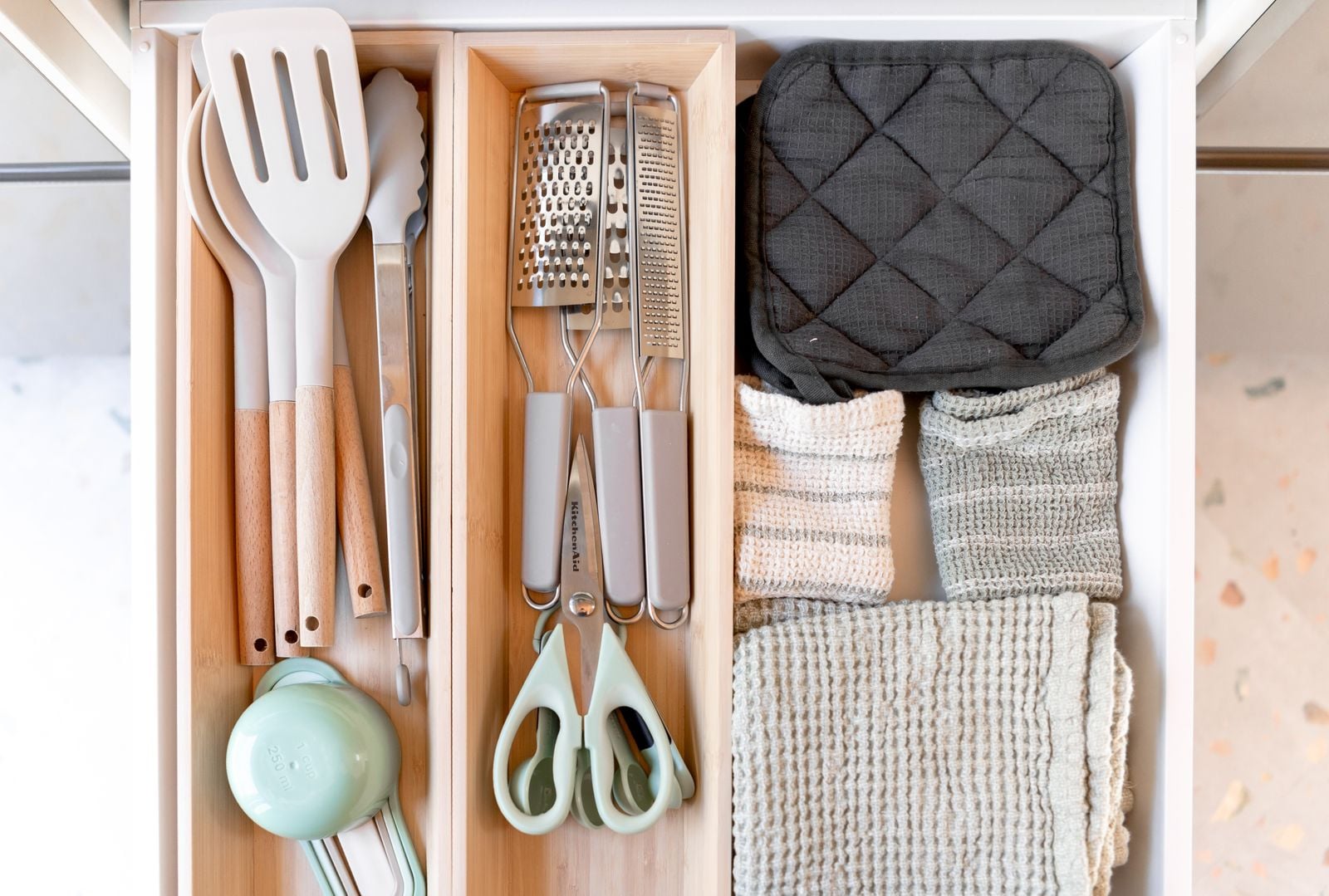
The person driving a ten-year-old Honda Civic when they could afford a new Audi isn't doing it for the money. The person with thirty-eight items in their closet when their bank account could comfortably hold three hundred isn't preparing for a recession. The person whose kitchen has one good knife, one good pan, and a single set of dishes isn't being austere. They have figured out something most consumers haven't: every object you own files a small, recurring claim on your attention, and the rent on that attention adds up faster than the credit card bill.
The framing most people reach for is frugality, which misses the point entirely. Frugality is about money. What's actually happening is closer to cognitive accounting. The cost of a possession isn't what you paid for it — it's what it continues to take from you, in low-grade attention, every day it remains in your house. A second car needs insurance, registration, parking, fuel decisions, and a place in your mind labelled the other car. A wardrobe of two hundred items demands a daily choice that the wardrobe of forty doesn't. A kitchen full of single-use gadgets requires opening drawers, finding things, deciding which thing, cleaning that thing, and storing it again. None of this is dramatic. That's exactly why it accumulates.
The conventional wisdom is wrong about minimalism
The standard cultural read on people who live below their means is that they're either anxious about money, performing some kind of moral superiority, or chasing an Instagram aesthetic involving linen and beige walls. Sometimes that's true. But there's a separate group, much quieter, much harder to spot on social media because they aren't posting about it, who arrived at smaller-than-they-can-afford through pure self-observation. They noticed something. They noticed that the more they owned, the more tired they felt at the end of the day, in a way that didn't correspond to how much they'd actually done. They felt managed by their stuff rather than served by it.
This isn't a vibe. It's a measurable phenomenon, and the psychology behind it has names attached to it.
Attention is a limited resource, and possessions tax it
Environmental psychologists Rachel Kaplan and Stephen Kaplan at the University of Michigan spent decades developing Attention Restoration Theory. The core observation: directed attention — the kind of focused mental effort you use to read a contract, plan your week, or decide which of your forty-seven coffee mugs to use — is finite. It depletes. It needs restoration, the same way muscles do. Every element in your environment that demands a decision, even a tiny one, draws from the same depleting pool.
This dovetails with Cognitive Load Theory, which established that working memory has a hard ceiling and that every element competing for it reduces available capacity for everything else. The implication isn't subtle: a house with twelve hundred individual objects in it is running a background process on your brain that a house with three hundred objects isn't. As research on the cognitive cost of attention has shown, the brain doesn't get a break just because the demand is low-grade. Background load is still load.
People who keep things small aren't being noble. They're being efficient with a resource they've realised is more limited than money.
The paradox of choice, applied to your closet
The paradox of choice gave us the now-familiar finding that more options tend to produce more dissatisfaction, more regret, and more decision paralysis, not less. Overwhelming choice is a contributing factor to depression, and people who practice voluntary simplicity — limiting consumption to closer to actual need — report higher well-being, happiness, and life satisfaction.
Apply this to a wardrobe. The person with two hundred pieces makes a meaningfully harder decision every morning than the person with forty, and the decision they make is statistically less satisfying because every choice carries the ghost of the choices they didn't make. The person with forty has effectively pre-decided. They've removed the morning negotiation from their life. Whatever cognitive bandwidth that negotiation used to occupy is now free.
The same logic runs through the kitchen. A drawer with one good chef's knife is faster, calmer, and more satisfying to use than a block holding eight knives, six of which you've never used and two of which you can't remember the purpose of. The Marie Kondo industrial complex got a lot of mileage out of this insight without ever quite saying it cleanly: the problem isn't that your stuff is messy, it's that your stuff is asking you questions all day long.
The hidden tax shows up in the body
Physical environments aren't neutral. A growing body of work on home environments and mental health, including research summarised by Healthline on mindful home design, links clutter and disorganisation directly to elevated stress, lower sleep quality, and higher cortisol patterns in women in particular. Visual noise is metabolic. The room you sit in is doing something to you whether you're paying attention to it or not.
This is the piece most frugality framings miss. The person with the smaller car, the smaller closet, and the smaller kitchen isn't saving money as the primary goal. They're protecting a nervous system that has finally been allowed to settle. Some of them spent decades not knowing what calm felt like and assumed that was just adulthood. Then they got rid of two-thirds of their stuff and discovered it wasn't.
Cognitive fatigue is real, and your stuff contributes
Cognitive fatigue isn't a metaphor. Cognitive fatigue is the measurable outcome of prolonged mental effort — impaired attention, slower decisions, poorer emotional regulation. The standard examples involve work or training, but the same mechanism operates everywhere. A person managing a household full of objects is running decision-making cycles continuously: where does this go, what do I do with that, why do I have three of these, when did I last use this, should I replace it, can I throw it out, will I regret throwing it out. Each of these is small. None of them is free.
Multiply that by the average American home, which contains thousands of items, and the math gets uncomfortable. Even if 95% of those items demand no conscious thought on a given day, the 5% that do still represents thousands of micro-decisions a week. The brain is keeping a ledger you can't see.
Why this isn't the same as frugality
Frugality optimises for cost. The people described here optimise for attention. Sometimes the two strategies look identical from the outside — both involve buying less and replacing things less often — but the underlying logic is different, and so is the experience. A frugal person buying a cheaper car may still feel deprived. An attention-optimising person buying a smaller car feels relieved. The frugal person counts what they spent. The other person counts what they no longer have to think about.
The distinction matters because frugality, as a value system, doesn't scale well into well-being. Plenty of frugal people are miserable. The attention framing is different because the reward is immediate and ongoing: every day you don't think about the second car, the extra closet, the appliance you'd otherwise be wrestling with is a small daily refund.
Voluntary simplicity, by another name
Academics call this voluntary simplicity, and the literature is more developed than most people realise. A research synthesis published through Nature describes it as consciously reducing material possessions and consumption to focus on personal fulfilment and well-being, and notes that voluntary reduction frequently correlates with enhanced autonomy, environmental mastery, and social connectedness, without significant detriment to life satisfaction in affluent contexts. The translation: people who do this don't feel like they're giving anything up. They feel like they've gained something.
This squares with what we've covered in adjacent pieces on the quietly satisfied people in their seventies, who tend to be the ones with smaller lives, not bigger ones. The pattern keeps appearing. The people who report the highest day-to-day satisfaction at every life stage are not the ones with the most. They're the ones whose stuff has stopped competing with them.
The counterargument worth taking seriously
The obvious objection: this is a story affluent people tell themselves. Voluntary simplicity is meaningful when you're choosing it. When you're poor, owning less isn't a wellness practice. It's a constraint. The research is honest about this — the well-being effects are observed primarily in affluent contexts where reduction is genuinely a choice. For someone whose smaller car is the only car they can afford, the attention argument is rhetorical at best.
The honest framing, then, is narrower: among people who could buy more and don't, the ones who seem most content over time aren't the ones counting savings. They're the ones who figured out that ownership is a subscription, and most things aren't worth the recurring charge.
The math of what stays
Once you start running this calculation, the filter on new purchases changes. The question stops being about affordability and starts being about attention cost. The question becomes whether you're willing to give this object a small piece of your attention every day for the next several years. Most things fail that test. A surprising number of things that pass the affordability test fail the attention test badly. A boat. A second home. A wine fridge. A guest room full of furniture for guests who come twice a year. None of these are bad things. They're just expensive in a currency most people don't track.
The people who've done this calculation tend to end up with cars that are reliable and unremarkable, wardrobes that are coherent rather than abundant, and kitchens that contain the eight or ten things they actually use. They aren't performing restraint. They're done paying rent on attention they'd rather spend elsewhere — on the kind of focus that actually produces something, or on nothing at all, which turns out to be one of the more underrated uses of an unburdened mind.
The smallest, most boring version of this insight is also the truest: the stuff you own is not free, even after you've paid for it. The bill comes in a different currency, and it arrives every day. People who keep things small have read the invoice and decided they'd rather keep their attention than spend it on inventory.