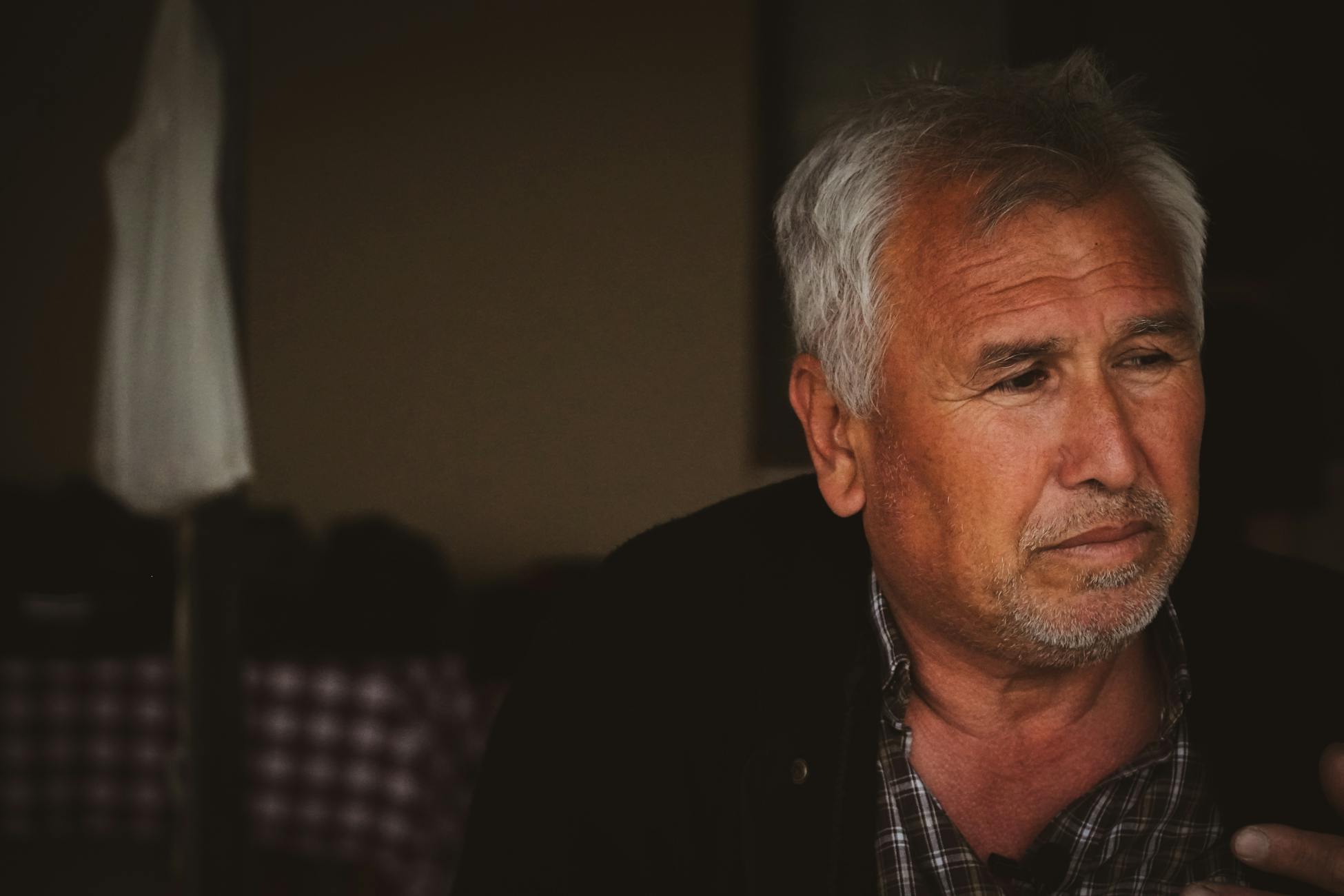
Two women in their late seventies sat in the same hospital waiting room last winter. Both had lost husbands within the past year. Both had raised children who moved far away. Both were dealing with the kind of low-grade chronic pain that narrows a person's world to the distance between the bed and the kitchen. One of them struck up a conversation with the stranger next to her, asked about his dog, laughed at something small. The other sat rigid, arms crossed, and when a nurse mispronounced her name, she said, loud enough for the room to hear, that nobody in this place gave a damn about anyone.
Same waiting room. Comparable losses. Radically different people to be around. The easy assumption is that the gentle one had it easier. Fewer betrayals, more money, better luck. But the gentle one had buried a child at forty-three. The bitter one had not. The math most people want to apply here — suffering in, bitterness out — does not hold up. Anyone who has spent real time around aging people knows this already, even if they can't explain why.
Psychology has been circling the explanation for decades through research on resilience, attribution style, and post-traumatic growth. It comes down to a single interpretive fork: did this happen to a person, or did this happen through them? That distinction appears to predict, with remarkable consistency, whether someone arrives at old age gentle and open or armored and resentful. And it has almost nothing to do with what actually happened to them.
The Fork in the Narrative
The difference between those two frames is enormous.
When suffering is something that was done to you, it becomes evidence of a hostile world. Every loss confirms a pattern. You were cheated, targeted, singled out. The narrative calcifies into an identity: the person who was wronged. And identities, once formed, resist correction. They seek confirmation. A person who has organized their entire autobiography around being harmed will, without intending to, find harm everywhere they look.
When suffering is something that moved through you — temporarily reshaping you, stripping certain things away, depositing others — the experience gets metabolized differently. The pain still registers as real. The loss still matters. But it doesn't become the defining feature of the self. It becomes weather. Severe weather, sometimes catastrophic weather, but weather nonetheless. And weather passes through a landscape without becoming the landscape.
This distinction maps closely onto what psychologists have long studied under the framework of locus of control. People with an internal locus of control believe their responses, choices, and interpretations shape outcomes. People with an external locus of control believe outcomes are shaped by forces outside themselves. Luck, fate, other people's behavior, systemic unfairness. Neither orientation is entirely wrong. But the balance between them, especially in how a person narrates their own suffering, predicts an extraordinary amount about how they age emotionally.
Consider a concrete case. A person might say a marriage nearly destroyed them, but rebuilding taught them what they valued. Another person experiencing the same divorce might say an ex-partner ruined their life and they never recovered. Same event. Radically different relationship to it.
What Resilience Research Actually Shows
Resilience has become a buzzword, drained of most of its meaning through overuse in corporate wellness programs and Instagram infographics. But the actual science underneath the word is more specific and more revealing than the motivational poster version suggests.
Research on resilience and mental health in older adults suggests that resilience in later life is not simply a personality trait people are born with, but involves cognitive and emotional habits, many of which are learned and practiced, that determine how a person relates to adversity. Among the most predictive of those habits is the capacity to reappraise. To take the same set of facts and shift the frame. Not to deny what happened, but to change what the happening means about who you are.
This is worth emphasizing because it reframes resilience as something closer to a skill than a disposition. A person who never learned the skill can still acquire it, though the learning tends to be slow and uncomfortable. It involves sitting with an experience that feels fixed and deliberately loosening its edges.
Therapists who work with older adults often describe this as the hardest part of the process: getting someone to entertain even the possibility that the story they've been telling about their worst moment might have an alternative version. Not a better version. Not a version that erases the pain. Just a version where the pain doesn't get the final word on who they are. The research consistently shows that the people who manage this shift, even partially, report higher life satisfaction, lower rates of chronic depression, and stronger social connections in their later years.
A study on how older adults bounced back from the pandemic found something that illustrates this well. Researchers discovered that older adults who showed growth during and after the pandemic shared a common cognitive pattern: they were able to locate elements of meaning, connection, or personal development within the experience, even while acknowledging its devastating toll. They didn't