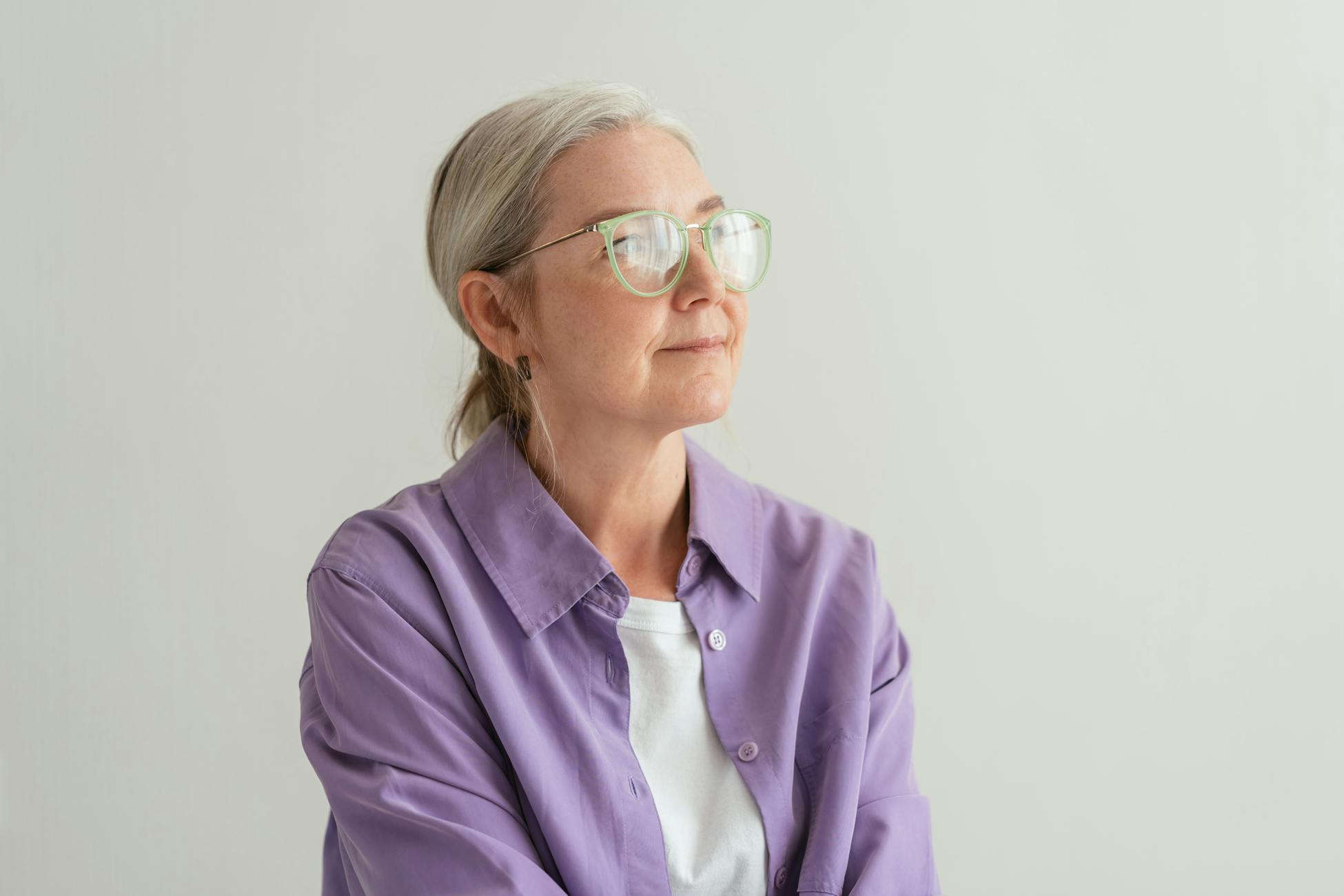
Gentleness that deepens with age is one of the most misunderstood qualities a person can carry. Most people read it as softness, as evidence of a sheltered life, as proof that someone got lucky and avoided the machinery that grinds the rest of us down. That reading is almost always wrong.
The conventional assumption runs deep: bitterness is the rational response to accumulated loss, and anyone who isn't bitter by seventy simply hasn't been paying attention. Society treats cynicism as sophistication. It treats hardness as proof of experience. The person at the dinner table who says something generous about human nature gets a particular kind of smile from the rest of the room — indulgent, faintly pitying, as if they've revealed a charming naivety rather than a considered position.
But what becomes clear, over decades of watching people age in very different directions, is that the gentle ones usually have a specific kind of backstory. They didn't coast. They hit walls. They lost things they couldn't replace. And at some particular juncture, they made a decision that most people don't even realize is available to them. They decided that whatever the world had already taken, it wasn't getting their warmth too.
The Fork Nobody Talks About
There's a moment — and you can almost pinpoint it if you talk to someone long enough — where a person's trajectory splits. Something happened. A betrayal, a loss, an accumulation of small cruelties that reached a threshold. And in that moment, two paths opened. One path leads toward protective hardening: fewer people allowed in, less trust extended, more cynicism wielded as armor. The other path involves something far more difficult. A conscious choice to remain open anyway.
That second path requires extraordinary internal negotiation. It means acknowledging the damage without letting it author the rest of the story. It means grieving what was lost while refusing to let the grief become the organizing principle. Most people don't choose this path because most people don't even see it as a choice. They experience bitterness as an inevitable consequence of experience, the way gravity is an inevitable consequence of mass.
But it's a choice. A hard one.
Psychologists who study personality change across the lifespan have found that people can and do shift their traits deliberately — including agreeableness, openness, and emotional stability. The shifts don't happen passively. They require what researchers describe as sustained effort. No one drifts into gentleness. It's built, the way someone builds stillness around an inner world that was anything but calm.
What Post-Traumatic Growth Actually Looks Like
There's a popular narrative about suffering that proves genuinely dangerous in its oversimplification. The narrative says: bad things happen, you learn from them, you grow. Neat. Clean. Almost inspirational. The reality, as research on post-traumatic growth has shown, is far messier. Not everyone who suffers grows from it. The growth, when it happens, is rarely linear and frequently comes with significant ongoing distress attached. A person can grow and hurt at the same time. Most people who become gentler after difficulty are doing exactly that.
The person who lost a spouse and still asks about your children with genuine interest hasn't moved on. They carry it. They've just decided that carrying it doesn't require them to withdraw from the people still standing in front of them.
The person who endured years at a job that slowly hollowed them out and emerged without resentment didn't forget. They remember every indignity. They simply concluded that bitterness costs more than it pays.

This is the mechanism that gets lost in the inspirational framing: gentleness after hardship is not transcendence. It's accounting. The gentle person ran the numbers and decided that the emotional tax of staying angry exceeded the cost of remaining kind. That calculation looks simple from the outside. From the inside, it can take years.
The Economy of Emotional Energy
By mid-life, if anyone has been paying any attention at all, a pattern starts to emerge: anger takes something from a person. Not metaphorically. Physiologically. Bitterness toward someone who caused harm in 2003 doesn't cost them a single thing. It costs the bitter person sleep, cortisol, rumination time, and the particular kind of mental real estate that could have been used for something else entirely.
People who become gentler with age have usually figured this out through experience rather than philosophy. They held onto a grudge long enough to feel what it actually does to a body. Then they set it down. Not because the offense wasn't real. Because the carrying was killing them.
Many people spend years carrying things they don't need to carry. Resentments toward people who have long since stopped thinking about them. It's a near-universal experience. Writers on this site have explored how major life decisions can be shaped by avoidance patterns — and the same dynamic applies here. Holding onto bitterness often serves as a way to avoid the more frightening work of remaining open.