
In 2023, Robert Waldinger summarized nearly 90 years of data from the Harvard Study of Adult Development with a finding that surprised almost no one in his field and almost everyone outside it. The single clearest predictor of health and happiness after 65 wasn't exercise frequency, dietary quality, or financial security. It was the quality of a person's close relationships. Specifically, whether at least one person in their life had access to the version of them that existed beneath the performance of being fine.
That finding sits awkwardly next to the way most longevity advice is packaged. The wellness industry has turned aging into a project management problem. Eat these foods. Move this many minutes. Sleep this many hours. Track these biomarkers. The implicit promise is that if you optimize hard enough, you'll earn more years. But the most compelling research keeps arriving at a conclusion that can't be purchased, supplemented, or tracked on a wristwatch: what holds up a good life after 65 has less to do with your cholesterol panel and more to do with whether someone would notice if you were quietly drowning.
The distinction between being monitored and being known is where the research gets interesting, and where most people's longevity plans fall apart.
The Research That Reframed Everything
The Harvard Study of Adult Development, which has tracked participants for nearly 90 years, remains one of the longest-running studies on what makes a good life. Waldinger has emphasized that the clearest finding across decades of data is that close relationships are a stronger predictor of health and happiness than other factors like cholesterol levels. Not the number of friends. Not marital status on paper. The quality, meaning how safe people felt being honest with at least one other person about what they were actually going through.
That word "quality" does a lot of heavy lifting. Most people hear it and think: do you get along? Do you fight a lot? But the data points somewhere more specific. The relationships that predicted well-being after 65 were ones where people felt they could be vulnerable. Where they didn't have to perform competence or calm. Where the version of themselves that existed at 2 a.m., confused, scared, uncertain, had somewhere to land.
The Harvard study isn't alone in this finding. Research from Brigham Young University, led by Julianne Holt-Lunstad, has demonstrated that weak social connections carry a mortality risk comparable to smoking 15 cigarettes a day, and that the quality of social ties, not merely their existence, drives the protective effect. A separate longitudinal study published in PLOS Medicine analyzing data from over 300,000 participants found that people with strong social relationships had a 50 percent increased likelihood of survival compared to those with weaker connections, independent of age, sex, health status, and cause of death. And work from the Rush Memory and Aging Project has shown that older adults who report having even one confidant, someone they can share personal experiences and feelings with, show slower rates of cognitive decline. This reinforces that emotional intimacy isn't just good for mood. It appears to protect the brain itself.
Sit with that for a moment. Across multiple studies, spanning different populations and methodologies, the variable that mattered most wasn't whether someone had a spouse, or children nearby, or a busy social calendar. The variable was whether anyone in their life had access to their authentic self. The one that exists beneath the performance of being fine.
Why "Being Strong" Becomes the Problem
Years of accumulated research on this topic reveal a pattern that is almost cruel in its simplicity. The people who struggle most after 65 are often the ones everyone else sees as doing great. They're the capable ones. The dependable ones. The ones who managed their health, saved their money, stayed busy. And they did all of that while slowly, imperceptibly sealing off the part of themselves that needed to be witnessed.
Research suggests that chronic emotional suppression is associated with elevated stress hormones, disrupted sleep, and weakened immune function, all of which accelerate aging. The body, it turns out, keeps a running tab of every feeling a person swallowed so someone else wouldn't worry about them.
There's a particular cruelty to this in the generation now entering their late 60s and 70s. Many of them grew up in households where needing people was treated as weakness. Where "handling it yourself" wasn't advice but identity. Writers on this site have explored how people in their 70s often describe shedding social performances as a kind of liberation. But that liberation requires having first built the relationships capable of receiving the real person underneath. Many haven't.
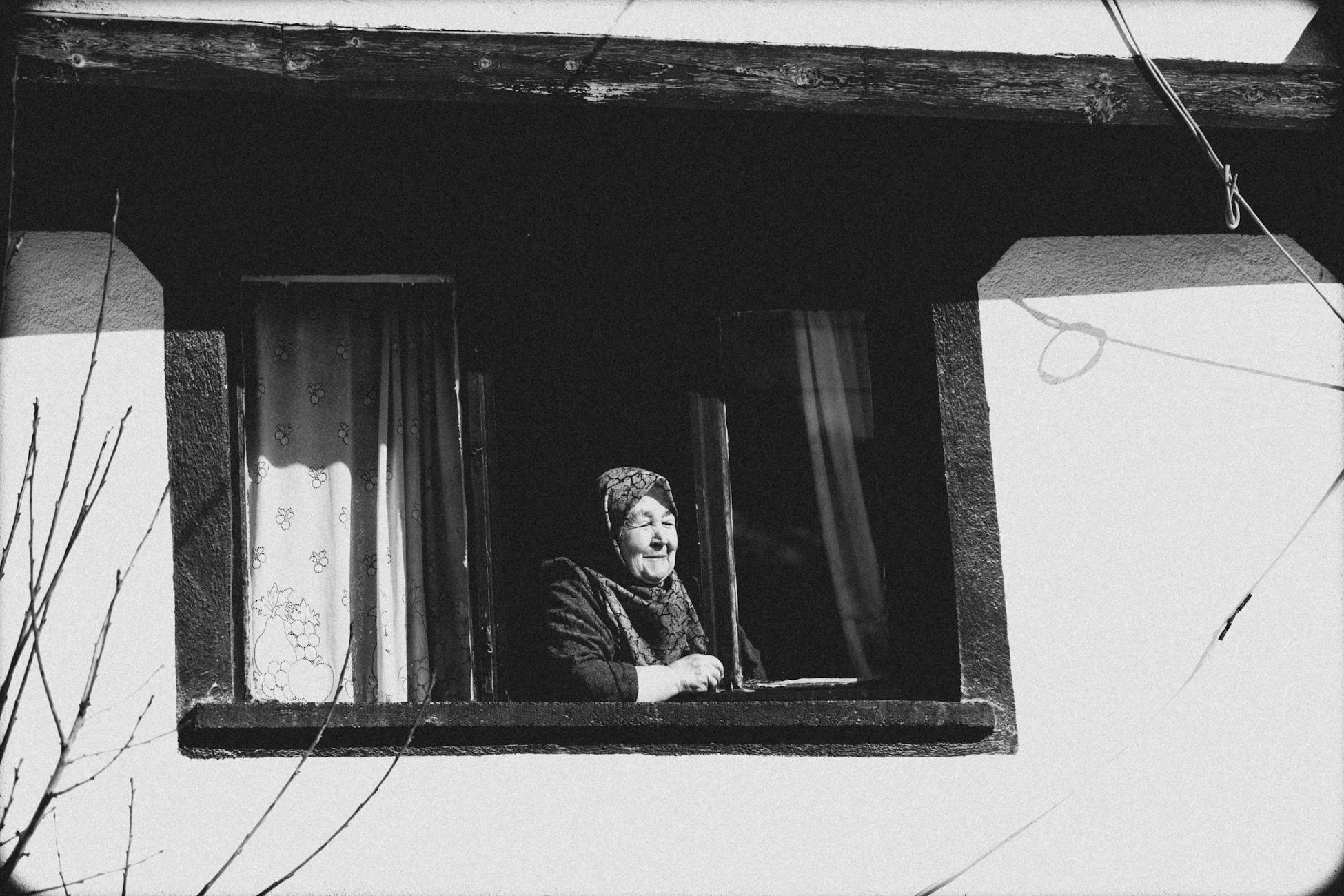
Studies on loneliness among older adults have been well documented. But the more precise problem might be called "accompanied loneliness." Having people around, even people who love you, while remaining fundamentally unknown.