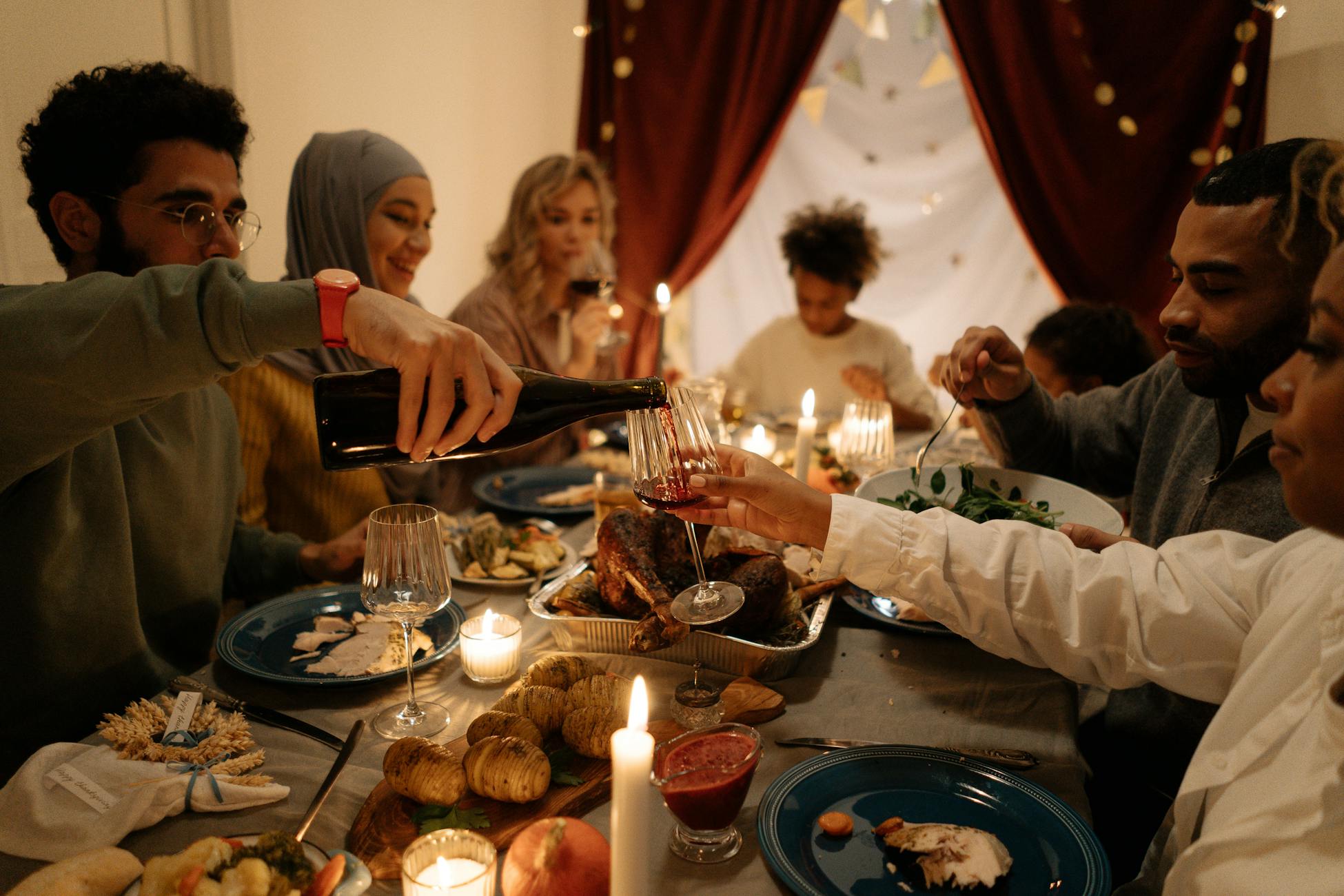
Quiet adults at loud dinner parties are often misunderstood. Because they are not competing for the floor, people assume they are nervous, bored, awkward, or waiting to be drawn out.
Sometimes that is true. But often, something else is happening: they are paying attention.
There is a specific kind of adult who shows up at a loud dinner party, stays the whole time, and contributes maybe ten sentences. They are not disappearing from the room. They are tracking it.
The default assumption is that quiet equals uncomfortable. That if someone is not jumping into the cross-talk, they must be holding back. But calm quietness and social unease are not the same thing, and confusing them makes a lot of quietly present people look like they need rescuing when they do not.
What shyness actually is, and what it isn't
Shyness usually involves hesitation in unfamiliar social situations. It is the pause before entering the conversation, the extra moment needed before someone feels at ease, the sense of needing time to settle into the room.
The quiet adult at the dinner party may be experiencing none of that. They arrived, greeted people, chose a seat, ate, listened, laughed, and stayed.
That is the giveaway. Their quietness is not necessarily tension. It may simply be the way they participate.
Some people warm up by talking more as the night goes on. Others warm up by listening more closely. The second pattern is easy to miss in a culture that treats volume as proof of comfort.
The thing uneasy people are doing that quiet observers aren't
When someone feels genuinely uneasy in a room, their attention often turns inward. They may replay what they just said, scan faces for signs that something landed badly, or rehearse the next sentence before they speak.
That inner monitoring can make a social event feel less like a meal and more like a performance review. The person may be present in the room, but a lot of their energy is being spent managing how they think they are coming across.
The settled observer has a different quality. Their attention is pointed outward. They are noticing who keeps trying to include the quiet guest beside them. They are catching the shift in tone when one topic lands badly. They are watching the rhythm of the room, not bracing against it.
That difference matters. One kind of quiet is guarded. Another kind is absorbed.
Why loud rooms actually suit some quiet people
This sounds backwards, but it tracks. A loud dinner party can be a surprisingly good environment for someone who likes to watch.
The volume gives them cover. Nobody expects them to carry the conversation because three other people are already doing it. They can listen without performing.
Some adults take in a lot at once: tone of voice, body language, who keeps checking their phone, who suddenly goes quiet, who laughs a little too quickly. For them, a loud dinner may prompt quietness because there is already so much to absorb.
The signal volume is high. They are just not adding to it.
The myth that introverts are anti-social
The other lazy read is that quiet people do not actually want to be there. That if they are not talking, they would rather be home.
This conflates introversion with avoidance, and it misses what is actually happening.
Introverts often show up to social events because the people matter to them. They just engage differently once they are there.
Many introverts have rich social lives but pace their engagement differently. They may choose depth over breadth, presence over performance, and one careful conversation over a dozen quick exchanges.
The adult who sits quietly through dinner and then has a forty-minute one-on-one with one person on the front step after everyone else leaves is not failing at socializing. They are doing the version of it that actually feeds them.
Why this gets misread so often
Loud rooms reward a specific kind of energy. Quick interjections, big reactions, and the ability to make a joke land in a three-second gap before someone else takes the floor.
If those are your metrics for engagement, anyone who is not doing them looks checked out.
But settled observation is a skill. It is the skill that makes someone genuinely good at remembering what their friends told them six months ago.
It is what produces the friend who asks, in February, how that thing in November went because they were listening when nobody else was.
The dinner party is not a test of social skill. It is a particular kind of attentional environment, and the people quietly tracking it may be doing more cognitive work than the people dominating it.
This is also why some of the most settled adults stop trying to be interesting somewhere in their thirties or forties. They realize they do not need to win the conversation to belong at the table.
Where it gets confusing: the loud anxious person
The tidy categories break down at the edges. Some of the loudest people at the table are also the most uneasy.
They talk to keep the room moving because silence feels dangerous. They accept every invitation and then spend the drive home replaying the moments that felt awkward.
So the inverse is also true. You can be calm, settled, and quiet. The outward behavior may look like shyness, but the inner experience is completely different.
This is the part most armchair diagnosis misses. The behavior at the surface tells you very little by itself. What is happening underneath is the actual signal.
What to look for instead
If you want to understand whether a quiet person at a dinner party is shy, uneasy, or simply observing, the tells are subtle.
The shy person may warm up. By dessert, they might be laughing more, contributing more, and visibly easing into the room. Their quietness was situational, and familiarity helped it loosen.
The uneasy person may not settle in the same way. They might talk plenty, but there is still a braced quality to them: the quick self-correction, the after-sentence flinch, the sense that they are monitoring the room for danger rather than enjoying it.
The settled observer never needed to warm up. They were comfortable from the moment they sat down. Their quiet does not have tension in it.
If you watch their face, they are following the conversation with interest, not shrinking from it. They laugh in the right places. They respond when they want to. They are just not chasing the floor.
The fourth type, the adult who reads every room they enter for shifts in tone, is often the most quietly attentive of all. They learned somewhere along the way that watching the room is information.
The bigger point
Quiet at a loud table is not a deficit. It is not automatically something to be coaxed out of, fixed, or worried about.
The cultural assumption that everyone should perform engagement at the same volume disadvantages the people whose contribution shows up later: in the follow-up text, in the thing they noticed that nobody else did, in the friendship that quietly outlasts every louder one in the room.
Traits like sensitivity, deep processing, and quieter engagement often get misread in a culture that defaults to extroversion as the norm. They do not need to be turned into a problem. They need a different frame.
The quiet adult at the loud dinner party is usually fine. Better than fine, actually. They may be getting more out of the evening than the people doing the most talking.
They are remembering it. They are noticing the parts that matter.
Next time you spot one, resist the urge to draw them out too quickly. They may not be stuck. They may not be waiting for permission.
They may be exactly where they want to be: at the table, in the room, watching the whole thing unfold.
That is a person who figured out, somewhere along the way, that you do not have to be the loudest one to be the most present.