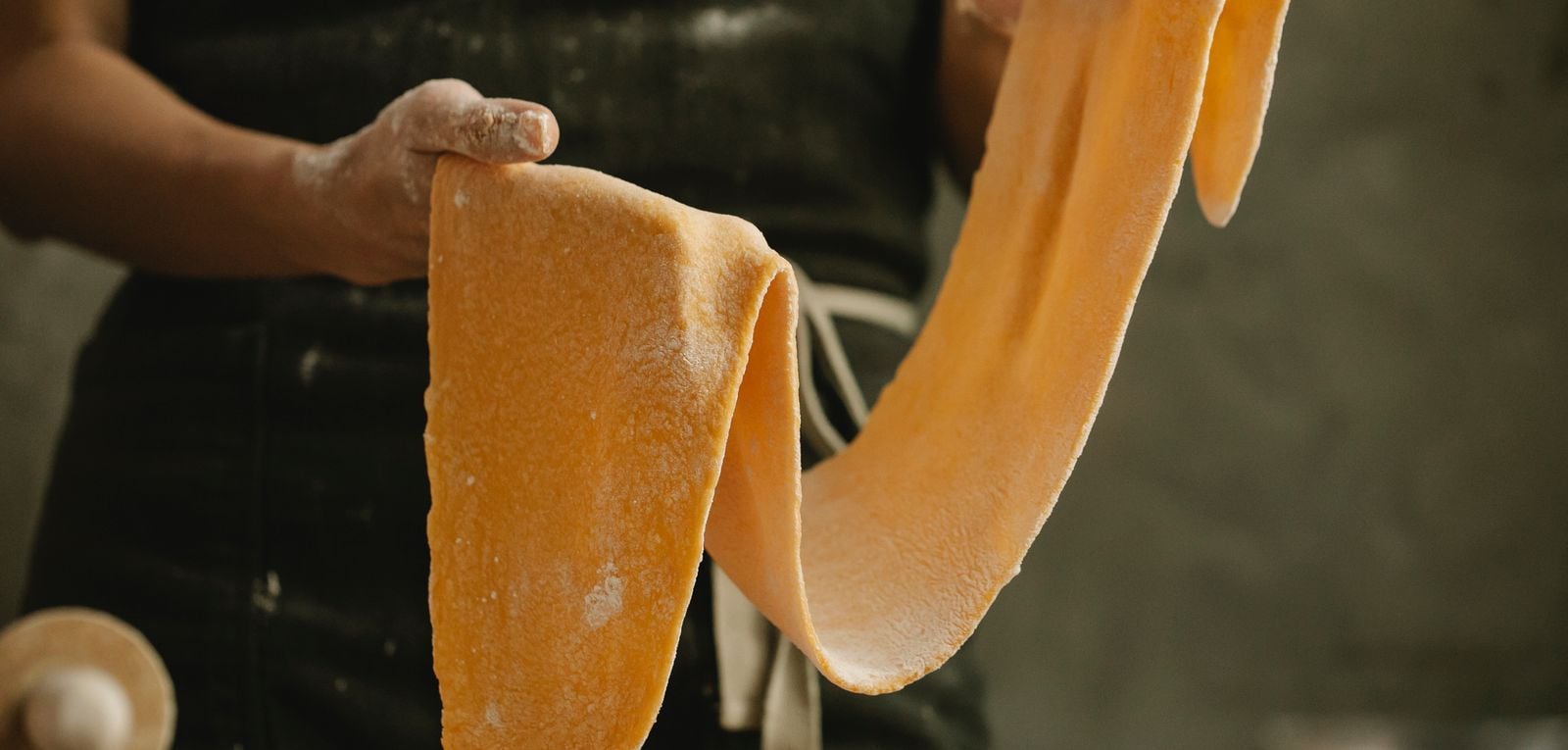
Walk through any city neighborhood on a Sunday afternoon and you'll find a particular subset of people doing something the culture barely has language for. They're braising short ribs of jackfruit for one. Folding gyoza for one. Making the three-hour ragù, the laminated dough, the stock that takes a full day. There's no dinner party on the calendar. No partner walking in the door at seven. The meal is for them, and only them, and the elaborateness is not a consolation prize.
The cultural read on this is reliably wrong. Solo elaborate cooking gets framed as a coping mechanism, the kitchen as a place where the lonely retreat to keep their hands busy. The assumption underneath: anyone who would spend four hours on a meal for one must be filling some kind of void. But the actual research on loneliness, cooking, and well-being suggests the opposite is closer to true. People who cook elaborately for themselves are often demonstrating something the loneliest people cannot: a working relationship with their own company.
The category error in how we read solitude
The confusion starts with a definitional problem most people never sort out. Loneliness and social isolation are different things, and conflating them produces bad conclusions about anyone who spends time alone by choice. Isolation is the objective state of limited social contact, while loneliness is the subjective experience of feeling disconnected from others — a distress signal that can fire in a crowded room and stay silent in an empty apartment.
This distinction matters because the person braising mushrooms for a Wednesday dinner alone may be objectively isolated for those three hours and not lonely at all. They may also have a full social calendar and have chosen this particular evening as a deliberate withdrawal from it. The cooking is not a symptom of anything. It's a chosen activity in a chosen pocket of time, which is something psychologically healthy adults arrange for themselves.
Loneliness can be understood as a discrepancy between the connection a person wants and the connection they have. By that definition, the question of whether solo cooking signals loneliness depends entirely on whether the cook wishes the meal were being shared. A great many of them don't. The University of Delaware's coverage notes that loneliness can exist in people surrounded by others who love them, because the connections don't meet specific needs. The inverse is also true. Solitude can exist in people whose needs are well met, and who simply want a quiet kitchen tonight.
What's actually happening at the stove
The psychological literature on cooking is unusually clear for a wellness topic. It's not a marginal benefit hiding in noisy data. Cooking does specific, measurable things to the nervous system and the sense of self, and most of those things are amplified, not diminished, when the cook is alone.
Start with flow — the state of deep absorption in a challenging but manageable task. A complicated recipe sits in the sweet spot of demand: enough variables to require full attention, not so many that the cook freezes. People enter flow states while cooking at home, describing time as passing pleasantly and the sensory experience — chopping, smelling, tasting — as grounding rather than burdensome. Solo cooking removes the social variable that often breaks flow: the conversation, the coordination, the negotiation about how spicy is too spicy.
Then there's self-efficacy, the belief that your actions reliably produce the outcomes you intend. The kitchen is one of the few remaining domains where ordinary adults can experience it cleanly. Cooking offers a structured task with a clear beginning, middle, and end — an experience of completion that can be psychologically grounding. Most modern work doesn't end. Email doesn't end. Parenting doesn't end. A finished cassoulet ends, and you ate it, and you made it. That loop closes.
The elaborate part is doing real work here. A frozen burrito heated in a microwave delivers calories. It doesn't deliver competence, sensory engagement, or the small but real pride that comes from executing something hard. The cook who spends three hours on a meal is buying psychological goods that the meal itself is incidental to.
The identity question
There's a deeper layer underneath the well-being framing. Cooking is one of the ways adults construct and reinforce a sense of who they are, and that construction doesn't require an audience.
Cooking occupies a unique space between art and utility — a creative outlet that produces something tangible, immediately rewarding, and personalizable along cultural, dietary, and aesthetic lines. The person who makes their grandmother's dumplings on a Sunday alone is not performing nostalgia for anyone. They're maintaining a thread of identity that runs through their hands. Domestic practices function as markers of heritage and instruments of self-understanding, and food is among the most durable of those practices.
This is why the lonely solo cook reading misses so badly. The cook isn't avoiding the world. They're conducting a small private ritual of selfhood that happens to require a cutting board. As we explored in a recent piece on eating alone at restaurants without feeling weird about it, there's a particular kind of psychological development that lets people stop needing an observer to validate their pleasures. Solo elaborate cooking sits in the same family. The meal is allowed to be enough. The cook is allowed to be the entire audience.
What loneliness actually looks like
To see why the elaborate solo cook is so often misread, it helps to look at what genuine loneliness actually does to behavior. Lonelier adults show greater immune dysregulation in response to stress and are more likely to experience pain and depression. The pattern is not one of elaborate self-care. It's one of withdrawal, dysregulation, and difficulty maintaining the daily structures that healthier people take for granted.
Isolation increases mortality by roughly 30%, linked to higher rates of coronary heart disease, stroke, dementia, depression, and anxiety. But the mechanism running underneath those numbers is not that people enjoyed solitary activities too much. It's the absence of meaningful connection plus the absence of self-directed engagement — a kind of behavioral flattening where the person stops doing things, alone or otherwise.
The elaborate solo cook is doing the opposite of behavioral flattening. They're engaged in voluntarily participating in goal-directed activity that produces a sense of accomplishment. Cooking dinner from scratch on a Wednesday night with nobody watching is closer to a therapeutic technique than to a symptom.
The cultural script the data contradicts
So why does the reading persist? Partly because shared meals are genuinely good for people, and the data on that is also strong. People who regularly eat with others report feeling happier, more supported, and less lonely, with the positive impact rivaling that of having a steady job. That finding is real. It just doesn't say what people often think it says.
It doesn't say that every meal must be shared. It doesn't say that solo meals are pathological. It says that the presence of any regular shared meals correlates with well-being — which is consistent with someone who eats with friends twice a week and then spends Sunday alone making a six-hour mole.
This connects to something we've been investigating on our YouTube channel—tech mogul Bryan Johnson, often called the world's healthiest person, eats his optimized meals in complete solitude, which raises an uncomfortable question about whether peak physical wellness without human connection actually constitutes wellbeing. The contrast between his data-driven isolation and the joy of cooking for oneself reveals how easily our culture conflates being alone with being lonely.
The cultural script that reads solo elaborate cooking as sad is partly a holdover from an era when domestic food preparation was almost always done by women for others, and doing it for yourself signaled either failure to acquire others or failure to be acquired. That economic frame doesn't describe most modern kitchens. The single adult cooking confit for one on a Saturday is not a leftover from a marriage market. They're an adult making decisions about how to spend their time.
The quiet skill of being your own dinner guest
What the elaborate solo cook has often developed is a skill the culture undervalues: the ability to be a good host to themselves. Setting the table when nobody is coming. Pouring the wine into the right glass. Plating the food. None of this is performance. It's a small operational definition of self-respect.
This is the same psychological territory covered in our piece on what quietly satisfied people in their seventies tend to have in common — a working understanding that the small, repeatable pleasures of a day are not consolation prizes for a bigger life, but the actual material of one. The elaborate solo meal is in that category. It's not a substitute for something. It's a thing.
The counterargument worth taking seriously: some people do cook elaborately alone because they don't have anyone to cook for and wish they did. That's real, and it's worth naming. The cooking in that case is still good for them — the flow, the competence, the structure all still apply — but it doesn't resolve the underlying loneliness. The activity is useful; it's not curative. The point is that the activity itself doesn't tell you which person you're looking at. You can't read someone's social life off their cutting board.
What to make of the person at the stove
The next time you walk past a window on a Sunday afternoon and see someone alone in their kitchen, sleeves pushed up, three pots going, the assumption to retire is that something is missing from their life. What's more likely is that something is being added to it. They're in flow. They're making something hard. They're being a good host to themselves in a culture that mostly doesn't teach people how.
The loneliest people are usually not in the kitchen for three hours on a Sunday. They're on the couch. The person at the stove has figured out something more useful than how to avoid being alone. They've figured out what to do with the time.