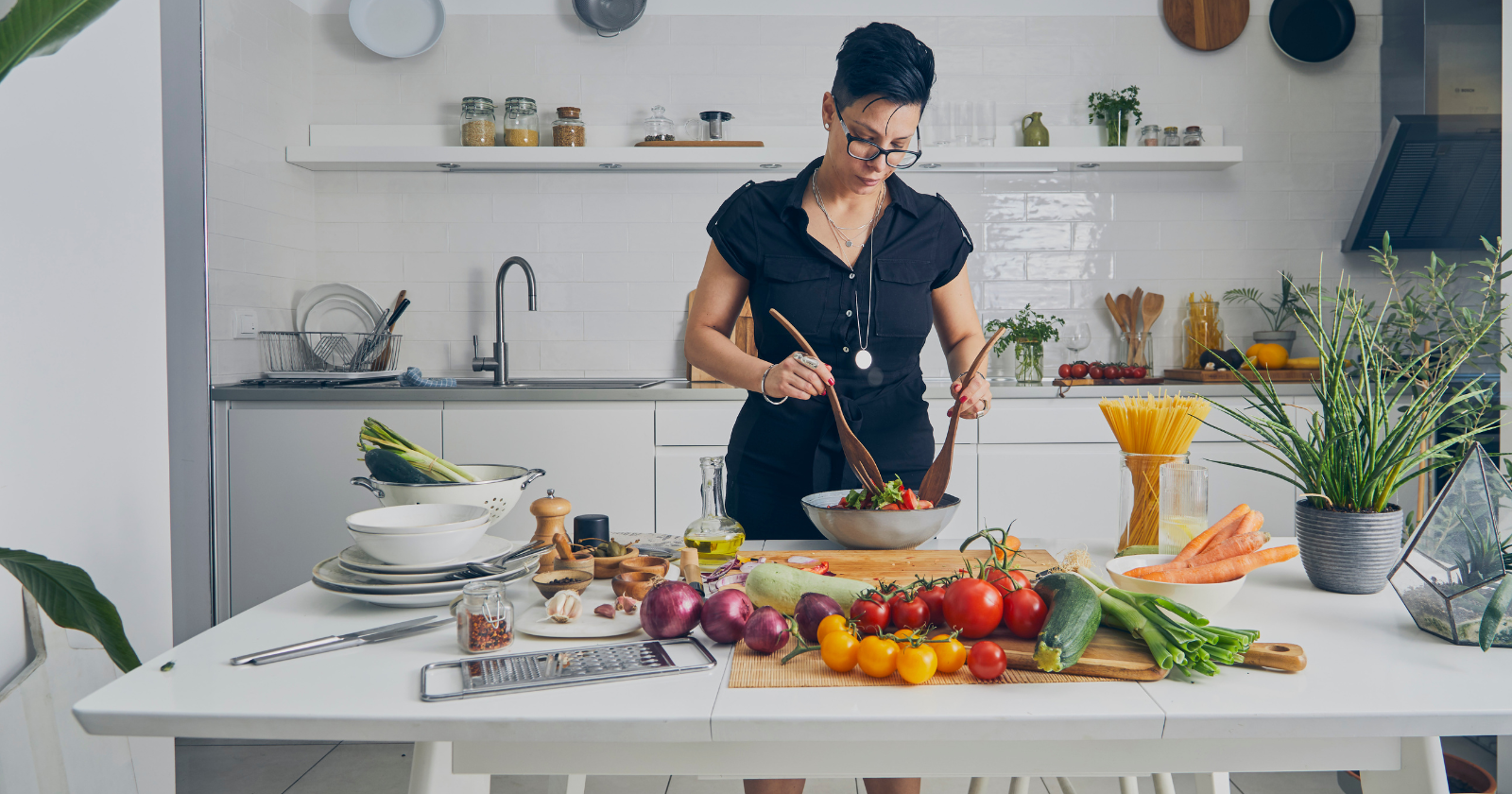
Something shifts in the kitchen during the fifth decade, and most people don't talk about it.
The shift is quiet. It's a slow renegotiation of how the kitchen actually functions — what gets done the night before, which pan stays untouched in the back of the cabinet, what gets eaten standing up when the house is empty.
The conventional read on fifty-something kitchen behavior tends to be condescending. It frames these habits as either decline (slowing down, becoming set in one's ways) or as wellness performance (clean eating, anti-inflammatory diets, longevity hacking). Both miss what's actually happening.
What's actually happening is closer to automaticity — behaviors that have been repeated long enough, in the same context, that they no longer require decision-making. By fifty, most people have established a lot of cues. The kitchen is where you can see them most clearly.
Here are ten of the small ones.
1. Prepping vegetables the night before
It usually starts as a practical fix and becomes ritual. Onions diced and sealed. Greens washed. Garlic peeled. Carrots cut into whatever shape the next day's meal requires.
This is habit stacking — attaching a new behavior to the existing cue of cleaning up after dinner. The brain doesn't have to decide when to do it. The behavior simply follows the pattern, which is exactly how sustained habit formation works.
The payoff isn't time saved. It's mental load removed from a future version of yourself who will be tired.
2. Keeping one pan they refuse to share
A cast iron. A carbon steel. A specific nonstick that's been seasoned exactly right over a decade. Whatever it is, by fifty, a lot of people have one pan that nobody else is allowed to touch.
This looks like fussiness from the outside, but research on psychological ownership describes it as the cognitive and emotional attachment people develop toward objects that feel like extensions of identity. A pan you've cooked five thousand meals in stops being cookware. It's a record of decisions you've made about how food should taste.
Letting someone scrub it with steel wool isn't a kitchen problem. It's an identity problem.
3. Eating standing at the counter when nobody's home
This one is rarely admitted out loud. The plate doesn't come out. The chair doesn't get pulled. A bowl gets eaten over the sink, or directly out of the container, and the moment is its own complete event.
After decades of cooking for households, school nights, partners, and guests, the solo meal becomes a small act of unstructured time — a recognition that some meals don't need an audience or a setting.
The kitchen, for a few minutes, isn't a workplace.
4. Moving breakfast earlier instead of later
Most adults drift the other way as they age — breakfast slides toward 10 a.m., then merges with lunch. People in their fifties who are paying attention often do the opposite. They pull it forward.
This isn't arbitrary. Recent research has found associations between later breakfast timing and depression, fatigue, and oral health problems.
People who notice their breakfast slipping later often instinctively course-correct, even without reading the study.
5. Buying the same three or four ingredients on every grocery trip
The list shrinks. By fifty, there's usually a core set of items that gets bought no matter what — olive oil, lemons, beans, a specific kind of bread, the yogurt that works.
This is choice architecture applied to a refrigerator — designing the environment so that healthy default behaviors happen with less effort. If the staples are always there, the decision about dinner never has to start from zero.
There's also a sentimental layer that's easy to underestimate — many of these staples are inherited. As VegOut has explored before, the brand of olive oil someone keeps buying is often less about the oil than about who first poured it.
6. Replacing one snack instead of trying to eliminate it
The all-or-nothing approach gets quietly retired around this age. People stop trying to "cut out" things and start swapping.
The brain is wired such that you almost always need a replacement behavior — trying to just stop, without filling the gap the old habit occupied, rarely works.
So the cookies don't disappear. They get partly replaced by fruit and yogurt at the same hour, in the same chair, watching the same show. The cue stays. The outcome changes.
7. Cooking for tomorrow while making dinner tonight
An extra cup of rice. A second sheet pan of vegetables. A pot of beans that's twice what the meal requires.
This habit shows up around the time people stop pretending that cooking from scratch every night is sustainable. The fifty-something cook tends to be honest about the math — energy is finite, weeknights are short, and one extra ten minutes tonight buys back forty minutes tomorrow.
It's a habit that tends to separate people who actually enjoy cooking from people who learned to treat it as performance. The performance crowd makes one impressive meal. The enjoyment crowd makes one meal that becomes three.
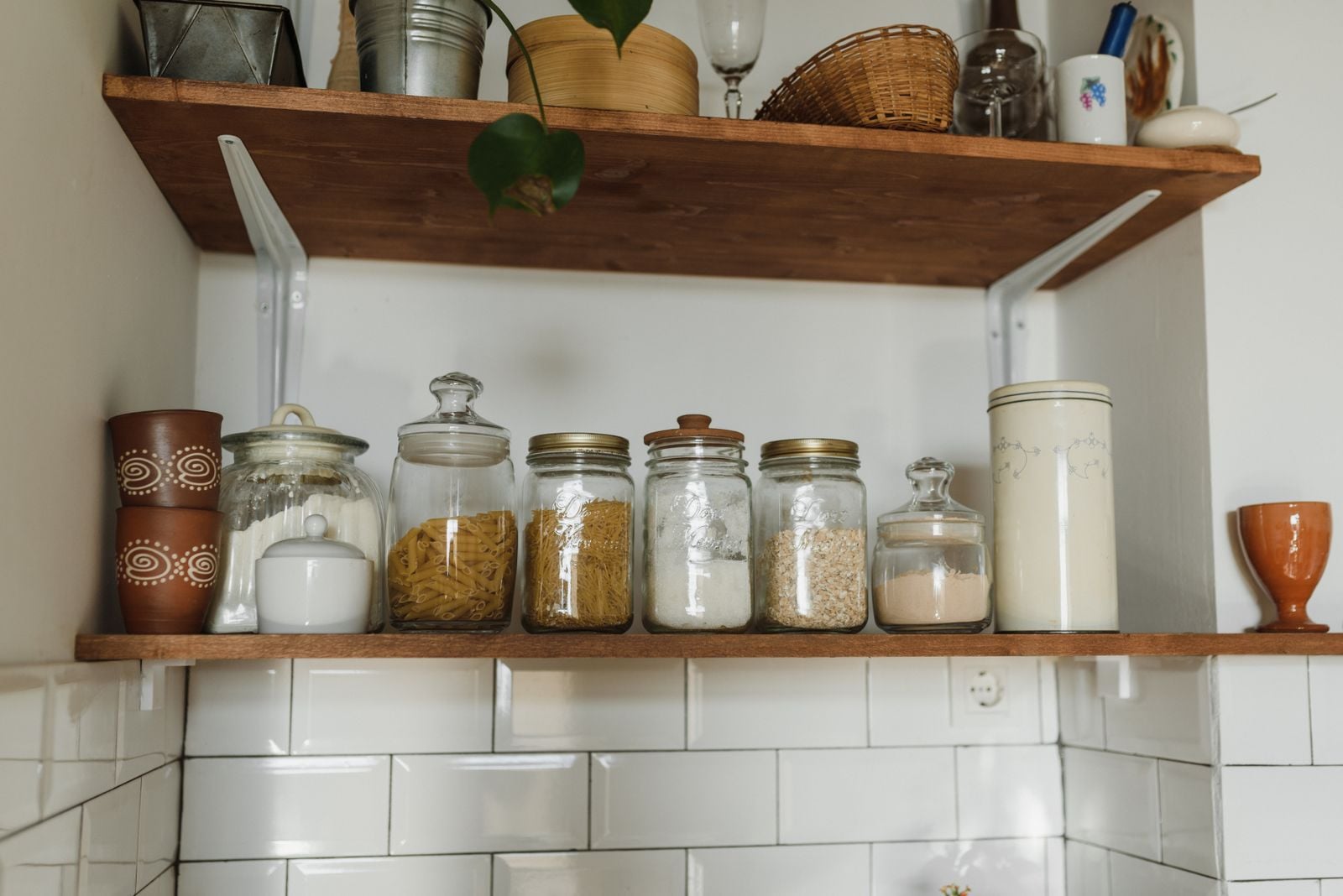
8. Keeping the pantry stocked past the point of reason
Three jars of the same lentils. Backup olive oil behind the current olive oil. Salt in two places.
This habit often traces back to a quiet promise to a younger version of yourself who once ran out of something at the wrong moment. As VegOut has written, an overstocked pantry is often less about preparation than about a small, learned shame from earlier life that the pantry promises will not return.
By fifty, the people who keep their pantry deep tend to know exactly why.
9. Making coffee before doing anything else, in the same order, every day
The kettle. The grinder. The same scoop, the same mug, the same window looked at while it brews. This is automaticity at its most concentrated.
Morning routines are typically a collection of habits stacked tightly together, each one cuing the next. By fifty, the coffee ritual is usually the spine of the morning — the cue that triggers every other downstream behavior.
Disrupt it on purpose and watch what happens to the rest of the day.
10. Eating dinner earlier, even when guests are coming
The 5:30 dinner stops being a joke about getting older and starts being a preference defended in public.
Research on meal timing points toward an underlying principle — aligning meals with daytime circadian biology tracks with better metabolic and overall health. Earlier dinner is the night-side version of the same instinct.
The social cost is real. Friends are still eating at 8. Restaurants don't fill up until 7:30. Holding the 5:30 line means quietly accepting that your body's preferences now outrank dinner reservation culture.
Most people in their fifties make this trade without commentary. They just start declining the later table.
What these habits have in common
None of these are dramatic. None are sold by a wellness brand. They aren't habits anyone announces.
What they share is a recognition that the kitchen, at this stage of life, is no longer a place for performance or aspiration. It's an operations center for a specific person with finite energy, accumulated preferences, and a clearer sense of what actually works for them.
Habits become sustainable when the behavior happens with less effort and less thinking. Most people in their fifties have stopped trying to overhaul their kitchen life precisely because they've stumbled into a version of it that runs on minimal cognitive load.
The pan stays in its drawer. The vegetables get prepped at night. The pantry holds more than it needs to. Breakfast happens early. Dinner happens early. The standing-at-the-counter meal happens whenever it happens, with nobody watching.
The worth of all this is easy to miss from the outside, because none of it photographs well. There's no before-and-after. There's no transformation arc.
What there is, quietly, is a person who has figured out how to feed themselves with most of the friction removed. That's not nothing. For a lot of people, it took fifty years to get there.