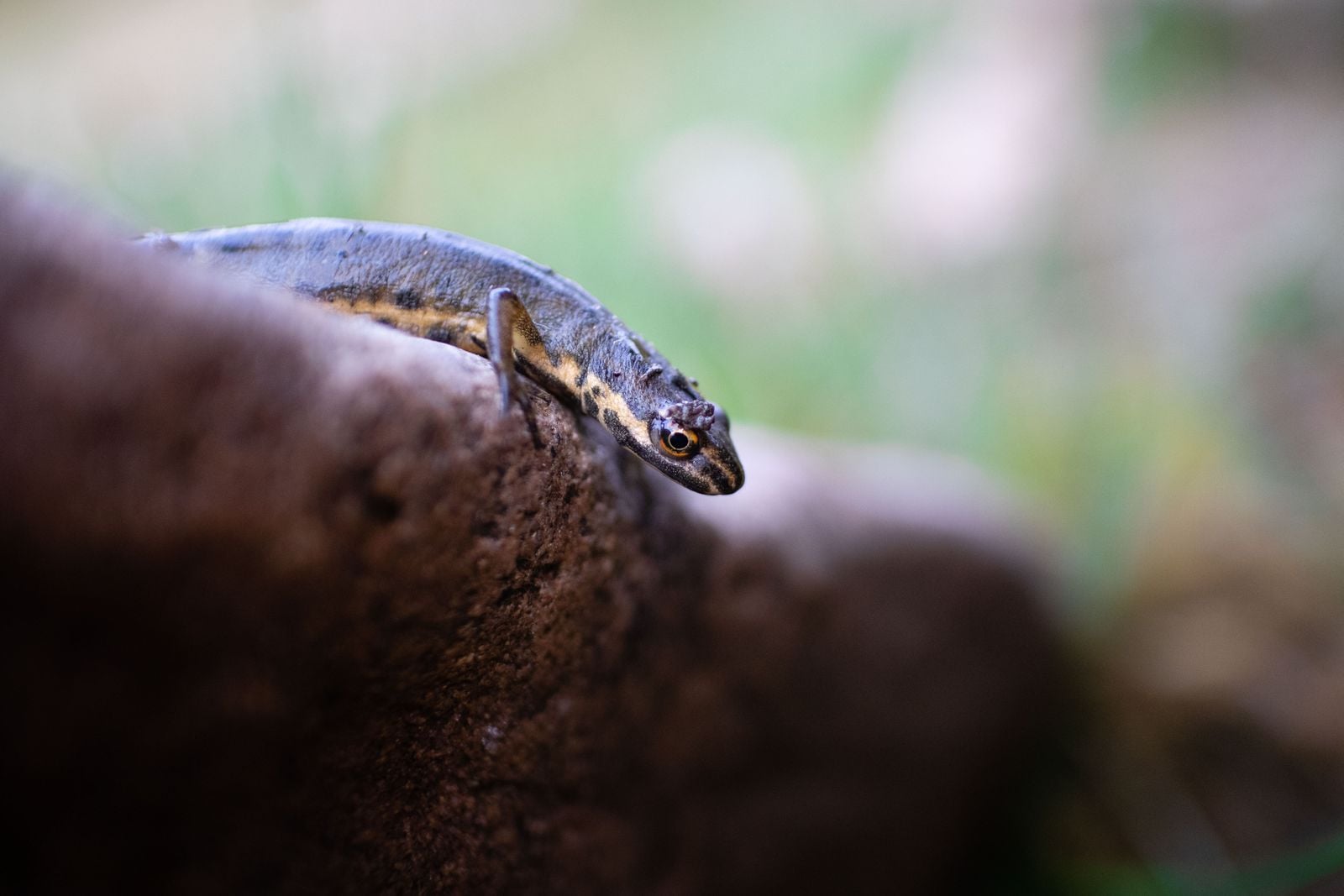
The standard story about human healing is that we trade regeneration for survival. Salamanders regrow limbs; we close wounds with scar tissue and call it done. A new study out of Texas A&M suggests that trade-off may be less permanent than biology textbooks have implied for the last century.
Researchers at the Texas A&M College of Veterinary Medicine and Biomedical Sciences report that mammalian cells already carry the machinery for regrowth — it has just been quietly switched off. With a two-step application of two well-known growth factors, the team regenerated bone, joints, ligaments and tendons in mice after amputation. The findings were published in Nature Communications on June 17.
What the researchers actually did
The conventional wisdom in regenerative medicine has been that humans need outside help to rebuild tissue — usually stem cells harvested, cultured, and injected back into the body. The Texas A&M team took a different route.
Instead of importing new cells, they redirected the ones already at the wound site. Fibroblasts — the cells responsible for sealing injuries with scar tissue — were nudged onto a different path.
The first step used fibroblast growth factor 2 (FGF2), applied after the wound had already closed. That timing matters. The body was allowed to finish its normal emergency response, and only then were the cells given a new instruction set, encouraging them to form a blastema-like structure — the kind of cell cluster salamanders use to regrow limbs.
A few days later, the team applied bone morphogenetic protein 2 (BMP2), which signals cells to start building actual tissue. Bone formed. So did ligament, tendon and joint structure. The regrown anatomy wasn't a perfect replica, but every major component removed in the amputation came back in roughly the right organisation, according to the Texas A&M research summary.
The reframe: capacity, not absence
For most of modern biology, regenerative failure in mammals has been treated as a missing feature. Salamanders have it, we don't, end of story.
The Texas A&M findings argue something subtler. The cells aren't broken. They're just being given the wrong instructions at the wrong time.
According to the research team, the cells appear capable of following different developmental pathways — either forming scar tissue or regenerative structures called blastemas. The research focused on redirecting fibroblasts at the injury site to form regenerative tissue rather than scar tissue.
The team suggested that cells previously thought to lack regenerative capacity may simply require the right signals to activate dormant abilities.
That distinction matters, scientifically and philosophically. A missing ability is a dead end. An obscured one is a research programme.
Why this approach is different from stem cell medicine
Most regenerative medicine right now is built around stem cells — extracting them, expanding them in a lab, and putting them back in. It's expensive, technically demanding, and raises persistent questions about consistency and safety.
The Texas A&M model bypasses that pipeline entirely. The stem cells are already on site. They live in the wound. The intervention is a sequenced signal, not a transplant.
There's a practical advantage worth noting. BMP2 already has FDA approval for certain orthopaedic uses, and FGF2 is currently being evaluated in multiple clinical trials. The compounds aren't speculative. The novelty is in the timing and the sequence.
That doesn't mean human limb regeneration is around the corner. It means the regulatory runway for testing the approach in humans is shorter than it would be for an entirely new molecule.
The honest limits
A few caveats are worth holding alongside the optimism. The regenerated structures in the mouse studies were functional but imperfect — recognisable bone, joint and ligament, but not exact copies of the original anatomy.
The work is also in early-stage animal models. Mice are not humans. Digit regeneration is not arm regeneration. And the biology of scar formation in older adults — where fibrosis tends to be more aggressive and healing slower — has not yet been tested in this framework.
The researchers themselves are careful about this. Muneoka has suggested the most immediate clinical use is probably not regrowing limbs but reducing scarring during ordinary wound healing. A modest dial-down of fibrosis would already be meaningful for burn survivors, surgical patients, and anyone healing from significant injury later in life.
What it means for how we think about ageing bodies
There's a broader cultural point sitting underneath this research. We've inherited a story that bodies decline in a one-way direction — that healing capacity shrinks with age and that lost function stays lost.
The Texas A&M work doesn't overturn that story. But it does suggest the underlying biology is more plastic than the cultural narrative gives it credit for. Capacity can be obscured and uncovered. Cellular behaviour can be redirected. The script isn't fixed.
For an audience thinking about longevity, mobility and what the second half of life can include, that's a useful frame. Rather than focusing solely on slowing decline, researchers can now explore reactivating dormant regenerative abilities. This raises questions about what other dormant biological abilities might be reactivated through similar approaches.
The next phase of the work, according to the team, is figuring out which biological pathways do the heavy lifting and whether the sequence can be refined to produce cleaner regrowth. The peer-reviewed details are available in the journal article for anyone wanting to read the primary source.
The research demonstrates that regenerative failure in mammals may not be permanent. The study provides a model system for investigating the mechanisms of mammalian regeneration.
That sentence is doing a lot of quiet work. For most of medical history, regenerative failure was treated as the floor. This study reframes it as a problem with a possible solution — one that may already be sitting in cells we previously dismissed as incapable.