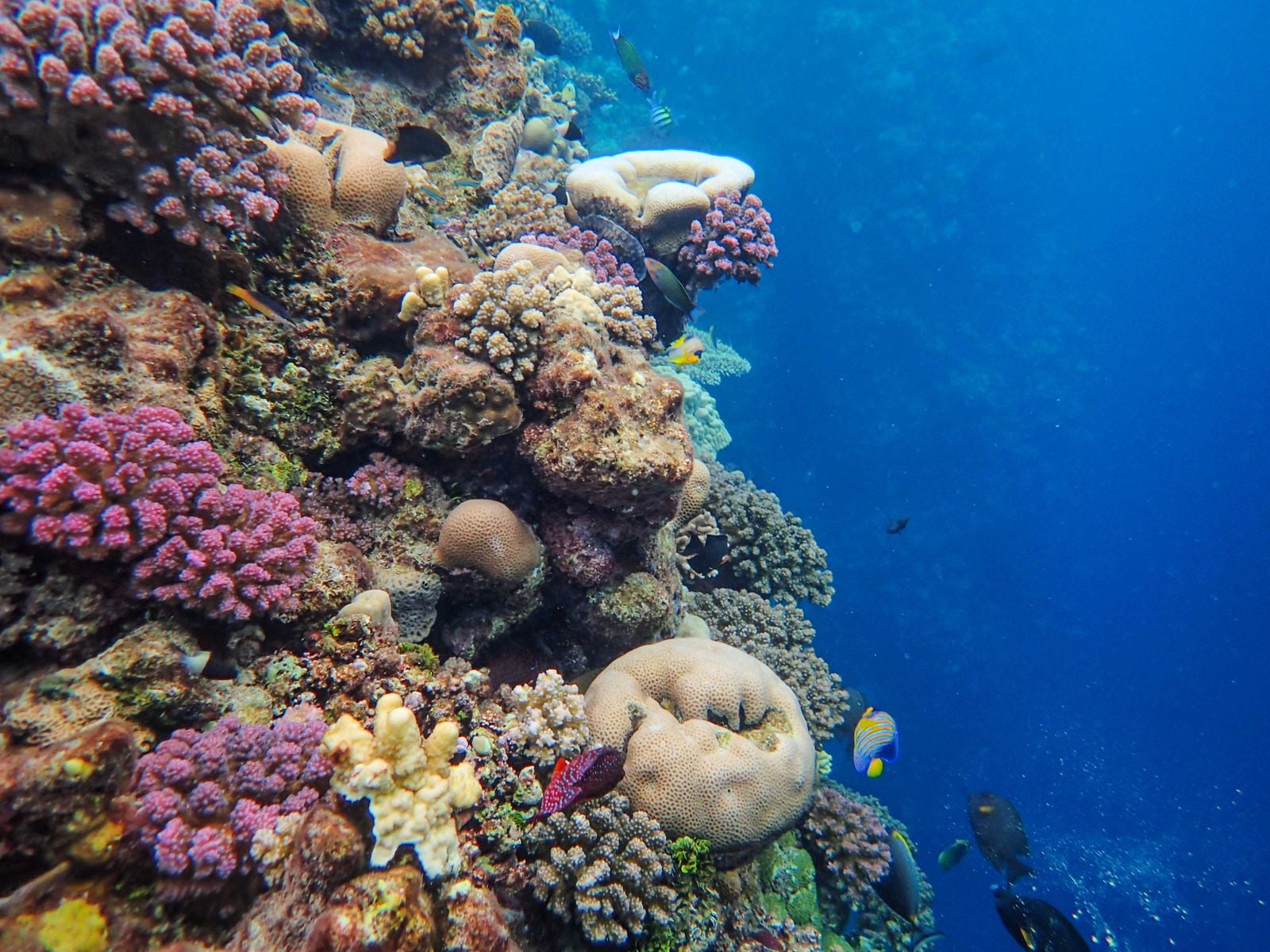
Most coral coverage reads like an obituary. The world's reefs face a grim timeline that makes conservation feel like hospice care rather than science. But a small group of researchers at Woods Hole Oceanographic Institution is working a different angle, one that flips the question from how do we mourn the reefs to why are some of them still thriving.
Environmental journalist Teresa Tomassoni traveled to the Marshall Islands to follow Woods Hole scientists tracking down what they call "super reefs" — coral systems that keep functioning even as ocean temperatures climb past the thresholds that bleach and kill their neighbors. The reporting frames coral resilience not as a miracle but as a measurable biological trait, one that could be studied, mapped, and possibly replicated.
The conventional climate narrative around reefs leans heavily on loss. What the Woods Hole work suggests is that the remaining reefs are not a uniform population sliding toward the same cliff. Some pockets — for reasons that appear to be partly genetic, partly environmental — endure conditions that should kill them. Identifying those pockets is the first step in any serious restoration strategy.
The Marshall Islands expedition relies on specialized underwater technology to survey reef health at scale, and on collaboration with local governments whose territorial waters hold these resilient systems. That detail matters. Coral conservation is often discussed as a purely scientific problem, but access to the reefs themselves is a sovereignty and policy question, particularly in Pacific island nations on the front line of sea level rise.
The longer-term hope is that decoding what makes super reefs tick could let scientists restore degraded reefs elsewhere — or cultivate heat-tolerant coral in places where the original ecosystems have already collapsed. It is a slower, more uncertain path than the headlines about reef die-offs suggest, and there is a fair counterargument that focusing on resilience risks letting emissions policy off the hook. No amount of genetic hardiness saves a reef from an ocean that keeps warming.
Still, the reporting is a useful corrective to the all-or-nothing framing that dominates climate coverage. VegOut previously explored the Woods Hole super reef project and the scientist quietly mapping these survivors. The dispatch from the Marshall Islands adds field texture to that story — the boats, the dive gear, the governments, the slow work of cataloguing what is still alive.
For travelers and readers who care about marine ecosystems, the takeaway is less about despair and more about attention. The reefs that survive will be the ones scientists studied early, governments protected, and the rest of us bothered to learn the names of.