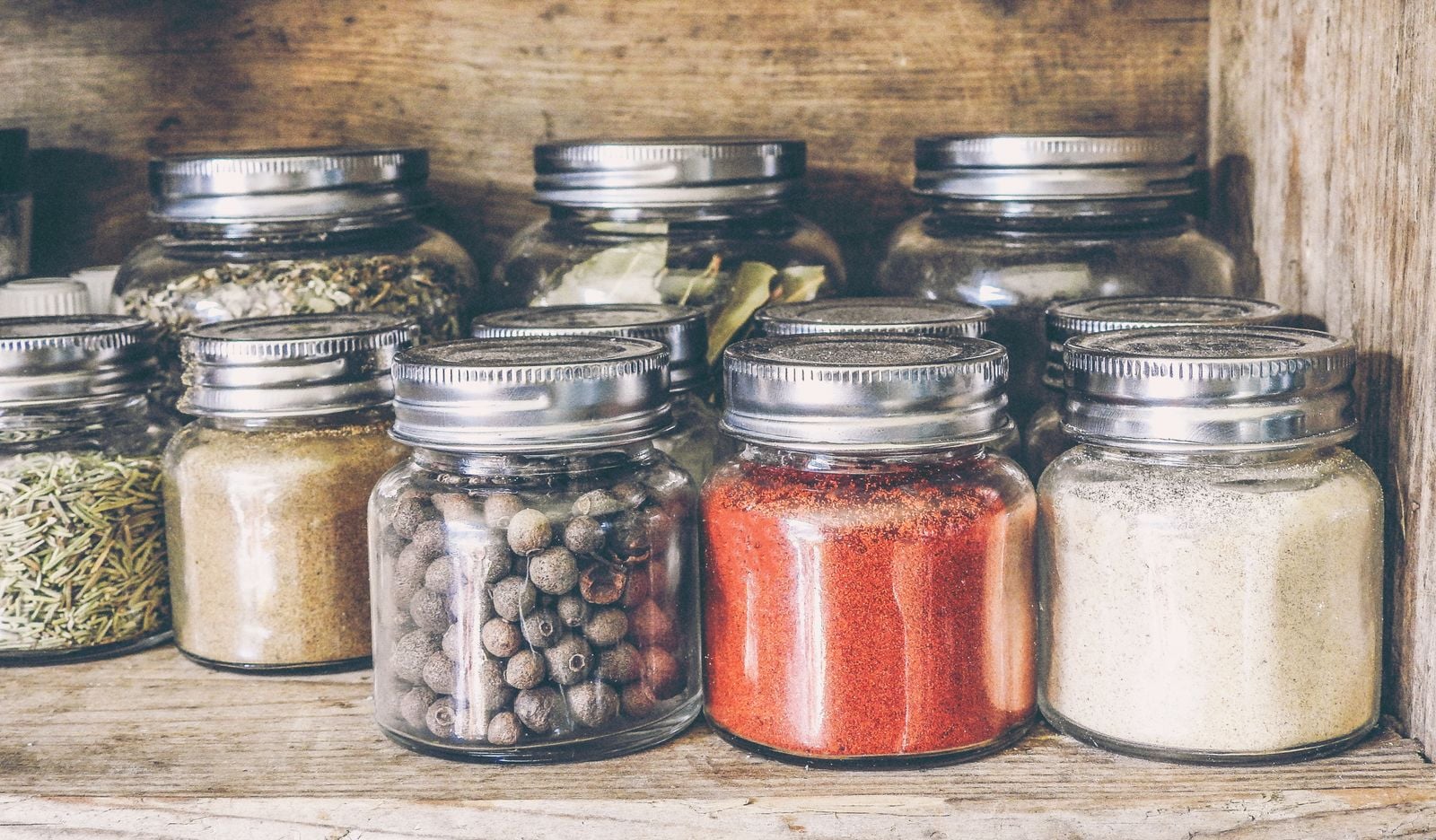
In August 2010, a neuroscientist described a student who had dissolved an entire canister of nutmeg into applesauce and eaten it. The student spent the following weekend in the bathroom. The anecdote serves as a warning: the spice most Americans keep in a small glass jar next to the cinnamon is, at high enough doses, a genuine deliriant.
This is the strange thing about nutmeg. It sits in the baking aisle at every grocery store. It goes into pumpkin pie, béchamel, mulled wine, eggnog. And it contains a compound called myristicin that is structurally related to certain psychoactive substances, capable of producing hallucinations if you eat enough of it.
The conventional read is that nutmeg is a harmless holiday spice. The more accurate read is that nutmeg is a harmless holiday spice at the doses you actually cook with. Move the dial up by a factor of thirty or so and the story changes completely.
What myristicin actually is
Myristicin belongs to a family of aromatic compounds. Its chemical structure has drawn attention from pharmacologists interested in the psychoactive compounds that show up in the plant kingdom.
It is not unique to nutmeg. Parsley and carrots contain it too, at concentrations so low that a garden salad presents no risk of anything more than lunch. The nutmeg tree, Myristica fragrans, is different. Its seed is dense with the compound, along with sabinene, eugenol, and caryophyllene — the aromatic profile that makes nutmeg taste like nutmeg.
Phytochemical literature describes myristicin as a principal allylbenzene with a wide range of biological activities: anti-inflammatory, antimicrobial, hepatoprotective, and neuroactive. The neuroactive part is the one that has fascinated toxicologists for two centuries and terrified emergency-room doctors for at least half of that.
The dose that turns spice into deliriant
The threshold is roughly two whole nutmeg seeds ground down, or the full contents of a small supermarket jar. It is not an amount anyone reaches by accident. A slice of pumpkin pie contains a pinch. A cup of eggnog, a dusting. Even an ambitious béchamel uses maybe a quarter teaspoon for a whole pot.
What happens at the threshold dose is unpredictable, and this is part of what makes nutmeg such a bad recreational choice. Reactions vary from nothing at all to mild euphoria to full hallucinations that can last up to two days. High-dose use has been associated with reactions that resemble psychosis.
Then there is the gastrointestinal part. Nutmeg at those doses stimulates neurons in the intestinal lining aggressively enough to produce extreme diarrhea. The applesauce weekend is not an outlier. It is the median experience.
Why medieval physicians handled it in pinches
The people who first codified nutmeg's use in Europe knew, in a rougher way, what modern pharmacology has now measured. Medieval and early modern physicians treated it as a serious substance, always in small quantities, ground fresh, blended with other aromatics.
The pinch was not caution for its own sake. It was the accumulated result of watching what happened when the dose crept up. A trader with access to whole seeds who decided that more must be better tended to end up in bed for two days, sweating, hallucinating, and unable to leave the room for reasons that were not exactly spiritual.
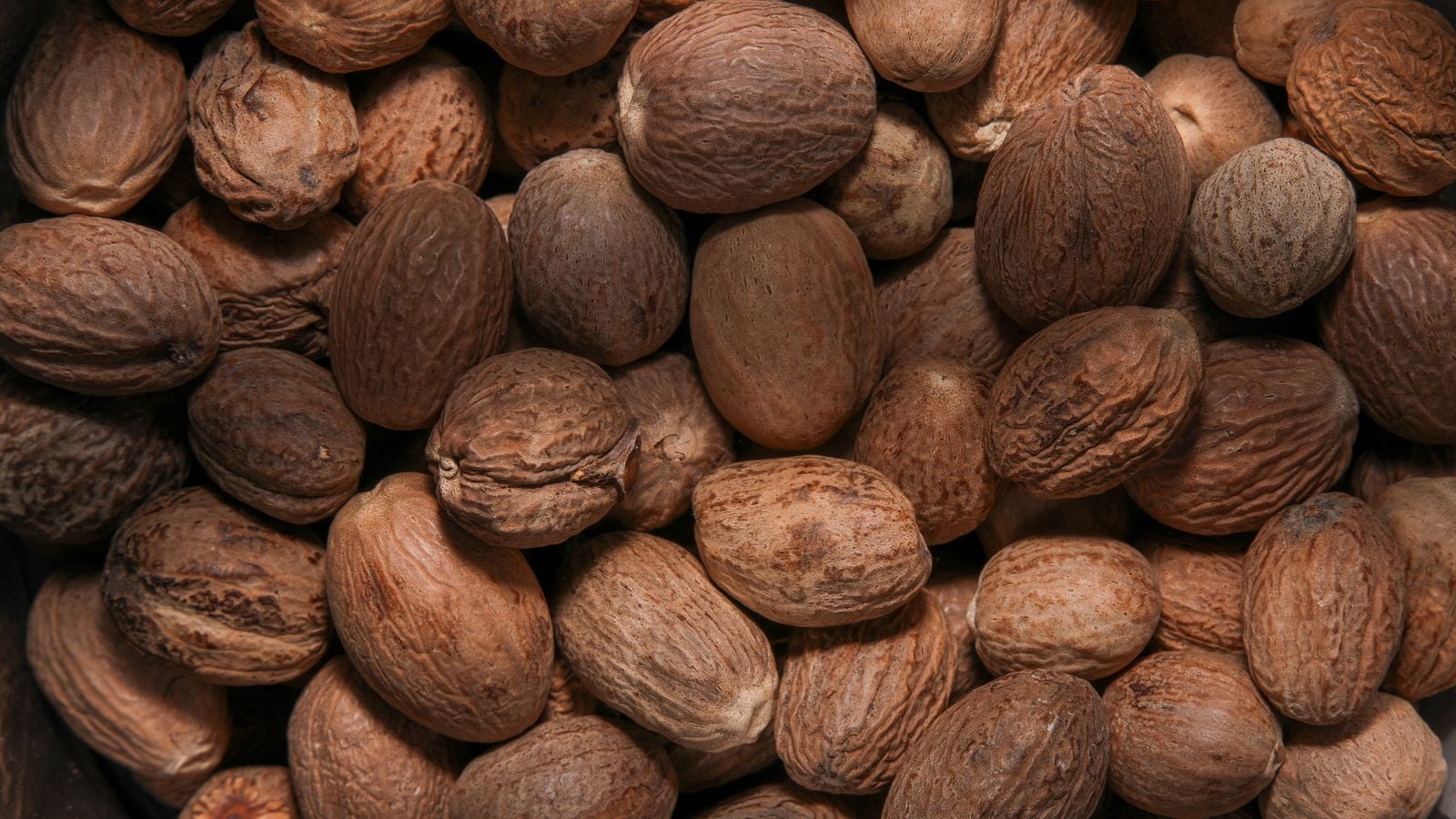
The spice's arrival in Europe in the medieval period made it one of the most expensive commodities in the world. It came from a single archipelago — the Banda Islands, in what is now Indonesia. This is the part of the nutmeg story that gets taught in world history classes. The other part, the one about sailors and delirium, tends to get left out.
The sailors and the spice rack
Long voyages on European trading ships had a specific problem: months at sea, limited entertainment, and cargo holds full of the most potent psychoactive spice in the pharmacopeia. Accounts from the seventeenth and eighteenth centuries mention crew members experimenting with nutmeg, sometimes deliberately, sometimes because they had run out of alcohol and were casting around for alternatives.
The results were consistent with what modern toxicology describes. Men went missing from their duties. Some experienced what were recorded as visions or fits. Some spent days incapacitated. The ship's cook, who had access to the spice locker, was often the person most likely to figure out where the line sat.
The pattern reappeared in the twentieth century in prisons, where nutmeg was one of the few intoxicants inmates could sometimes obtain. Malcolm X mentions it in his autobiography. The kitchen contraband route mirrors the ship's galley route almost exactly. Where alcohol is unavailable and the spice rack is not, someone eventually tries the nutmeg.
What the modern research shows
Contemporary toxicology has largely confirmed the historical pattern while adding chemical detail. Nutmeg in culinary quantities contains a useful mix of B-complex vitamins, vitamin A carotenoids, and minerals, and its essential oils show antioxidant and antimicrobial activity in laboratory assays. The health-adjacent research on small doses is genuinely interesting.
The toxic-dose research is also genuinely interesting, and considerably grimmer. Case reports in the emergency medicine literature describe patients arriving at hospitals with tachycardia, agitation, disorientation, and hallucinations after consuming amounts most people would consider absurd but that are entirely available in a single grocery-store purchase. Most recover within 24 to 48 hours with supportive care. Fatalities are extremely rare but have been recorded.
Myristicin's metabolism and toxicological limits are still being mapped. The compound interacts with liver enzymes in ways that vary between individuals, which is part of why reactions to the same dose can range from no effect to two days of hallucination. The science is not settled. The general shape of the curve is.
The everyday cook is fine
None of this is a reason to throw out the jar. The doses required for psychoactive effects are so far above what any recipe calls for that a reasonable person could grate nutmeg into everything they cook for a year and never approach the threshold. A whole nutmeg seed weighs roughly five grams. A pumpkin pie uses maybe half a gram, split across eight servings. The math is not close.
What the story of nutmeg does illustrate is something worth sitting with about the food that ends up in kitchens. The distinction between a spice and a drug is, in many cases, a distinction of dose. Coffee at three cups is a pleasant stimulant. Coffee at fifty is a medical emergency. The same molecule that makes a béchamel taste like winter is, in higher concentration, the reason a seventeenth-century sailor spent two days believing he could hear the cargo hold speaking to him.
This is also why the medieval instinct — grind fresh, use a pinch, respect the spice — turns out to have been correct on grounds the physicians who followed it could not fully articulate. They did not know about methylenedioxyphenyl allylbenzenes. They knew about the man who ate too much and disappeared into his room for the weekend.
What to notice next time you grate one
A whole nutmeg is smaller than a walnut, dense, oily when you crack the surface, and releases a smell that fills a kitchen from a single pass across a microplane. The reason it smells the way it does — that warm, resinous, faintly medicinal quality — is the same reason it has the pharmacology it has. The compounds that make it delicious and the compound that makes it dangerous are the same family, produced by the same tree, for the same evolutionary reason: to make the seed unpleasant to eat in bulk.
Every animal that has tried to make a meal of nutmeg has learned this. The tree is telling anything that would consume its seed to take a small taste and move on. Humans, for reasons that say more about us than about the tree, have spent five hundred years grating exactly that amount into custard, and occasionally, on long voyages with nothing else to do, eating the rest.