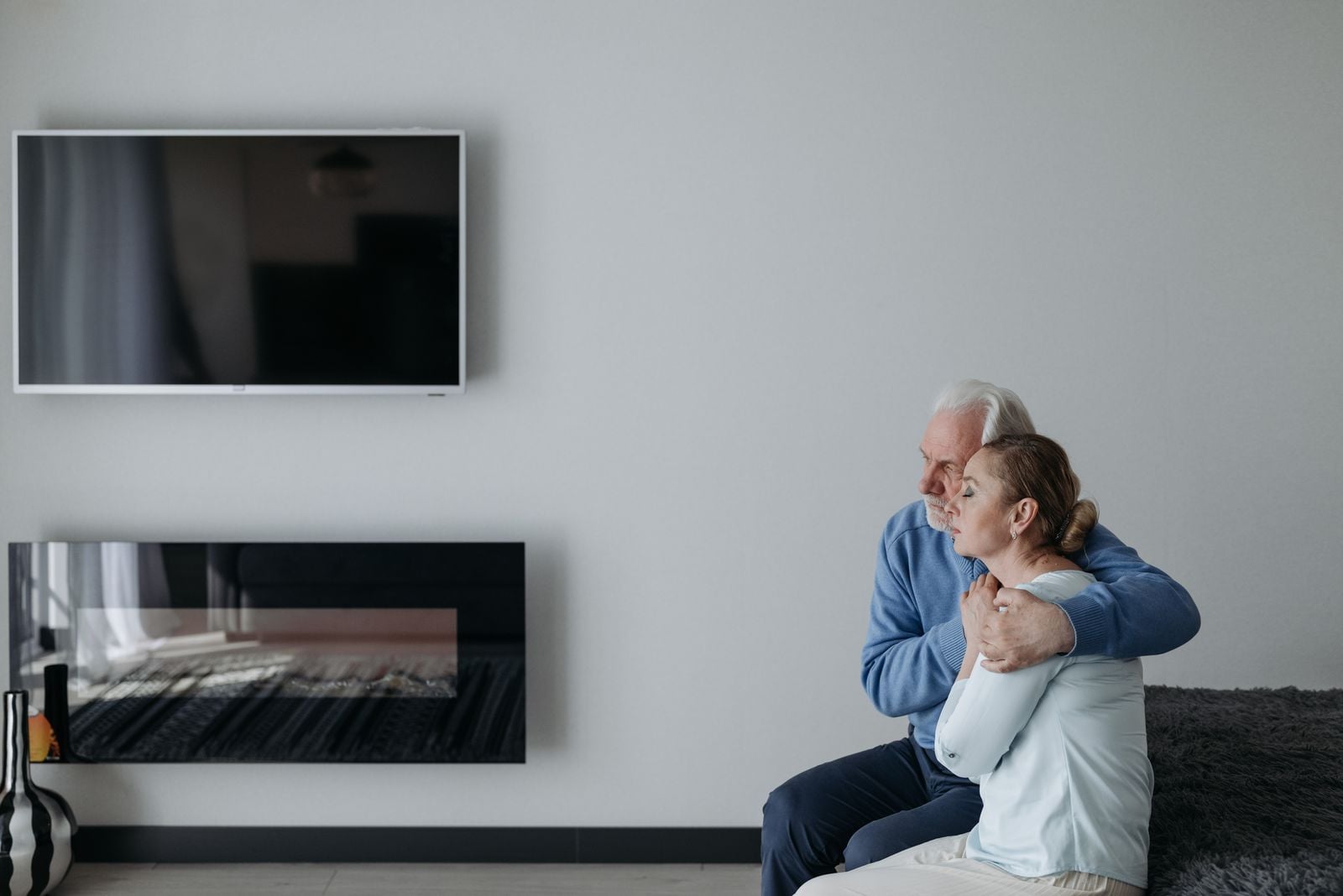
The adults who grew up before the home became a node on a network — before the second phone line, the second TV, the personal computer in the den — often arrive at modern connectivity with a kind of bewildered fatigue. They function. They text. They Zoom. And they feel tired in a way they can't quite locate.
The differences between cohorts are about lived experiences, formative events, and the communication styles each generation absorbed when their nervous systems were still forming.
Which is the part nobody quite says out loud.
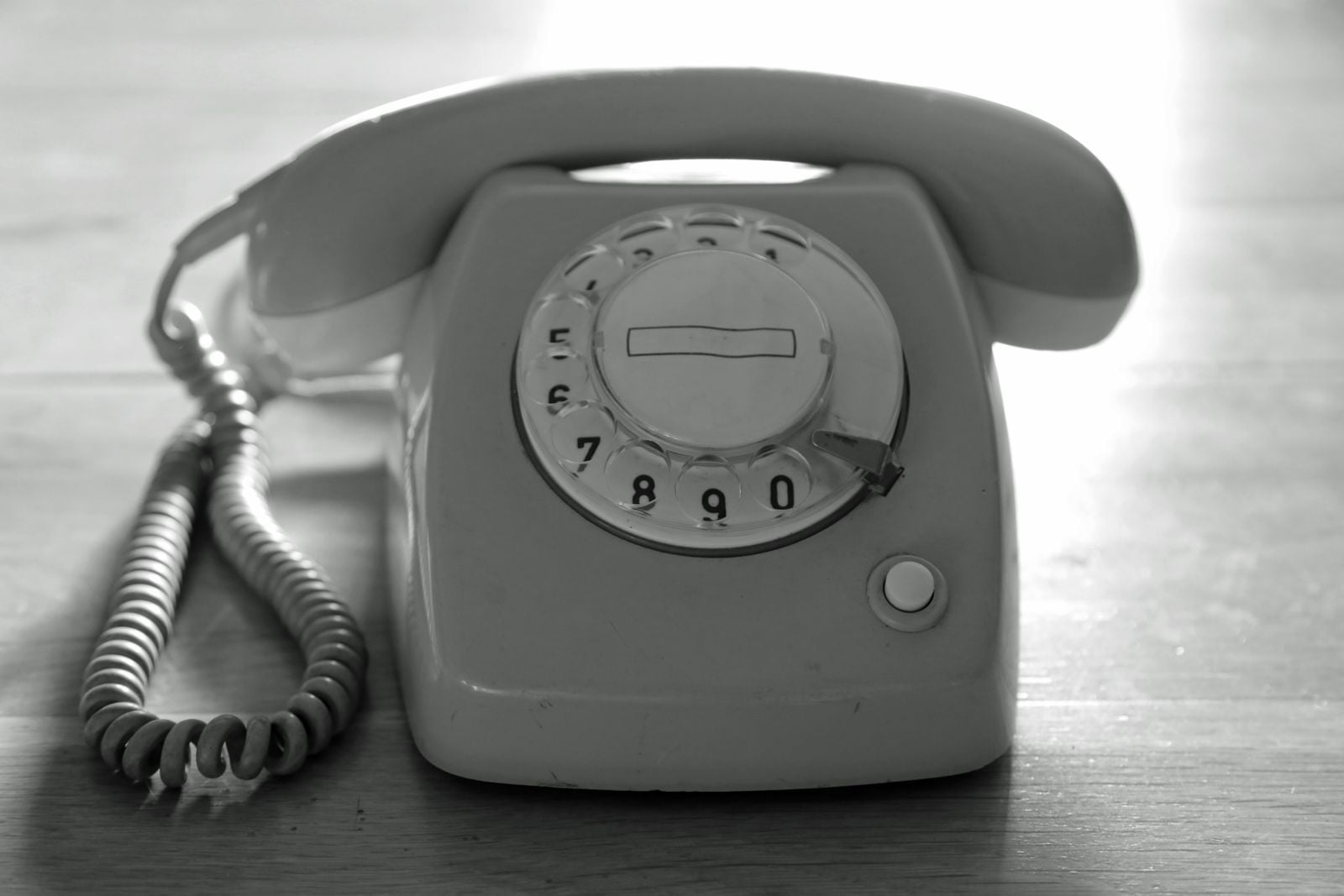
The hallway phone was an entire infrastructure
If you grew up in 1965, the phone lived in the hallway. It rang occasionally. When it rang, someone answered, and the conversation ended within a few minutes because long-distance cost money and the cord only reached so far.
The television sat in the living room and was watched at specific hours by the entire family at once. The car was shared. Plans were made on Tuesday for Saturday and then honored, because there was no way to renegotiate them en route.
None of this was romantic. It was just the bandwidth of the era.
But here's the thing about formative environments: they shape baselines. The nervous system that develops inside a low-bandwidth world calibrates itself to a certain rhythm of stimulus, and that calibration is sticky.
Why early environments stick
The science on developmental windows is unusually clear. Research suggests that early-life environments shape brain architecture and stress regulation in ways that persist into adulthood. The mechanisms differ — some involve cortisol pathways, some involve white matter development, some involve the slow scaffolding of attention itself — but the headline is consistent. What surrounds a child during the first two decades doesn't wash off.
The point isn't that the 1960s were better. They weren't, in dozens of measurable ways.
The point is that a person whose attention was formed in a one-phone, one-TV, one-car household learned a specific cadence of incoming information. Something happened. Then nothing happened. Then something else happened. The gaps were real and structural.
Modern connectivity has erased the gaps.
The exhaustion that doesn't have a name
The kind of tiredness that builds up when stress arrives in small, unrelenting doses without any single source you can point to has been studied closely as a feature of chronic low-grade stress states that quietly become a person's default operating mode.
The shoulders tense. The email pings. The clock ticks louder. None of it is a crisis. All of it is a tax.
For an adult who grew up with the hallway phone, this is a fundamental violation of the rhythm their nervous system was trained on. And because the violation is constant, it never registers as a discrete event you can complain about. You just feel a little wrung out by 4pm and you don't know why.
Younger generations report different patterns. Gen Z workers, for instance, struggle most with unpredictable scheduling rather than with the volume of digital contact itself. They were calibrated to constant connectivity from the start, so the connectivity feels like air. It's the unpredictability of when work actually requires them that taxes them.
That's a different exhaustion. Same word, different machinery underneath.
The cohort that learned attention from the inside out
There's a small piece worth saying carefully here. The generation that came of age before constant connectivity spent the first twenty years of life practicing a kind of attention that has to be installed early to really take root — the small, unflashy muscle of being fully present with another person without anything interrupting.
That training doesn't disappear when the iPhone arrives in 2007. It just gets buried under a lot of new behavior.
Which is part of why the exhaustion is so hard to name. The person feels two systems running at once. The old calibration, which expects long stretches of nothing. The new behavior, which delivers stimulus every nine seconds.
The two don't reconcile. They just coexist, expensively.
What the formative-window research actually says
Developmental neuroscience has been getting steadily better at mapping which environmental inputs leave permanent marks. Studies have found that prenatal lead exposure can track with measurable differences in expressive communication and motor development. The mechanisms are physical and chemical, not behavioral, but the principle is the same: early environments shape later baselines, and the marks are real even when they're invisible.
None of this proves that growing up with one phone in the hallway "wires" anyone for anything specific. The research isn't that clean.
What it does suggest is that the assumption underneath most modern productivity discourse — that any adult can simply adapt to any information environment — isn't well supported by what neuroscience actually knows about formative windows.
The counterargument worth taking seriously
The strongest objection here is that this is just nostalgia in a lab coat. People have complained about new technology since the printing press, and somehow civilization keeps absorbing the shock.
True. And the people making that objection aren't wrong.
But there's a difference between finding something annoying and experiencing something that operates against a baseline their nervous system spent twenty years building. The first is preference. The second is physiology. A person born in 1955 isn't asking the modern world to slow down because they're sentimental about transistor radios. They're asking because something in them is being asked to run continuously in a register it was never tuned to.
And many of them, to be clear, manage it beautifully. The fatigue is real and has a real source, even when it can't be named.
What this looks like in daily life
You can usually spot it in small behaviors. The person who keeps the phone in another room at dinner, not as a statement but because they genuinely cannot eat with it on the table. The person who lets calls go to voicemail and returns them in a batch later. The person who refuses to put a TV in the bedroom.
The nervous system is asking for the gaps back.
For someone whose formative years were spent in low-bandwidth environments, the relief that arrives when a person eats a meal slowly without scrolling, talking, or planning the next thing isn't a discovery. It's a homecoming.

The trap of calling it progress
One of the quietly damaging features of the last twenty years has been the framing of constant connectivity as straightforwardly better. Faster, easier, more efficient. The assumption underneath is that humans are infinitely adaptable to whatever rhythm the technology imposes.
Generations don't differ because of age — they differ because of what was around them when their brains were still being built. That's not a critique of any cohort. It's just an honest description of how human development works.
The person who finds the modern attention environment exhausting isn't failing to adapt. They're correctly noticing that the environment is asking them to override a calibration that took two decades to install. Override is possible. It's also costly.
What might actually help
Small, structural restorations of the gaps work better than performative, short-lived digital detoxes.
A meal without a screen. A walk without earbuds. A car ride where the radio stays off. An evening where the phone goes in a drawer at 8pm and stays there.
These aren't moral choices. They're nervous-system maintenance for a generation whose nervous system was tuned to a different signal-to-noise ratio. The exhaustion that builds up without these gaps isn't laziness or aging or any of the other explanations people reach for. It's the cost of running an old operating system on new hardware that never stops pinging.
The hallway phone is gone. But the cohort that grew up with it is still here, doing the work of translation every day, mostly without realizing it. The least we can do is stop calling that translation effort progress and start calling it what it is.
A tax. Paid quietly. By people who never agreed to the rate.