
Most people say they spend too much time on their phone. Most of those same people have not actually changed how they use it. The gap between those two facts is where this whole conversation lives.
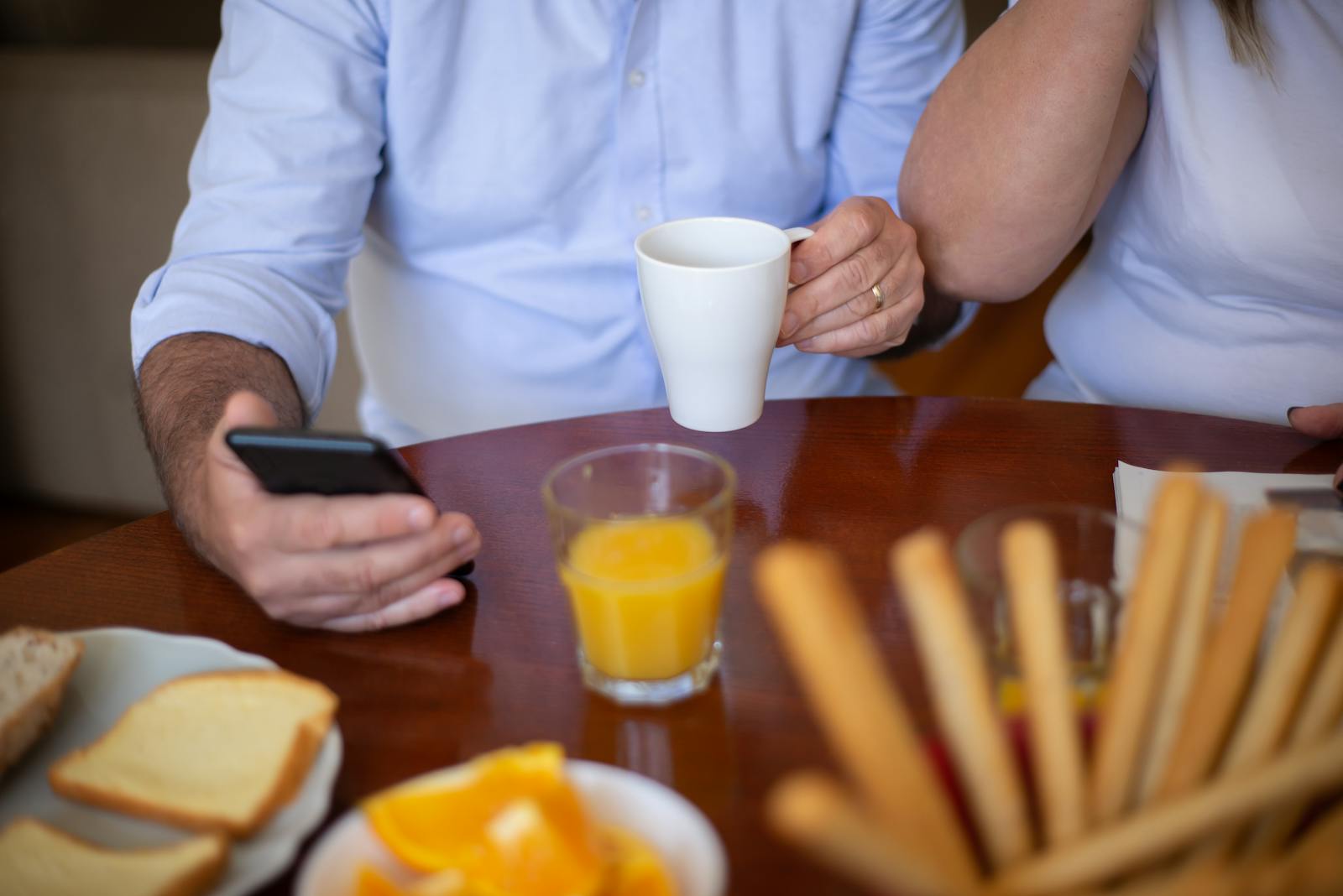
The face-down phone has become a small social ritual. Someone sits down to eat, places the phone screen-side down on the table, and the gesture says something polite about the company being kept. I'm here. I'm with you. I'm not going to glance.
But watching the people who do this, it becomes clear the gesture is doing something else underneath the politeness. It's not really about the person across the table. It's about the dawning realisation that the phone, in its normal upward-facing position, has been quietly running a parallel conversation the whole time — and the person sitting across from you is barely the loudest voice in the room.
The polite explanation is a cover story
The conventional take is that the face-down phone is good manners. You're being respectful. You're signalling presence. And that's true as far as it goes.
What the research suggests, though, is that the manners framing understates what's actually happening. The mere presence of a smartphone, even face-down, even untouched, appears to reduce cognitive performance and degrade the quality of social interaction. The device doesn't have to be doing anything to be doing something.
So the people who flip their phones aren't just being courteous. Some of them have started to notice that the courtesy is also, quietly, a form of self-defence.
Seven seconds, one hundred times a day
Here's the part that surprises people when they first encounter it. Studies have found that a single notification can interrupt concentration for several seconds, and that effect holds even when the phone isn't picked up. The ping itself does the damage. You don't have to engage.
The pattern is consistent: people who believe the notifications are real, from their actual phones, tend to show the most disruption. The brain treats the buzz as socially significant before anyone has decided whether it is.
Even brief interruptions add up over the course of a day. And here's the line worth sitting with: the frequency of notifications and checking habits matters more than total screen time. This matches what clinicians observe — engagement frequency can be as big a predictor, or an even bigger predictor, of harmful, problematic use than time spent.
That changes the question. The question isn't how many hours someone spent on the phone today. It's how many times something interrupted them, and how much of the day was spent in the cognitive smudge that follows.
Attention as something that can be taken
The title of this piece talks about attention being stolen by people who never knew they had it. That phrasing is doing some work, so it's worth unpacking.
The people who built the apps on your phone aren't the ones across the dinner table. They're not your friends, your colleagues, or your family. They're product designers and growth teams in offices you'll never visit. And the relationship is real, even though it's one-way. They have your attention. You don't have theirs.
This is what writers and regulators now call the attention economy. The FTC ran a workshop on it specifically because of how tech platforms use design patterns to hold engagement, particularly around children. The framing is no longer fringe. It's regulatory.
The idea is straightforward enough. Attention is finite. Companies compete for it. The ones that win are the ones whose products are best at holding focus past the point where the person consciously chose to give it.
The competition you didn't know you were in
What's interesting is how rarely anyone frames their own evenings as a competition. But that's what they are.
A piece on the modern attention economy after working hours describes it well. On one side there are employers who, especially since remote work blurred everything, expect a kind of ambient availability. On the other side there are streaming platforms, social feeds, games, and shopping apps, all designed to capture exactly the same focus the employer wants. The person sitting at the dinner table is the contested territory.
Netflix auto-plays the next episode. Slack badges nag until cleared. Mobile games send push notifications timed to re-engage users at the moments they're most likely to relapse. None of this is accidental. It's all a calibrated effort to make their option feel more urgent than the meal in front of you.
The face-down phone is, in this context, a small territorial gesture.
A square foot of contested ground, reclaimed.
Why noticing is the hard part
The reason people don't change their phone habits, despite knowing they should, is rarely willpower. It's that the pattern is invisible while you're inside it.
The ability to step outside your own habits long enough to see them is the precondition for changing them. Without that step, you're just running the loop.
And the loop is the thing. You feel a buzz. You glance. You go back to dinner. You feel another buzz. You glance. The interru