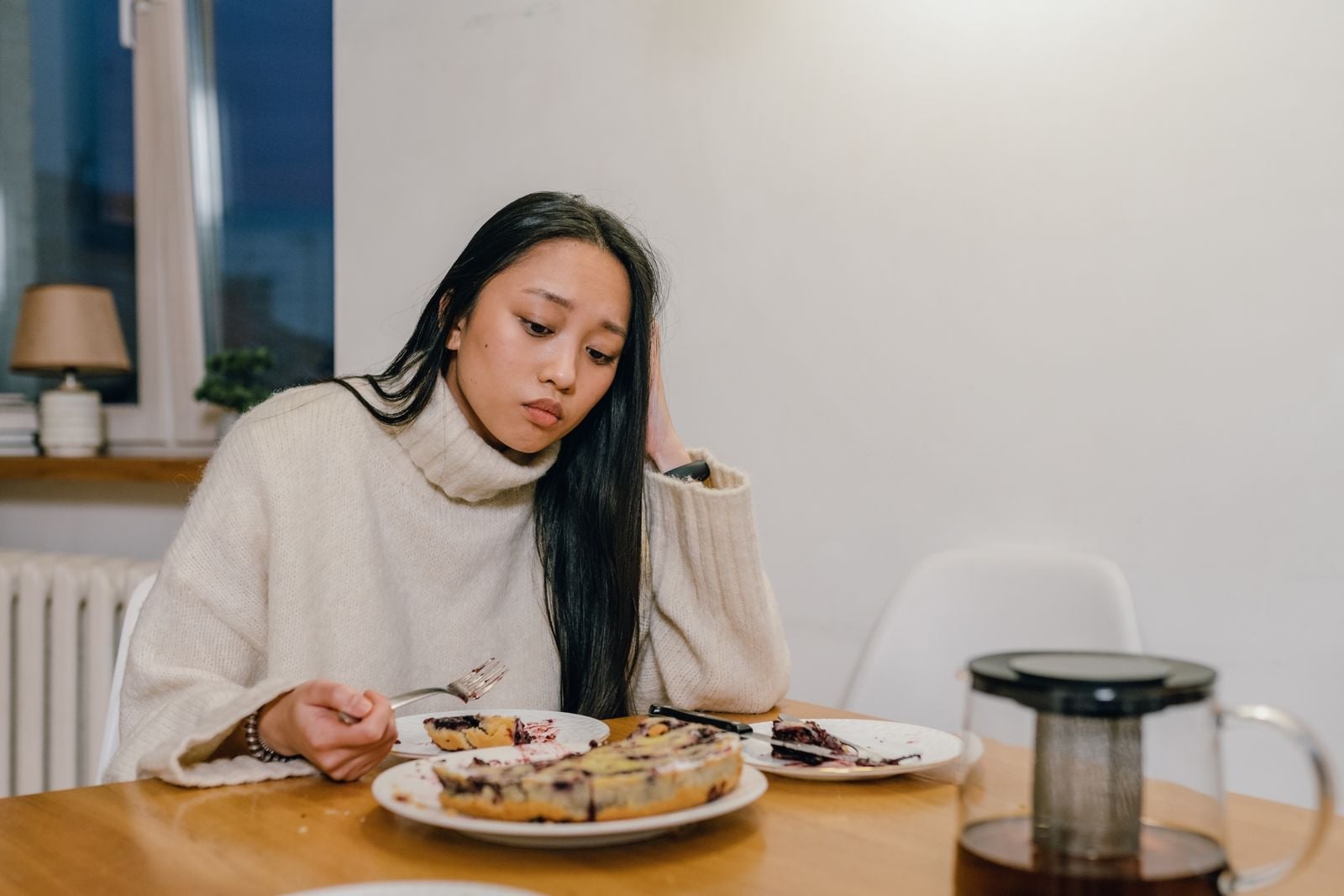
The average American eats roughly half their meals alone, a number that has climbed steadily since the 1980s. The same period has produced a near-uninterrupted rise in self-reported anxiety, social fatigue, and performance exhaustion—the depletion that comes from being constantly observed, evaluated, and responded to.
Both things are true. Neither cancels the other out.
And somewhere in the space between those two facts sits a quieter pattern worth paying attention to: the people who seem unusually steady, unhurried, and present in group settings are often the same people who, when you look closely at their week, are eating most of their meals by themselves.
It is tempting to read this as sad. The cultural script around solo dining still leans heavily on pity — the lonely bachelor, the divorcée at the bar, the widow with her single bowl. But the script is outdated, and the research that has accumulated over the last decade tells a more interesting story about what actually happens when a person sits down with their food and nobody else.
The difference between solitude and loneliness
Psychologists have spent years trying to untangle these two states, which look identical from the outside and feel nothing alike from the inside. Loneliness is the painful gap between the connection a person wants and the connection they have, while solitude is the chosen, often restorative state of being alone without that ache.
Everyday solitude time can both benefit and harm well-being depending on how it is experienced — chosen solitude correlates with greater calm and self-connection, while imposed isolation correlates with distress. The variable that matters most is not the quantity of alone time but whether the person has agency over it.
This is the part the conventional wisdom keeps missing. The question is never whether you are alone. It is whether you chose this, and what you are doing with it.
What a meal actually demands of you
Eating with other people is one of the most cognitively demanding things humans do, even when we do not notice it. There is the food itself, the conversation, the pacing of bites, the social monitoring — who is talking, who is being left out, who needs the water pitcher, whose plate is almost empty.
There is also a performance layer most people never consciously register. The decision about how much to eat in front of others. The micro-management of facial expressions while listening. The unspoken rules about which topics are appropriate at the table.
None of this is bad. Shared meals are one of the oldest forms of human bonding. But they are not neutral. They cost something to participate in, and the cost is paid in executive function.
Acute stress disrupts executive functions like working memory, response inhibition, and cognitive flexibility — the exact mental tools required to manage emotional responses in social settings. The people most vulnerable to that disruption are also the ones most likely to need recovery time afterward.
A meal alone gives the brain a window where none of those tools are required.
The nervous system gets a break it cannot get anywhere else
One of the more useful framings to come out of recent psychology is that the popular language of regulating your nervous system often oversimplifies what is actually happening in the body.
The insight: the nervous system is not something that gets damaged by ordinary stress. It is a responsive system doing its job. What people usually mean when they say something is bad for their nervous system is that they are having an emotional experience they do not want.
The interesting implication is that some experiences genuinely do lower the demands placed on the body. Eating alone is one of them. There is no fight-or-flight signal triggered by another person's facial expression. No vigilance about being heard. No quiet calculation about how the food on the plate will be perceived.
For people whose jobs or family lives involve constant interpersonal monitoring, this is not a small thing.
Why the calmest people often build it into their week
The pattern shows up most clearly in people who work in high-contact professions — therapists, teachers, nurses, executives, parents of small children. These are people whose entire day is shaped by other humans needing something from them.
What looks from the outside like an antisocial habit (the same colleague who eats lunch at her desk every day with her phone face down) is often a form of maintenance. A recovery interval. A way of resetting the part of the self that has been performing competence, warmth, or attention for six straight hours.
This is consistent with what researchers studying authenticity have found. The alignment between a person's inner experience and their outward behavior is one of the strongest predictors of psychological health. Most social settings require some degree of misalignment. Solo time is where the alignment gets restored.
A meal is just an unusually concrete container for that restoration. It has a beginning, a middle, and an end. It demands the body. It cannot be skipped.
The performance layer most people do not notice
If you ask people what they do during a meal alone that they do not do during a meal with others, the answers are revealing. They chew slower. They put down the fork between bites. They notice the temperature of the food. They eat in a different order. They stop checking their posture.
None of these are dramatic. But added up across a week, they describe a category of attention that simply is not available when another person is across the table.
This is not a critique of social eating. It is an observation about what gets traded away. The body that sits at a table with friends is also a body that is, however subtly, performing — facial expressions calibrated, chewing rate adjusted, story-telling cued up for the right moment. Some of that performance is joyful. Some of it is taxing. The ratio depends on the day, the company, and how much performance the person has already done that week.
What this is not
It is worth being careful here. The argument is not that solo dining is superior, or that introverts are somehow more enlightened, or that anyone should be eating more meals alone than they currently are.
The argument is narrower. For people whose lives are already saturated with other people — and for many adults that describes the default condition — solitary meals function as one of the few places where the performance can fully drop. That is why the calmest people in the room often turn out to be the ones protecting that time most fiercely.
There is also a real risk of romanticizing solitude in a culture that already over-isolates people. The line between chosen solitude and corrosive isolation is thinner than wellness culture tends to admit. A person who eats alone six nights a week because they want to is in a different world from a person who eats alone six nights a week because nobody invited them.
The first is restoration. The second is a public health problem.
The pattern in midlife
Something shifts in the way people relate to solo meals around midlife, and it is worth naming. After decades of family dinners, work lunches, networking breakfasts, and meals shaped around everyone else's schedule, a lot of people in their fifties and sixties begin to describe eating alone as a luxury rather than a deprivation.
This tracks with how people get more selective about their time as they age. The same instinct that makes a sixty-year-old start declining invitations they would have accepted at thirty is the instinct that makes a solitary meal feel less like an admission and more like a choice.
It is the same impulse behind the quieter shifts described in our piece on adults in their fifties suddenly taking up gardening — a hunger for activities that do not require performance, do not keep score, and do not need to be witnessed to count.
What the calm ones actually know
The skill, if it can be called that, is recognizing the difference between solitude that restores and solitude that depletes. The people who seem unflappable in group settings are not necessarily more naturally calm. They have often just figured out, through trial and error, how much time off-script their nervous system actually needs to show up well when the script is required.
For some of them, that calculation happens at the dinner table. Sometimes a quiet meal is just a quiet meal. And sometimes it is the only forty minutes in the day when nobody is watching, nobody is waiting for a response, and the person eating gets to be exactly who they are without making anything of it.
That second kind tends to show up in the room afterward as composure. From the outside it looks like a personality trait. From the inside it is more like a practice — one most people would never think to name, performed alone, with a fork.