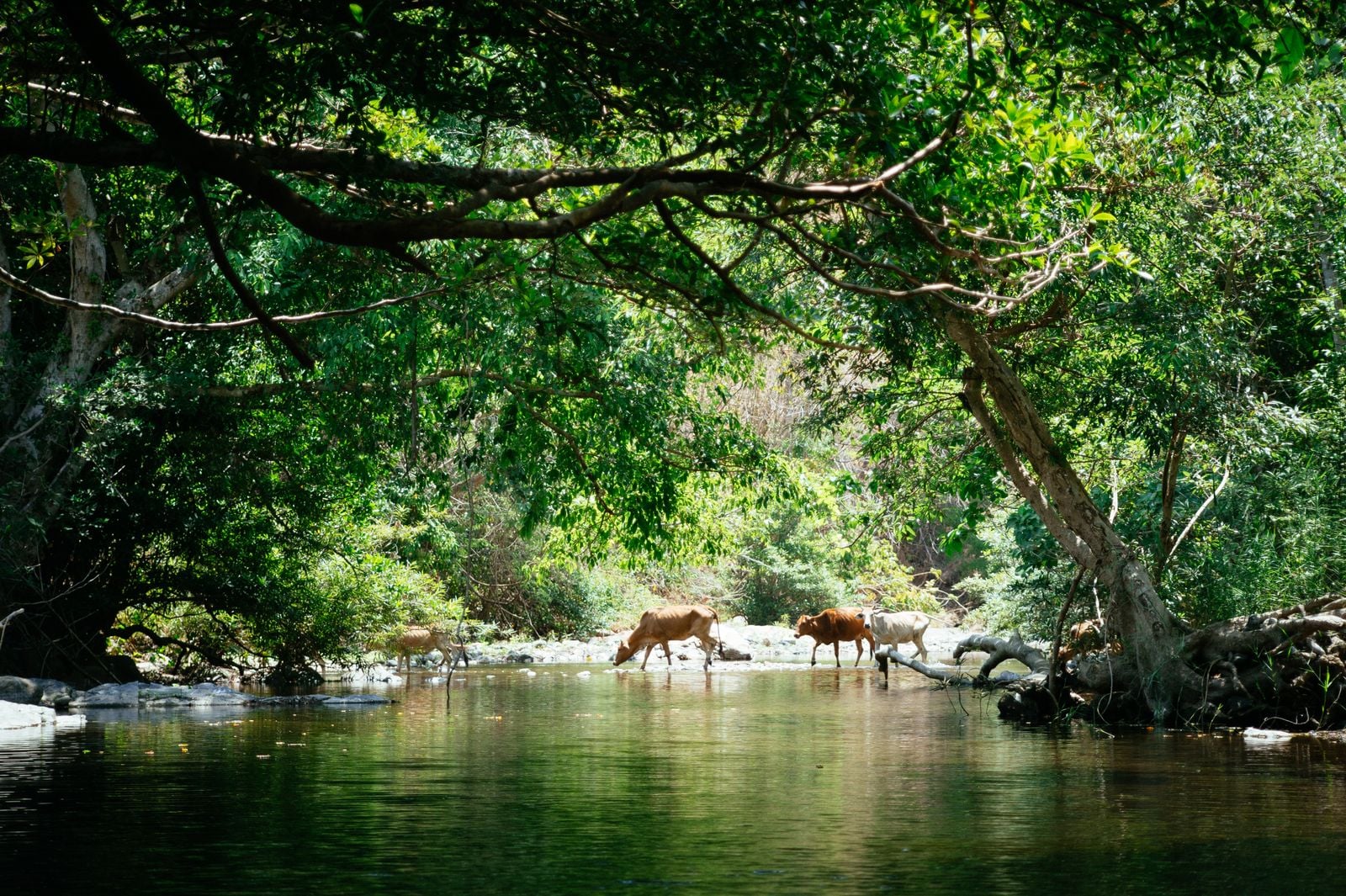
Colombia this month enacted the first national law in the Amazon region requiring beef to be traced from a calf's birthplace all the way to the supermarket shelf, a legally binding attempt to sever the link between cattle ranching and rainforest destruction.
The conventional wisdom on cleaning up commodity supply chains has leaned on voluntary industry pacts. Those have mostly faltered. Colombia is testing whether legislation, with real penalties, can do what handshake agreements could not.
The measure was prompted in part by investigations showing Colombian grocery stores were unknowingly selling beef raised on illegally cleared land inside national parks. The law will roll out over the next two years and require regulations defining what qualifies as a "deforestation-free producer," along with surveillance measures in deforestation hotspots.
The scale of the problem is hard to ignore. Colombia had roughly 30 million head of cattle in 2025, and more than 200,000 of them were sourced from protected areas between 2020 and 2024, according to analysis by the Environmental Investigation Agency. Cattle move through a chain of owners and ranches that effectively launders their origins.
Colombia's situation is more tangled than most. Ranchers often graze cattle as a path to claiming land titles. Armed groups linked to drug trafficking extort ranchers with per-cow "protection" fees and issue illegal forest-clearing permits, generating hundreds of thousands of dollars a year, according to a 2021 EIA investigation.
Investigators have noted that Colombia's armed conflict complicates traceability efforts, as armed groups resist having cattle traced back to their operations.
That is the quiet logic of the law. Traceability is not only an environmental tool. It is a financial one, cutting off the revenue streams that depend on cattle being untraceable.
External pressure helped push this forward. The European Union passed a 2022 law requiring commodity exporters to prove their products are deforestation-free, which has raised the stakes for any country selling beef or leather into European markets.
Boris Patentreger, a senior director at Mighty Earth, indicated that Colombia's traceability law represents important progress in addressing deforestation linked to beef and leather production. He noted that effective traceability requires transparency, enforcement, and consequences for those involved in deforestation.
That qualifier matters. Voluntary efforts elsewhere have buckled. Brazil's Soy Moratorium was credited with slowing Amazon deforestation for years, until the association representing the largest soy traders pulled out of the pact earlier this year. The Brazilian state of Pará passed a cattle traceability law similar to Colombia's, and it has stalled.
For travelers, eaters, and anyone who thinks about where their food comes from, the Colombia experiment is worth watching. Most beef supply chains globally remain opaque by design — and opacity is what allows forest loss, land grabs, and criminal financing to coexist with a clean-looking steak at the grocery counter.
Colombia is betting that a paper trail, properly enforced, can change the math. Whether it works will depend less on the law itself than on what happens to the people it implicates.