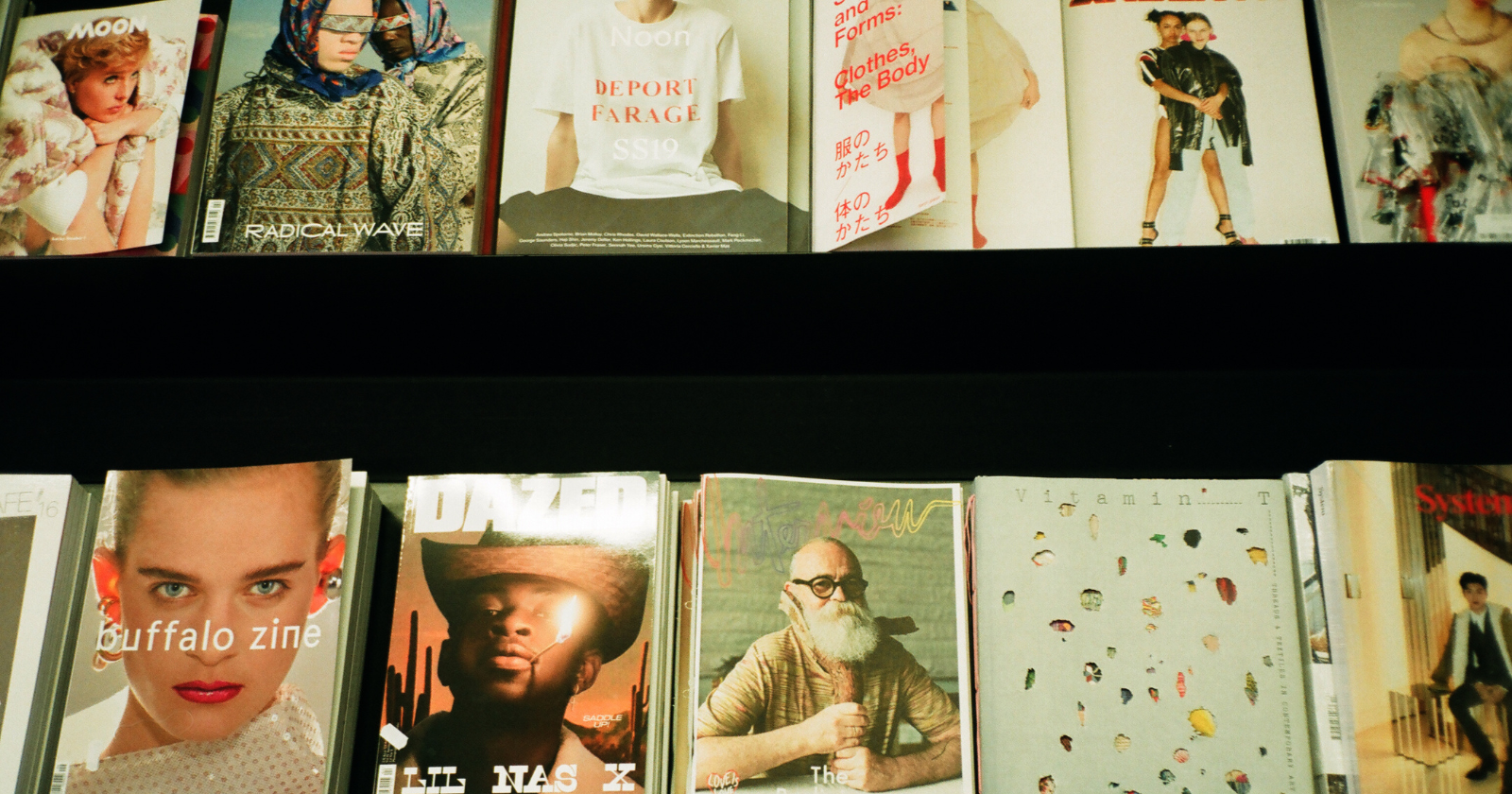
Dazed has published a guide to 15 sexy, poignant and political books about lesbians and queer women, framing the act of reading widely as quiet resistance against a censorship campaign that has made LGBTQ+ literature one of the most targeted categories in American libraries.
The Dazed list spans nearly a century of writing, from Djuna Barnes's modernist novel Nightwood to Julia Armfield's flood-soaked dystopia Private Rites. The selection moves through Victorian England (Sarah Waters's Fingersmith), post-martial law Taipei (Qiu Miaojin's Notes of a Crocodile), 1990s Ireland (Chloe Michelle Howarth's Sunburn) and the queer underworld of late-1980s downtown New York (Sarah Schulman's After Delores).
The argument running through Dazed's piece is that no previous generation has had access to this much lesbian writing across this many genres — novels, essays, theory, memoirs, coming-of-age stories, hard-boiled crime, erotica. The reviewer notes how Jeanette Winterson's description of Nightwood — "reading it is like drinking wine with a pearl dissolving in the glass" — pulled her back to a notoriously difficult book.
Several featured authors are flagged for work beyond fiction. Schulman is named for her non-fiction (Conflict is Not Abuse, The Gentrification of the Mind, The Fantasy and Necessity of Solidarity) and her activism around HIV justice and Palestine. Audre Lorde's essay collection When I Dare to be Powerful appears alongside Lamya H's memoir Hijab Butch Blues, which plays on the title of Leslie Feinberg's Stone Butch Blues.
The list lands at a pointed moment. Dazed links the recommendation directly to rising book bans, and the data backs up the framing. According to reporting by The Guardian, book bans have surged over the past five years, with LGBTQ+ titles and books by authors of colour the primary targets. Organized challenges to library books have increased dramatically, with efforts now predominantly coming from activist groups and government officials rather than individual parents.
That context reshapes what a reading list is for. The stakes are clear: book banners are trying to narrow the worldview of young people, and representation changes lives. A curated shelf of queer fiction isn't only a literary recommendation in 2026 — it's a record of what someone, somewhere, is trying to remove from a school library.
For readers used to thinking about conscious choices in terms of food or fashion, this is a reminder that culture itself is a site where impact compounds. Buying the book, lending it, talking about it, requesting it at a local library — each gesture pushes back against the economic squeeze authors of colour and queer authors are now reporting, as school visits dry up and publishers grow more cautious about acquisitions that might attract challenges.
The full list, with annotations from Dazed's contributors, is worth reading in its entirety.