Carbon removal needs to nearly quadruple by mid-century if the world wants any realistic shot at pulling global temperatures back to 1.5C above pre-industrial levels — a target that recent temperature records show has been breached as a single-year average. That was the central message from a gathering of climate scientists in Milan, as reported by Carbon Brief.
The conventional wisdom for years has been that cutting emissions is the headline act and carbon dioxide removal (CDR) is the backup. The Milan conference complicated that framing. With single-year breaches of 1.5C now happening and scientists projecting the 20-year average could be exceeded by the end of this decade, CDR is no longer just a hedge against hard-to-abate sectors like aviation and agriculture. It has become the mechanism by which an overshoot world might claw temperatures back down.
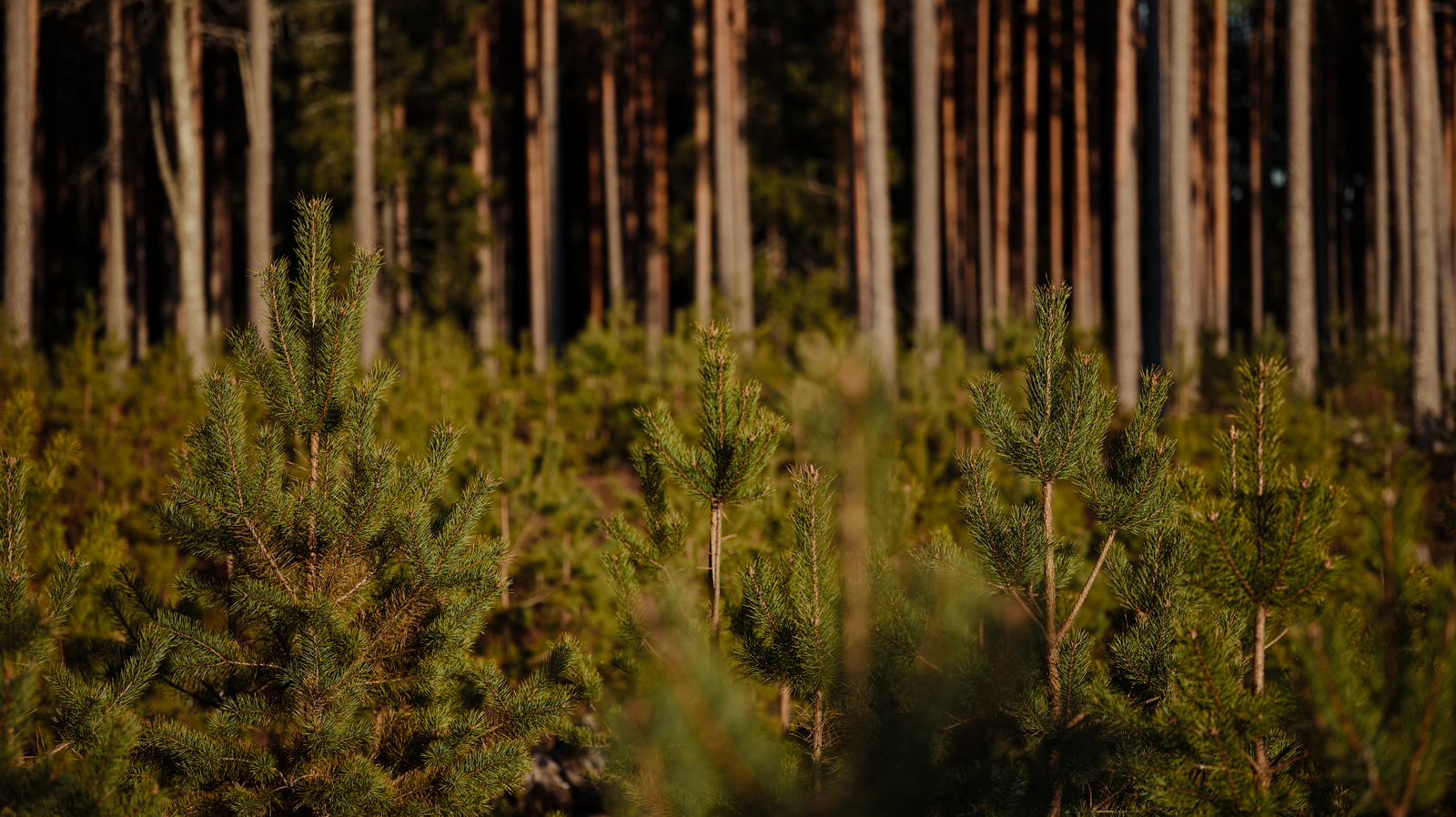
According to Carbon Brief's coverage of the conference, meeting the Paris Agreement's 1.5C goal by 2100 would require CDR to scale from 2.2 billion tonnes of CO2 per year today to 8.8 billion tonnes by 2050. Today, the vast majority of that removal is conventional CDR: tree-planting, reforestation and forest management. The world's forests currently draw down roughly 2.2GtCO2 annually.
That dominance of trees is also the problem. Multiple researchers at the conference argued that forests alone cannot do the work being asked of them, citing land-use competition with food and biofuels, the reversal risk when forests burn or are cleared, and significant measurement uncertainty. The ocean findings presented in Milan were sobering. Modelling work showed that even under a hypothetical global net-negative emissions scenario, surface ocean temperatures would stay flat for 30 to 40 years due to ocean inertia. Below 200 metres, warming, acidification and deoxygenation continue regardless, with one researcher noting that the deep ocean shows no response to negative emissions efforts.
The cost gap between approaches helps explain why forests still dominate. Conventional methods can come in at low costs per tonne of CO2 removed in some cases. "Novel" methods — direct air capture, enhanced rock weathering, ocean alkalinity enhancement, biochar — make up a very small fraction of current CDR but are growing quickly. A major scale-up of these technologies will likely require substantial cost reductions before they can carry serious load.
For readers who track climate news at the consumer level — what to eat, what to buy, what to fly — the Milan story is a useful corrective. Removing carbon is not a substitute for emitting less of it, and the systems that produce most emissions are not consumer-facing. The conversation about who is responsible for cleanup tends to skip over the structural piece, something VegOut has previously explored in the context of how sustainability narratives get distributed across income brackets. Scaling CDR to 8.8 gigatonnes is an industrial-policy problem, a land-use problem and a measurement problem long before it is a behaviour problem. The Milan conference made clear it is also a problem the planet now needs solved on two tracks at once — cutting emissions hard, and building the removal capacity to deal with what gets through.